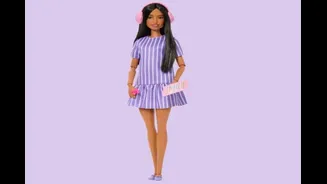

Mattel has introduced its first-ever autistic Barbie doll, marking a new step in its efforts to promote inclusion and diversity. The announcement was made on January 12 as part of the Barbie Fashionistas
line, which aims to reflect a wider range of real-life experiences through play.
The doll was created in partnership with the Autistic Self Advocacy Network (ASAN), a disability rights organisation led by autistic people. The collaboration lasted more than 18 months and involved close consultation to ensure the design reflected lived experiences in an authentic way.
Design features
The autistic Barbie includes flexible joints that allow for movements such as hand flapping. She has a slightly averted gaze, reflecting how some autistic people may avoid direct eye contact. The doll wears flat shoes and a loose-fitting purple dress designed to reduce fabric-to-skin contact.
She also comes with accessories that represent tools some autistic people use in daily life. These include a finger-clip fidget spinner, noise-cancelling headphones and a communication tablet with symbol-based AAC apps.
Mattel said the doll is meant to represent common ways some autistic people experience and communicate with the world, without suggesting that autism looks the same for everyone. The aim is to allow children to recognise themselves or others through imaginative play.
Barbie gets more inclusive
ASAN executive director Colin Killick said the doll offers joyful and authentic representation for autistic children. The launch builds on Mattel’s earlier releases featuring dolls with Down syndrome, diabetes, prosthetic limbs and hearing aids, expanding representation across abilities and identities.