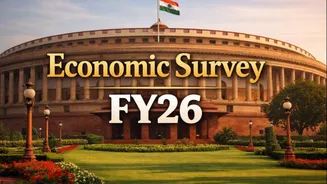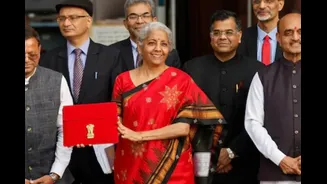




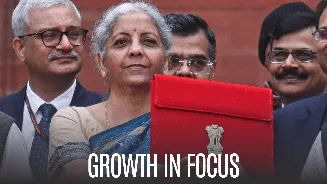


The 88th Union Budget of India will be presented in parliament on February 1 by Finance Minister Nirmala Sitharaman. A document detailing the government’s plan for fiscal management, spending and growth
priorities over the financial year, the Budget outlines the policy priorities of the country. In a rare departure from the norm, the Budget will be presented on a Sunday this year.
Since the Budget details the government’s economic priorities for the upcoming financial year, it is one of the most important policy documents released every year. This year as well, people will be keenly waiting for any Budget announcements related to tax exemptions, income tax slabs, long-term capital gains tax and more.
Ahead of the Budget 2026-27, there are some terms people must know to help them better understand the nuances in the government’s annual financial plan. This can aid them in planning out their financial future in a better manner.
10 Terms To Know Ahead Of Union Budget 2026
Inflation
The rate of increase in prices over a given period of time is called inflation. It is typically a broad measure, and often defines the overall increase in prices or the hike in the cost of living in a country. When inflation rises, the purchasing power of money declines. The inflation rate measures how much prices are rising over a period of time.
Direct Tax
This tax is imposed directly on entities and individuals. It cannot be transferred to another party. Examples include income tax and corporate tax.
Indirect Tax
These taxes are levied on goods and services based on their value. The cost is ultimately borne by the consumers. Excise duty and customs duty are examples of indirect tax.
Fiscal Policy
The government’s decisions on taxation and public spending are called fiscal policy. These are aimed at managing economic growth, stability and employment, and are reflected directly in the Union Budget.
Monetary Policy
The actions of central banks, such as the Reserve Bank of India (RBI), to control money supply and interest rates for regulating inflation and supporting economic growth come under monetary policy.
Revenue Expenditure
Revenue expenditure is the spending that does not lead to any future income or asset creation. Salaries, pensions, subsidies, and administrative costs come under this term.
Goods and Services Tax (GST)
GST is a value-added tax levied on goods and services. It was introduced to streamline the country’s indirect tax system, bringing forth a unified tax structure instead of multiple state and central levies.
Gross Domestic Product (GDP)
The GDP represents the total value of all goods and services produced within a country during a specific time period. It is considered to be a key indicator of economic health.
Fiscal Deficit
Fiscal deficit signals how much the government relies on borrowing. It happens when the government’s total revenue, excluding borrowings, is less than its spending.
Revenue Deficit
The gap between the government’s revenue expenditure and revenue receipts is called revenue deficit It signals how much the routine expenses of the government exceeded its regular income.