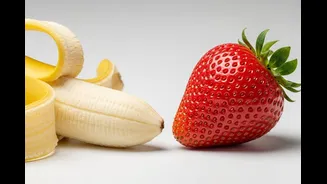





If you had to name a berry, strawberries would probably be the first thing that comes to mind. Bananas, not so much. However, from a scientific perspective, it is really the other way round. We generally
define fruits according to their physical appearance and taste. For example, fruits that are small and juicy would be described as berries. However, in botanical terms, fruits are defined by their growth pattern. A fruit is simply the mature ovary of a flowering plant. Within that, there are different categories, and berries are just one type of fruit. A “true berry” develops from a single flower with one ovary, and its seeds are contained inside the fruit. That’s where bananas fit in. Bananas grow from a single ovary and have a soft skin, a fleshy inside, and tiny seeds within the fruit — even if you don’t really notice them. Because they meet all these conditions, they’re classified as berries in the botanical sense. They’re not alone either. Fruits like grapes, tomatoes, kiwis, and even avocados fall into the same category when you look at how they grow. Strawberries, though, work completely differently. They do not come out of one ovary. They come from flowers that consist of several ovaries. This explains why there are small yellow dots on the exterior of this fruit since they are not really seeds. Because of this, strawberries are classified as “aggregate fruits,” not berries. Part of the confusion comes from how long we’ve been naming fruits. Fruits were getting named far earlier than botanists came up with any formal classification, and that is why sometimes the names do not coincide with the modern scientific classification. It is because of this that bananas are often not regarded as berries, despite their being considered so. Yes, it might seem very odd, but bananas are berries, while strawberries aren’t. It is one of those things that seem to be absolutely false until you get to know how plants reproduce.