







Ukraine is confronting a worrying combination of battlefield setbacks—restrictions on the use of Elon Musk’s Starlink satellite communications system have disrupted military drone operations, while President
Volodymyr Zelenskyy says Kyiv received no advance warning from its international partners before Russian ballistic missiles struck the capital.
The two developments, unfolding amid a sharp deterioration in relations between Kyiv and Washington, have heightened concerns in Ukraine that vital American-backed military capabilities could become less dependable just as Russia intensifies its aerial campaign.
The immediate impact has been felt on the battlefield. Ukrainian officials quoted by Axios said restrictions on Starlink terminals mounted on fast-moving drones disrupted several missions, including operations involving interceptor drones used to counter Russian aerial threats. Meanwhile, Zelenskyy said Ukraine had not received its usual advance warnings before Russian ballistic missiles hit civilian infrastructure in Kyiv.
The timing has fuelled suspicions among Ukrainian officials that the Starlink restrictions could be linked to the wider political dispute with US President Donald Trump.
Starlink Curbs Disrupt Ukrainian Drone Operations
According to a Reuters report, Ukrainian officials said SpaceX had unexpectedly restricted the functioning of military-grade satellite communications terminals when they were travelling at high speeds.
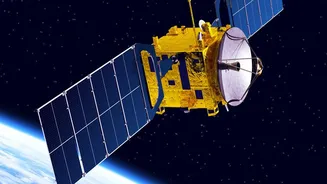
Starlink has become an important part of Ukraine’s military communications infrastructure, supporting frontline logistics, long-range drone missions and air-defence operations. The reported restrictions affected drones that depend on satellite connectivity for guidance and control.
Serhii Beskrestnov, an adviser to Zelenskyy, said Ukrainian forces had not been warned about the limitation and that several missions had been disrupted. He suggested the timing was unlikely to be coincidental, given the political situation between Kyiv and Washington.
By late Wednesday, Zelenskyy said drone operators were reporting improved data connections at speeds of up to 161 kmph. However, a Ukrainian official told the Associated Press that the restrictions continued to affect the interception of faster, jet-powered Russian drones.
The distinction matters because the reported problem was not necessarily a complete shutdown of Starlink across Ukraine. Rather, restrictions affecting particular terminals and operating speeds created difficulties for specific military applications.
Elon Musk subsequently said on X that the military version of the system, Starshield, was controlled by the US government, with limits on speed and usage determined by the US military and ultimately the president. The Pentagon did not immediately respond to requests for clarification.
Ukraine has sought an explanation from SpaceX and the US government over the restrictions. Their precise cause and the extent of government involvement remain unclear.
Kyiv Says It Received No Advance Warning Of Russian Missiles
The Starlink disruption came as Ukraine was also grappling with a reported gap in advance warnings about Russian ballistic missile attacks.
Zelenskyy said Ukraine had received no early warning from its international partners before five Russian ballistic missiles struck civilian infrastructure in Kyiv. He did not identify which partners had failed to provide the information.
In a statement reported by the Associated Press, Zelenskyy emphasised the importance of intelligence-sharing in protecting civilians, saying advance warnings about ballistic missiles helped prevent deaths.
Ukrainian Air Force spokesman Yurii Ihnat also said there had been no warning ahead of the initial missile attack, although Kyiv was warned about subsequent waves.
The absence of the usual warning raised concerns because the US possesses satellite capabilities that can detect missile launches and help provide early warnings. Such information can give authorities additional time to alert civilians and prepare air defences.
However, the reported lapse does not establish that Washington deliberately withheld intelligence. Trump said the US was still sharing intelligence with Ukraine, and Ukrainian officials indicated that intelligence-sharing with international partners had not stopped altogether.
A separate report by the Financial Times said Ukrainian officials were examining the failure to receive advance warnings. The precise reason for the gap remained unclear.
The two developments have therefore created uncertainty over the reliability of crucial military support, even as the reasons behind them remain contested.
The Trump Angle
The immediate backdrop is a renewed deterioration in relations between Trump and Zelenskyy.
Trump has publicly criticised the Ukrainian president, questioned his handling of the war and called for Ukraine to have a new leader. He has also pressed Kyiv to halt attacks on Russian oil refineries, linking the campaign to higher fuel prices in the US.
Tensions have grown further after Trump announced a deal to import Russian diesel and suggested that Moscow and Kyiv had agreed to an energy ceasefire. Ukraine said it was holding back from attacks on Russian energy infrastructure, while accusing Russia of continuing to strike Ukrainian power facilities.
Russia’s attacks have inflicted significant damage on Ukraine’s energy infrastructure, leaving hundreds of thousands without electricity. Zelenskyy has argued that Moscow’s continued bombardment demonstrates that it is not adhering to the ceasefire Trump has described.
Against this backdrop, the Starlink restrictions have prompted speculation about whether Washington’s support for Kyiv is becoming conditional on changes to Ukraine’s military strategy.
Axios reported on Wednesday that Ukrainian officials suspected the restrictions could be a form of political pressure linked to the dispute over attacks on Russian oil infrastructure. A senior US official told Axios that the Trump administration had nothing to do with the restrictions.
The White House did not immediately offer a public explanation for the Starlink developments, while the Pentagon had not clarified the extent of any restrictions on military satellite services.
Europe Has No Immediate Replacement For Starlink
The latest developments have also highlighted a problem for Ukraine’s European supporters: there is no ready-made alternative capable of replacing Starlink across the military’s existing network.
In a report published on October 14, Reuters said European countries lacked an immediate substitute for the satellite connectivity Ukraine uses in frontline operations.
OneWeb, operated by European satellite company Eutelsat, offers an alternative source of connectivity. But analysts cited by Reuters questioned its suitability for some battlefield applications, pointing to limitations involving capacity, performance and the size, weight and power requirements of its terminals.
Replacing Starlink would also require the replacement or adaptation of thousands of terminals, as the systems use proprietary technology.
The problem extends beyond satellite internet. Europe’s ability to provide an independent early-warning capability for ballistic missile launches is also limited. The US Space-Based Infrared System detects the heat generated by missile launches, helping provide information for early warning.
Marc DeVore, an associate fellow at Chatham House, told Reuters that Europe had no equivalent capability. European Defence Commissioner Andrius Kubilius has called for the continent to develop its own space capabilities, including through the planned IRIS² satellite constellation. But that programme is years away from becoming operational.
For Ukraine, the immediate challenge is to maintain reliable military communications and early-warning systems while continuing to depend on external partners for capabilities that cannot be quickly replicated.
A Wider Question Over Ukraine’s Military Dependence
The Starlink controversy has renewed a debate that has followed Ukraine throughout the war: how much can a country depend on technology and intelligence supplied by partners whose political priorities may change?
Starlink has provided Ukraine with a resilient communications network at a time when conventional infrastructure has been damaged by Russian attacks. US satellite intelligence has also played an important role in helping Kyiv assess threats and prepare for incoming attacks.
But the latest developments show how vulnerable a military can become when critical capabilities depend on systems it does not fully control.
The immediate impact of the Starlink restrictions may be limited to particular terminals and missions, and the reported intelligence gap does not prove that US support has been withdrawn. Yet both episodes have exposed the strategic risks of dependence on external technology and intelligence.
For Zelenskyy, the challenge is now twofold: maintaining the military capabilities needed to withstand Russia’s attacks while ensuring that Ukraine’s international partners continue to provide reliable support.