



The Centre’s latest clean-air survey has thrown up an apparent contradiction as Delhi, a city synonymous with toxic winter smog, has ranked ahead of Srinagar and Bengaluru in the Swachh Vayu Sarvekshan
2026. Delhi has secured the 21st position among 48 cities with populations above 10 lakh, scoring 172 points. Srinagar is 26th with 162.6 points, while Bengaluru is 32nd with 152.6 points.
At first glance, the ranking may seem difficult to reconcile with Delhi’s air pollution crisis. But there is an important distinction. Swachh Vayu Sarvekshan is not a league table of which city has the cleanest air on any given day. It also assesses how seriously cities are tackling the sources of air pollution and how effectively those measures are being implemented.
Why Delhi Ranks Above Bengaluru, Srinagar
Delhi’s 21st-place finish does not mean that its air is cleaner than Srinagar’s or that residents of the capital are breathing healthier air. Instead, the survey evaluates efforts such as controlling road dust, managing solid waste, tackling vehicular and industrial emissions, handling construction and demolition waste, and creating public awareness around air pollution.
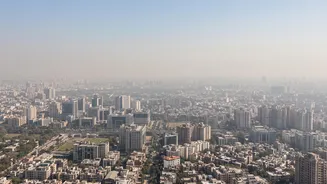
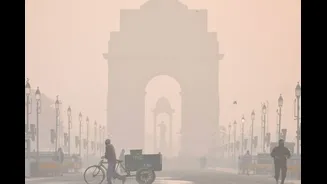
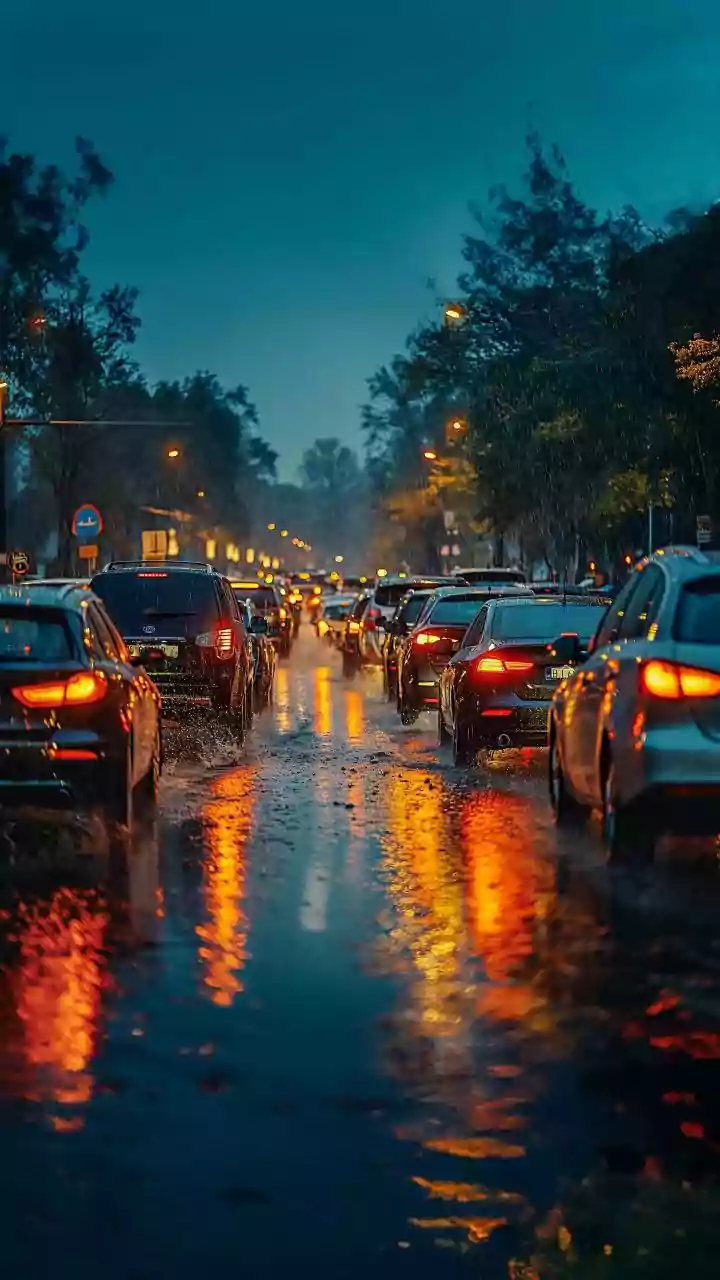
This distinction becomes particularly important in Delhi’s case. The capital continues to face severe pollution episodes, especially during winter. Its AQI frequently climbs above 400, entering the “severe” category, and has at times crossed 450. In January 2026, authorities were forced to invoke Stage IV of the Graded Response Action Plan (GRAP) after pollution reached the most critical levels.
Then how did Delhi finish above Srinagar and Bengaluru? The answer lies in what the survey is designed to reward.
Pollution-Control Efforts, Not Just AQI
The Swachh Vayu Sarvekshan is conducted under the Centre’s National Clean Air Programme (NCAP). The 2026 edition assessed 130 NCAP cities across three population categories.
The evaluation process is also broader than simply checking pollution monitors. Cities conduct self-assessments, which are then scrutinised by state-level monitoring committees. The Central Pollution Control Board evaluates the submissions, followed by field verification by independent teams.
In other words, a city can have significant pollution and still score well if it demonstrates stronger systems and implementation to address that pollution.
Delhi’s improvement is particularly notable because it stood 32nd in the 2025 edition, with a score of 157.3. It has now climbed to 21st with 172 points.
What About Bengaluru And Srinagar?
The official rankings put Srinagar at 26th with 162.6 points, while Bengaluru is 32nd with 152.6 points.
Their lower positions should similarly not be interpreted as proof that their air is necessarily dirtier than Delhi’s. The scores reflect the broader parameters used by the survey, including how cities are implementing pollution-control measures.
This is also why the rankings can produce results that appear counterintuitive when compared with people’s everyday understanding of air quality.
The No. 1 City Too Has A Pollution Problem
The contradiction is visible at the very top of the table. Lucknow has emerged as the No. 1 city in the million-plus category with 198 points, followed by Indore with 197 and Jabalpur with 195.
Yet Lucknow’s achievement does not mean the city has eliminated air pollution. Its PM10 concentration reportedly fell substantially from the 2017-18 baseline, but remained above the national standard of 60 micrograms per cubic metre in 2025-26. Measures credited to the city include electric vehicles for waste collection, mechanised road sweeping and better legacy-waste management.
This illustrates what the survey is really attempting to capture: progress and governance, rather than a simple “cleanest air” contest.
Is India’s Air Actually Improving?
There is some encouraging data. According to the government, 108 of the 130 cities assessed recorded lower PM10 levels in 2025-26 compared with the 2017-18 baseline. But there is an important caveat as only 14 cities actually met the national PM10 standard.
That makes Delhi’s 21st-place ranking worth viewing as a measure of its pollution-control performance, and not a certificate declaring the capital’s air clean.
For Delhi’s millions of residents, the more meaningful test will ultimately be whether these measures translate into fewer days of hazardous air, lower particulate concentrations and, most importantly, less exposure to pollution.
The ranking says Delhi is doing more than some cities to tackle its air-pollution problem. It does not say Delhi has solved it.