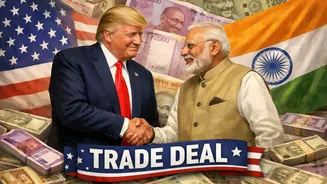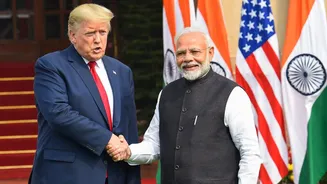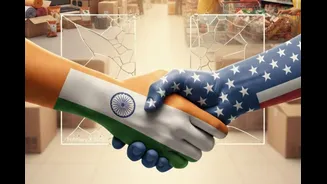

The India-US trade deal is being seen as a significant positive for Indian exporters, particularly after a year marked by steep duties that dented competitiveness in the US market.
Under the new arrangement,
the United States has lowered the so-called reciprocal tariff on Indian imports to 18%, a sharp drop from the punitive levels of up to 50% imposed last year by the Trump administration. The reduction is expected to provide immediate relief to exporters across several labour-intensive and value-added sectors.
A key strategic gain from the tariff cut is India’s improved price advantage over China in the US market. While Indian goods will now face an 18% duty, Chinese exports continue to attract tariffs of around 34%. This differential is likely to nudge global buyers towards Indian suppliers, potentially lifting order volumes and improving margins for domestic companies.
Textiles and apparel are expected to be among the biggest beneficiaries, given that a substantial share of garment exports are destined for the US. Lower duties will translate into more competitively priced Indian clothing on American retail shelves. Small exporters in leather and footwear, many of whom had slowed or halted shipments due to high tariffs, are also likely to resume exports.
The gems and jewellery sector, which had come under pressure over the past year, is expected to regain momentum as reduced duties restore price competitiveness. Similarly, India’s seafood industry stands to gain, with shrimp and frozen seafood becoming more affordable for US consumers, a move likely to boost demand.
Engineering exports, including auto components and specialty chemicals, are also poised for growth. Industry participants expect fresh orders from global original equipment manufacturers, with improved margins allowing companies to expand production capacity. Pharmaceuticals and agricultural exports such as tea, coffee and spices are also likely to benefit from the revised tariff regime.
Market experts believe the tariff relief, combined with closer bilateral cooperation, could strengthen India’s position in global supply chains. Quoted in a report by Moneycontrol, Sonam Srivastava, founder and fund manager at Wright Research PMS, said export-oriented segments such as IT services, pharmaceuticals, specialty chemicals, auto ancillaries and select engineering goods were likely to gain the most.
Divam Sharma, co-founder and fund manager at Green Portfolio, echoed this view, noting that textiles, auto ancillaries, engineering and specialty chemicals could see “major gains” from the deal. He added that the agreement aligns closely with the 2026 Union Budget’s emphasis on integrating India more deeply into global manufacturing and supply-chain networks.
From a technology standpoint, analyst Parikh Jain said the agreement could encourage further investment by US tech firms. According to him, American companies are likely to continue selling cloud, data centre and artificial intelligence services in India through domestic partners, easing concerns about India developing a parallel technology stack. He noted that ongoing engagement with firms such as Microsoft, Google, Amazon and Dell would ensure continuity and stability in the sector.