









For thousands of Indians living and working in the United States on temporary visas, the journey to a Green Card is often a years-long wait.
Now, the Donald Trump administration has revived a controversial
immigration policy that could add another layer of scrutiny to that process. The rule, known as the “public charge” rule, allows US immigration authorities to consider whether an applicant is likely to become dependent on government benefits while deciding certain immigration applications, including Green Cards.
The move has sparked concern among immigrant communities, including Indians, many of whom are navigating lengthy employment-based immigration queues.
What Is The ‘Public Charge’ Rule?
The US Department of Homeland Security (DHS) announced that it is reviving the public charge policy, arguing that immigrants seeking permanent residence should be able to support themselves financially rather than rely on taxpayer-funded welfare programmes.
ALSO READ | Student Visa Delays? US Embassy Reassures Indians Amid Proposed H-1B, Green Card Overhaul
According to the department, reported by AP, officers will once again examine whether an applicant is likely to become a “public charge” when deciding applications for lawful permanent residence. The administration says the policy is aimed at ensuring immigrants are financially self-sufficient.
Why Is This Back Now?
The Hill reported that the rule was first expanded during Trump’s first term in 2019 but was later rolled back by the Biden administration.
The Trump administration has now restored the policy, saying it is enforcing long-standing provisions of US immigration law that require applicants for permanent residency to demonstrate financial independence.
What Benefits Could Matter?
According to the administration, immigration officials may consider an applicant’s use of certain public benefits while assessing whether they are likely to become dependent on government assistance.
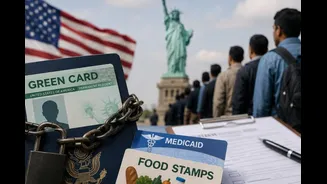
The benefits that could be taken into account include—Medicaid (with certain exceptions), Supplemental Nutrition Assistance Program (SNAP), commonly known as food stamps, cash assistance programmes, and some housing assistance programmes.
Officials say the rule does not automatically deny a Green Card to anyone who has received these benefits. Instead, benefit usage forms part of a broader assessment of an applicant’s financial circumstances.
Does This Affect Every Indian In The US?
No. The policy mainly affects people applying for lawful permanent residence (Green Cards) where the public charge assessment applies.
ALSO READ | ‘Moral Turpitude’: Can US Green Card Holders Be Deported More Easily Now? What It Means For Indians
Many Indian nationals in the US are on H-1B, L-1, F-1 or other temporary visas. Merely holding these visas does not mean the rule automatically applies in the same way. Similarly, several categories of immigrants are exempt from the public charge test under US law.
Why Are Indians Paying Attention Then?
Indians make up one of the largest groups waiting for employment-based Green Cards in the United States. Many have lived and worked in the country for years while waiting for permanent residency because of visa backlogs.
Immigration lawyers say any policy that increases scrutiny during the Green Card process naturally draws attention from Indian professionals and their families, even if many may never have used public assistance.
Will Using Medicaid Automatically Lead To Rejection?
No. The revived policy does not create an automatic disqualification.
Instead, immigration officers examine multiple factors, including an applicant’s income, assets, employment history, education and skills, health, age, and affidavit of financial support, where applicable. Use of certain public benefits may be considered alongside these factors rather than serving as the sole basis for a decision, The New York Times reported.
What Is The Administration Saying?
The Trump administration has defended the move by arguing that immigrants seeking permanent residence should be financially self-reliant.
Officials say the rule is intended to protect taxpayer-funded welfare programmes and ensure that permanent residency is granted to applicants who can support themselves without depending on government assistance.