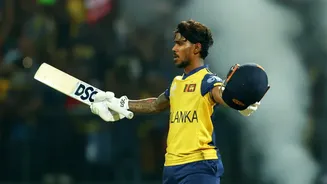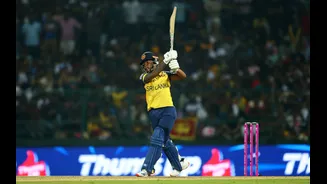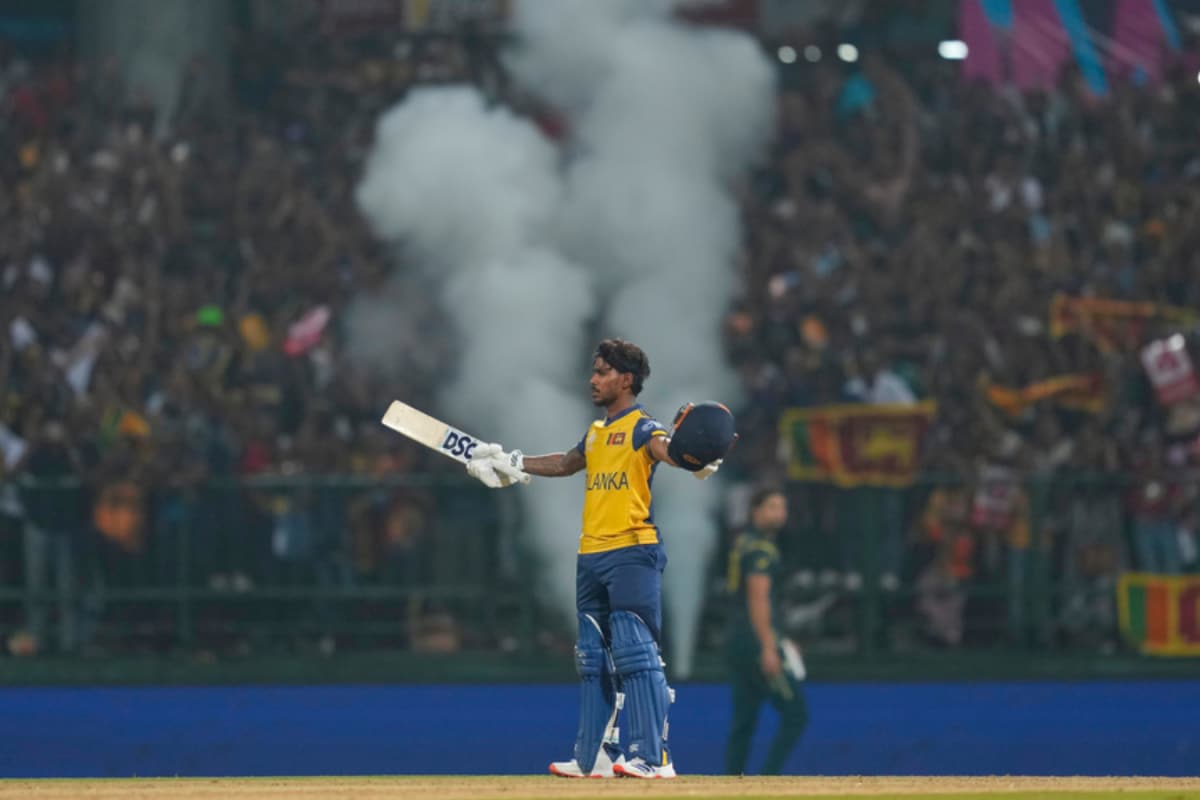





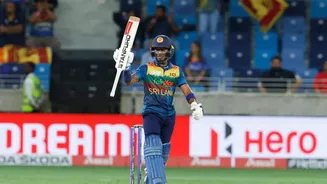
On Monday, opener Pathum Nissanka transformed a challenging chase into an easy victory, his aggressive 52-ball 100 propelling Sri Lanka to an eight-wicket win over Australia and securing their spot in the Super
Eights.
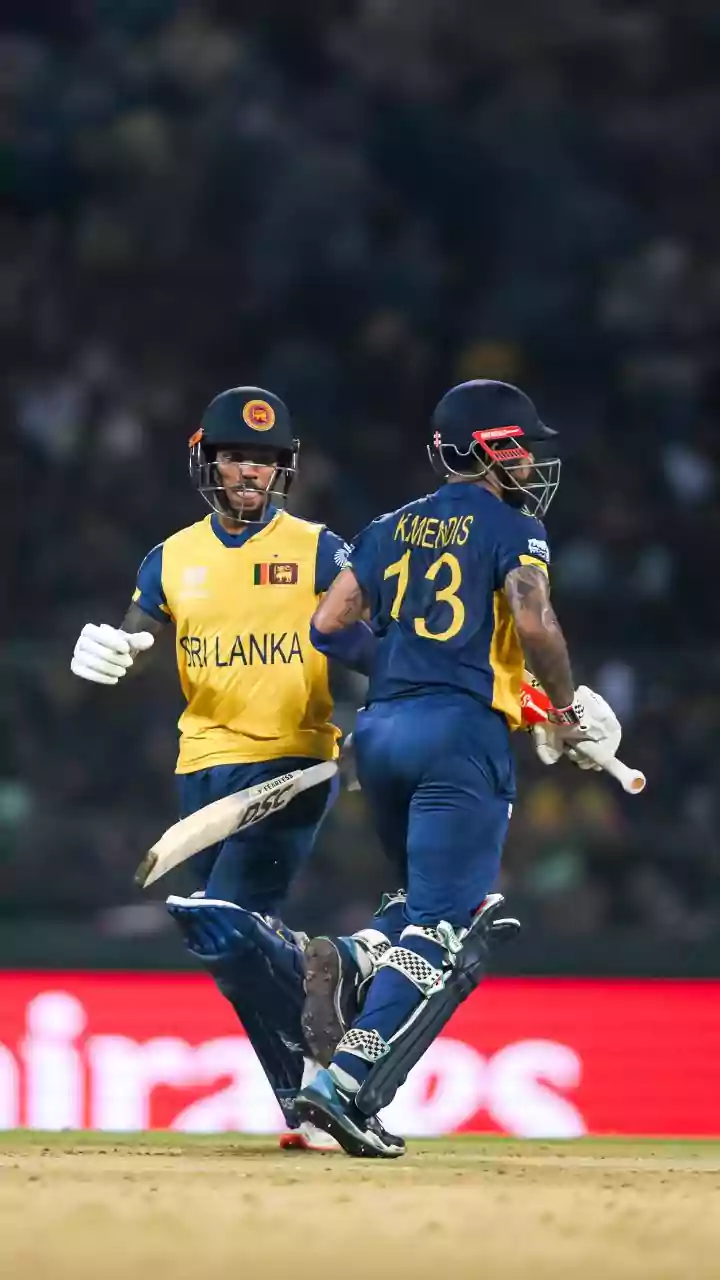
Chasing a record target of 182 at this venue, Sri Lanka relied on Nissanka’s unbeaten century and Kusal Mendis’s 38-ball 51 to accomplish the task in 18 overs, leaving Australia’s qualification hopes in jeopardy.
Pavan Rathnayake remained not out on 28 off 15 balls.
Nissanka hit 10 fours and five sixes during his match-winning innings.
Australia must now win by a substantial margin against Oman in their final match and depend on both Sri Lanka and Ireland to defeat Zimbabwe to have any chance of progressing. If Zimbabwe beats Ireland on Thursday, Australia will be eliminated even before facing Oman in their last group stage game.
How Sri Lanka Beat Australia?
Earlier, Mitchell Marsh and Travis Head scored explosive fifties before Sri Lanka rallied to bowl out Australia for 181.
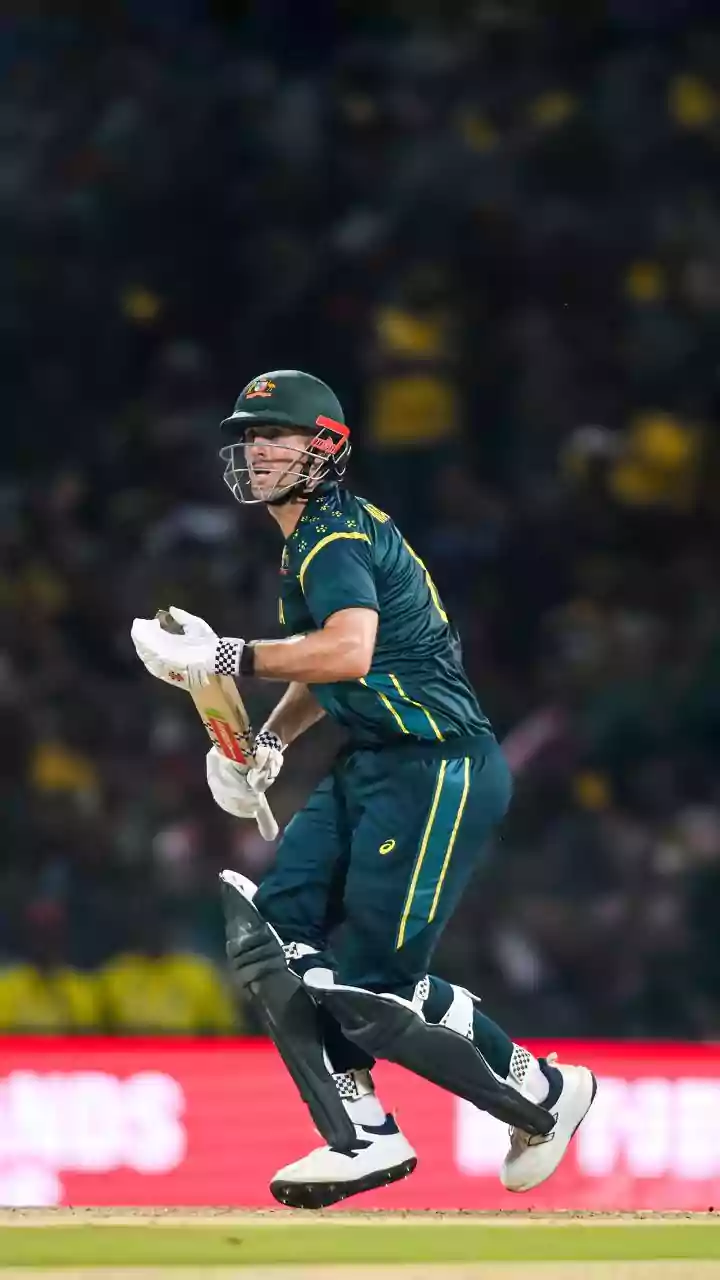
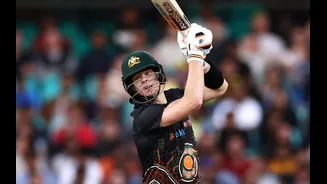
Returning to the playing XI after missing the first two matches due to injury, Marsh made an immediate impact with a 27-ball 54.
Head was equally destructive, scoring 56 off 29 balls, as the opening pair added 104 runs in less than nine overs, setting Australia up for a 200-plus total.
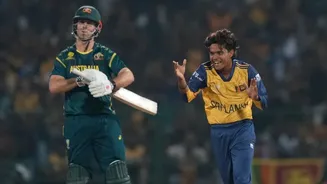
However, Sri Lanka performed much better in the last 10 overs, with leg-spinner Dushan Hemantha (3/37 in 4 overs) becoming the most successful bowler for the home team. The last four Australian wickets fell for only six runs.
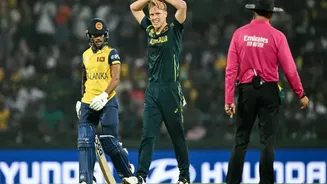
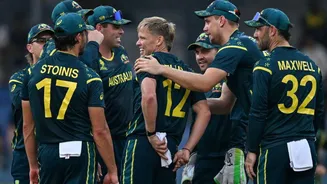
In the chase, Sri Lanka suffered an early setback when Kusal Perera failed to properly connect with a Marcus Stoinis delivery, slicing it to the deep backward point fielder.
The packed stands at Pallekele International Stadium fell silent, but Nissanka and Mendis had other plans, adding 97 runs for the second wicket to keep Sri Lanka ahead at the halfway point of their innings.
With 89 runs needed from 60 balls and nine wickets in hand, Sri Lanka was confident of reaching the target.
However, Stoinis struck again as Kusal Mendis hit one straight to the deep mid-wicket fielder, giving Australia an opening. Nevertheless, there was no stopping Nissanka.
Earlier, opting to field first backfired for Sri Lanka as Australia got off to a flying start with Marsh and Head marking their return with a flurry of boundaries and sixes.
Following their 23-run defeat to Zimbabwe, Australia began aggressively, collecting 16 runs in the first over bowled by Dushmantha Chameera.
Marsh started his innings in style, driving one beautifully off the back foot through the off side.
Head clipped a Chameera half-volley off his pads to get off the mark with a four before Marsh pulled the pacer for a six over midwicket.
Head hit two fours against Maheesh Theekshana to maintain the momentum.
If the early onslaught by Head and Marsh was not enough, Sri Lanka faced a significant blow in the third over when Matheesha Pathirana, the 23-year-old slinger, hobbled off the field with a hamstring injury, leaving Dasun Shanaka to complete the over.
Shanaka was driven through point for a boundary by Head on his first ball, and then the left-handed power-hitter clobbered the bowler over deep square leg for a maximum.
Marsh hit Maheesh Theekshana for five successive boundaries as Australia raced to 70 for no loss in the power play.
Hoping to stem the run flow, skipper Shanaka introduced leg-spinner Dushan Hemantha into the attack, but Head welcomed him with a six and a four. In the next over, Marsh hit left-arm spinner Dunith Wellalage for a four and a six.
Marsh brought up Australia’s hundred with a six off Hemantha.
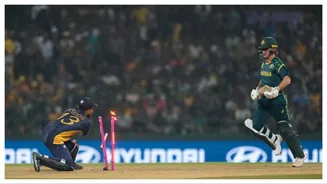
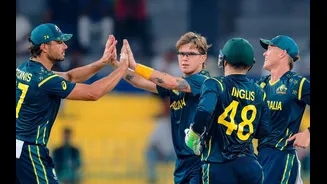
However, Australia lost a cluster of wickets thereafter, slipping from 104 for no loss to 130 for four and never recovered from that.
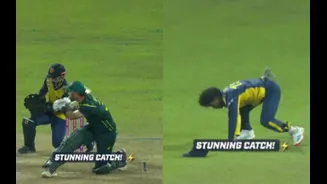
Glenn Maxwell made 22 off 15 balls before Pathum Nissanka made amends for an earlier dropped catch by pulling off a diving stunner at point. Inglis, who got a life even before opening his account, contributed a 22-ball 27, but Australia ended well short of what was an expected total at the halfway stage.
(With inputs from Agencies)