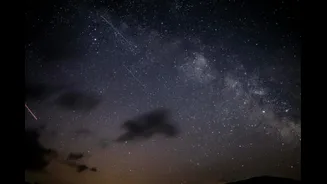









Skywatchers, this is your moment. India is set for a dazzling celestial show this week as the annual Geminids meteor shower peaks between December 13 and 15.
One of the most reliable meteor displays of the year,
the Geminids are expected to produce more than 100 meteors per hour from dark, open locations. The streaks originate from asteroid 3200 Phaethon, known for shedding rocky debris that burns into bright, chunky trails as Earth drifts through its path.
When To Watch The Geminids In India
The shower will reach its strongest phase on the night of December 13-14, with activity intensifying after midnight.
The best viewing window is 12 am to 4 am on December 14, when the radiant in the constellation Gemini climbs high in the eastern sky. Meteors may appear earlier in the night, but the post-midnight period offers the highest chances of spotting long, clear streaks.
This year’s conditions are especially favourable. A 25 per cent waning crescent Moon rises around 3 am, keeping skies dark enough for even faint meteors to stand out.
How To Watch Geminids If You’re In A City
Anyone stuck under bright city lights can still enjoy the spectacle through online streams. The Virtual Telescope Project, led by astrophysicist Gianluca Masi, will host a high-definition live feed from its dark-sky observatory in Italy.
Other streams, including those tagged under “Geminids 2025 live,” may appear on YouTube from organisations like NASA and the International Meteor Organisation.
To make online viewing more immersive, turn off room lights, sip something warm, and use a star-chart app to track the radiant.
How To Choose The Perfect Spot Outdoors
If you prefer stepping outside:
Find the darkest possible location like a terrace, park, village field or hilltop.
Ensure an unobstructed horizon, free from tall buildings or trees.
Allow 20-30 minutes for your eyes to adjust.
Skip telescopes and binoculars. Your naked eyes are ideal for wide-sky viewing.
Carry warm layers, a mat or reclining chair, and a torch covered with red film to preserve night vision.
What You Will See
The meteors appear to originate from Gemini, but can streak across any part of the sky. Expect a mix of fast, needle-thin flashes; bright, slow-moving streaks and occasional fireballs. These would be larger meteors that flare dramatically.
With Earth sweeping through Phaethon’s dense debris at nearly 35 km/s, each streak is a brief flash of cosmic dust burning high above the atmosphere.
The Geminids
The Geminids are asteroid-born, unlike most meteor showers that come from comets. Their rocky origin produces sturdy particles that create bold, colourful meteors. With a zenith hourly rate of up to 150 under perfect conditions, they rank among the most intense annual showers, rivalled only by the summer Perseids.