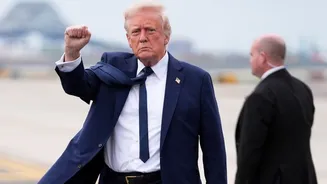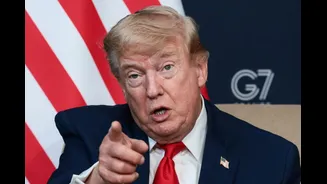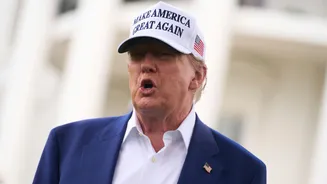




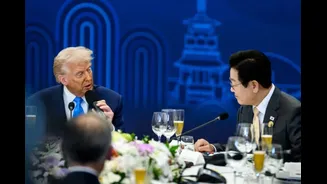

United States President Donald Trump is pressing his administration to explore another face-to-face meeting with North Korean leader Kim Jong Un, potentially as early as this autumn, even as Washington
and Seoul scale back their annual military exercise on the Korean Peninsula, according to a report published by The Wall Street Journal.
Trump has privately raised the possibility of meeting Kim during a prospective Asia trip in November, when leaders are expected to gather for the Asia-Pacific Economic Cooperation summit in Shenzhen, China, according to US officials cited by The Wall Street Journal. No formal preparations have begun, however.
Trump’s Pyongyang Outreach
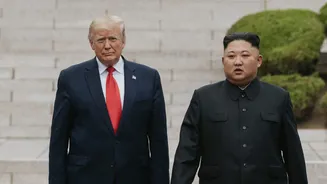
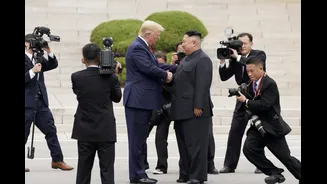
A fresh meeting would revive Trump’s high-profile diplomatic engagement with Pyongyang during his first term, when he became the first sitting US president to meet a North Korean leader. Trump held three meetings with Kim between 2018 and 2019 but failed to secure an agreement that would dismantle North Korea’s nuclear programme.
The president’s renewed interest comes as his administration looks for diplomatic openings abroad while negotiations elsewhere, including over Iran, remain difficult. Trump has indicated that Kim has responded to his recent outreach, although he has not disclosed what was communicated.
The White House has also signalled openness to another summit. A White House official said Trump and Kim would meet at an appropriate time.
Also Read: US, South Korea To End Military Drills Six Days Early After Trump Scale-Back Order
US, South Korea Shrink Military Drill
At the same time, the US and South Korea have agreed to substantially shorten their annual Ulchi Freedom Shield military exercise. The drills, which began on August 17, will now end on August 21 rather than August 27, reducing their duration from 11 days to five.
The allies also plan to scale back portions of the field training. South Korea’s Joint Chiefs of Staff said some adjustments were made at Washington’s suggestion, while a US Defence Department official said several live-training activities had been cancelled or converted into simulations.
The changes followed Trump’s Sunday order to “substantially reduce” US participation in the exercise. He cited his “very good relationship with Kim Jong Un” when announcing the move.
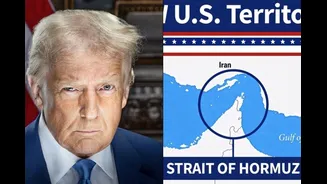
Trump later offered a different explanation, telling reporters that South Korea’s failure to assist Washington in efforts to reopen the Strait of Hormuz had influenced his decision.
North Korea Condemns Drills, South Says ‘No Intention To Attack’
North Korea has once again condemned the joint drills, describing the United States and South Korea as “warmongers” and accusing them of heightening tensions on the peninsula. Pyongyang has long portrayed the exercises as preparations for an invasion, while Washington and Seoul maintain that they are defensive in nature and essential for military readiness.
The reduction has also raised questions in Seoul. South Korean Foreign Minister Cho Hyun said lawmakers were told that officials in Seoul and Washington had not been informed beforehand about Trump’s order. President Lee Jae Myung, meanwhile, reiterated that the exercises were defensive and that South Korea had no intention of attacking the North.
Also Read: ‘Open Threat’: North Korea Slams US-South Korea Drills Despite Trump Order To Scale Back
Nuclear Standoff
Trump’s earlier attempts to engage Kim produced historic images but little lasting progress. The two leaders signed the “Singapore Declaration” in 2018, pledging to work towards a new relationship and the denuclearisation of the Korean Peninsula. Their second summit, in Hanoi in 2019, collapsed after Washington rejected Pyongyang’s offer to dismantle part of its nuclear programme in exchange for sanctions relief.
A subsequent meeting at the Demilitarised Zone involving Trump, Kim and then-South Korean President Moon Jae-in also failed to break the impasse.
Since then, North Korea’s nuclear and missile capabilities have expanded. Independent experts estimate that Pyongyang could possess dozens of nuclear warheads, although some analysts now believe previous estimates significantly underestimate the size of its arsenal.
US intelligence has continued to identify Pyongyang’s weapons programme as a major security threat. The annual US intelligence assessment in March said, “North Korea remains committed to expanding its strategic weapons programs, including missiles and nuclear warheads, and to solidifying its deterrent capability.”
North Korea, meanwhile, has consistently sought recognition of its nuclear status and an end to US demands for complete denuclearisation.
With inputs from Reuters