






The latest Ebola outbreak in the Democratic Republic of the Congo (DRC) has spread to a sixth province after a death was recorded in previously unaffected Bas-Uele, according to Jean Kaseya, Director-General
of the Africa Centres for Disease Control and Prevention.
Kaseya said on Thursday that the man died in Buta, the capital of Bas-Uele province, after travelling from Isiro in neighbouring Haut-Uele, where Ebola cases had already been reported.
The development marks another worrying expansion of an outbreak that health authorities say is spreading at an alarming pace. “If we do not stop this outbreak, it will last more than a year and will be the largest in the world,” Kaseya warned, adding that prolonged transmission would also increase the risk of the virus spreading to other countries.
According to government figures reported this week, 4,566 cases and 2,128 deaths have been recorded. The outbreak began in northeastern Ituri province and has since reached North Kivu, South Kivu, Haut-Uele, Tshopo and now Bas-Uele. WHO has described the outbreak as spreading at an exceptionally rapid pace.
WHO Director-General Dr Tedros Adhanom Ghebreyesus warned this week that, “at its current pace”, the outbreak could surpass the 2014-2016 West Africa epidemic, the deadliest Ebola outbreak on record, which killed more than 11,000 people.
But why has containing the latest outbreak proved so difficult?
How Does Ebola Spread?
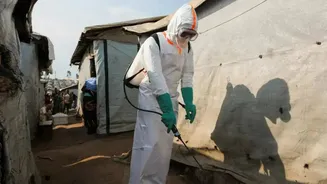
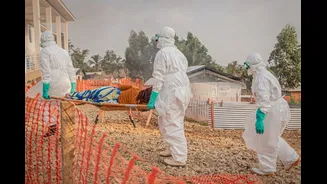
Ebola does not spread through the air in the same way as illnesses such as measles. Transmission occurs through direct contact with the blood or other body fluids of an infected person, contaminated objects, or the body of someone who has died from the disease.
This makes rapid identification and isolation of patients, safe and dignified burials, infection control in healthcare facilities and rigorous contact tracing particularly important. When even one infected person travels undetected, a new chain of transmission can potentially begin elsewhere.
The arrival of Ebola in a sixth DRC province therefore represents more than another point on the outbreak map. It illustrates the central challenge facing health authorities: stopping multiple chains of transmission across a vast region where insecurity, population movement, limited infrastructure and the lack of an approved Bundibugyo vaccine or specific treatment are all working against containment.
A Different Ebola Virus Is Behind The Outbreak
The current outbreak is caused by Bundibugyo virus, one of the viruses capable of causing Ebola disease. This distinction matters because the vaccines and specific treatments developed and licensed for outbreaks caused by Zaire ebolavirus are not currently approved for Bundibugyo virus disease.
WHO says there is presently no licensed vaccine or specific therapeutic for Bundibugyo virus, although vaccine and treatment candidates are being evaluated. Early supportive care, including managing dehydration and other complications, can improve a patient’s chances of survival.
The absence of an approved vaccine removes one of the important tools that has helped health authorities contain some previous Ebola outbreaks through targeted vaccination of contacts and people at high risk.
The Virus Had A Head Start
Although the DRC formally declared the outbreak on May 15 after laboratory testing confirmed the presence of Bundibugyo virus, investigations indicate that transmission had already been occurring before the official declaration.
Such delays are particularly dangerous with Ebola. Identifying infected people, isolating them, tracing everyone they have had contact with and monitoring those contacts are central to breaking chains of transmission. If cases circulate undetected, those chains become considerably harder to reconstruct.
WHO’s early assessments already highlighted weaknesses in contact follow-up, with insecurity and movement restrictions making it difficult for response teams to reach and monitor everyone who may have been exposed.
Conflict Hampers Efforts To Track Cases
Parts of eastern DRC have endured years of armed conflict and displacement. WHO has identified insecurity as one of the major obstacles to controlling the outbreak, alongside inadequate isolation and referral systems in some affected areas.
Violence can prevent health workers from safely reaching communities, interrupt surveillance and make it difficult to transport patients to treatment centres. Displacement can also mean people exposed to Ebola move to another community before health teams can identify or monitor them.
People Are Moving Across Provinces And Borders
The latest case in Bas-Uele demonstrates how human movement can carry the virus into previously unaffected areas. The patient travelled from Haut-Uele to Buta before dying, according to Africa CDC.
The outbreak’s original epicentre in Ituri presents another challenge. WHO describes the area as having significant population and trade movements, while parts of the province are important commercial and mining hubs. Ituri also borders Uganda and South Sudan, increasing the possibility of infections being carried across international borders.
The international risk is not theoretical. Uganda reported imported Bundibugyo virus cases from DRC soon after the outbreak was identified, prompting WHO to declare the event a Public Health Emergency of International Concern in May.
Difficult Terrain And Weak Infrastructure Slow The Response
Containing Ebola requires speed: suspected cases need to be detected and tested, patients isolated, contacts traced, and communities kept informed.
But many affected communities are in areas where poor roads, limited communications and gaps in healthcare infrastructure can make that work considerably harder. The wider humanitarian crisis, insecurity and the combination of remote and densely populated affected areas have all complicated the response, according to WHO.
These challenges become even more significant as the outbreak expands geographically, requiring response teams, laboratories, protective equipment and treatment capacity across an increasingly large area.
Community Trust Is Critical
Ebola outbreaks cannot be controlled through medical interventions alone. People need to report symptoms quickly, cooperate with contact tracers, follow infection-prevention measures and seek treatment rather than hide suspected cases.
WHO stresses that community engagement is essential to bringing outbreaks under control. Misinformation and mistrust can undermine that effort, particularly when communities are already coping with conflict and other crises.