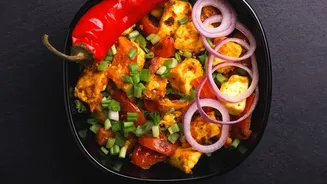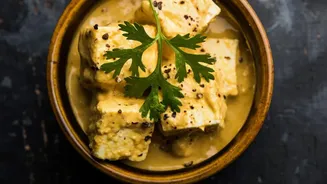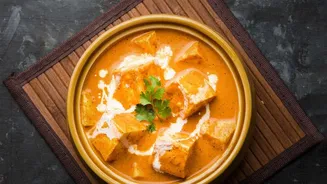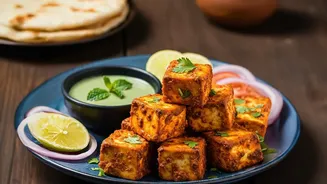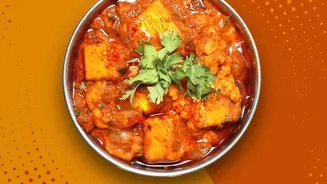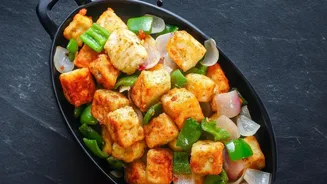

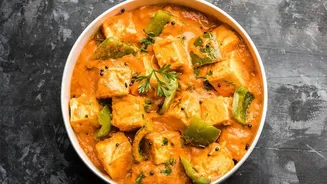


The debate around paneer in India has mostly been about freshness and adulteration for year. But in 2026, a new confusion has entered the national conversation: Is analogue paneer the same thing as fake
paneer?
There is a difference between the two. Analogue paneer can be legal if it is properly labelled and sold transparently. Fake paneer is fraudulent when a product is sold as real milk paneer even though it is not made according to the prescribed dairy standards.
The distinction may sound technical, but it affects millions of consumers who eat paneer in restaurants, order paneer dishes online, buy sweets made from khoya, or purchase loose dairy products from local shops.
What Is Real Paneer?
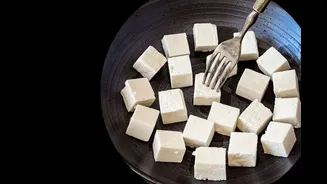
Under India’s food standards, traditional paneer is a dairy product made by coagulating milk with food-grade acids such as citric acid, lemon juice, or vinegar, and then pressing the curd. Real paneer contains milk fat and milk proteins and is regulated under the Food Safety and Standards (Food Products Standards and Food Additives) Regulations, 2011.
What Is Analogue Paneer?
FSSAI defines an “analogue in the dairy context” as a product in which constituents not derived from milk replace milk constituents either partially or wholly, while the final product resembles the traditional dairy product in appearance, texture, or functionality.
In practice, analogue paneer may contain vegetable oil or vegetable fat, starch, emulsifiers, stabilisers, milk solids in small quantities or sometimes none at all.
It is often significantly cheaper than dairy paneer.
What Is Fake Paneer?
Fake paneer is not a separate category recognised by FSSAI. The term is commonly used for products that are substandard (do not meet paneer standards), adulterated, or misbranded, meaning they are sold as real paneer even though they are not. This is where the legal line is drawn.
What FSSAI Has Clarified
In April 2026, FSSAI issued a public notice on the correct labelling of cheese analogues. The regulator said that any analogue product sold simply as “paneer” is a grave violation of the law and must cease immediately. Manufacturers and suppliers were directed to use accurate and unambiguous names, especially when supplying to restaurants and food-service establishments.
FSSAI’s position is therefore not that all analogue products are banned nationwide. The key principle is consumer transparency.
Why The Paneer Confusion Exploded In 2026
The trigger was a combination of food-safety raids and media investigations across several states.
Ahmedabad
The Ahmedabad Municipal Corporation inspected more than 1,000 food establishments early this year and found that several outlets were allegedly using analogue paneer made from vegetable fat while presenting it as milk paneer. Laboratory tests found a number of paneer samples to be substandard due to high vegetable-fat content, and 173 kg of such paneer was seized from dairies in Sola Road, Vejalpur, and Naroda. Fines were imposed on offending establishments.
Nagpur
The Maharashtra state FDA seized 231 kg of analogue paneer valued at about Rs 61,000 from a shop in Darodkar Chowk in September last year. Officials said the product was made using vegetable oil, starch, and milk solids and was being sold without proper labelling or licensing. Khoya was also confiscated for quality testing.
The Maharashtra FDA repeatedly emphasised that paneer substitutes are legal only when clearly disclosed, particularly in institutional kitchens and food-service operations. Officials also highlighted nutritional differences between dairy paneer and analogue products.
The Recent State Crackdowns
In July–August 2026, several states took unusually strong action.
Maharashtra announced a ban on the manufacture, sale, storage, transport, and distribution of analogue dairy products such as artificial paneer and cheese, citing public-health and consumer-protection concerns. Violations can attract penalties under the Food Safety and Standards Act.
Gujarat followed with restrictions on non-dairy analogue variants of paneer, cheese, and butter.
Chhattisgarh imposed a one-year ban on non-standard dairy analogue products including paneer, cream, and butter.
Where Does The ‘Fake Paneer’ Story Fit In?
Separate from analogue products, India has seen repeated cases of adulterated paneer and synthetic khoya.
Recent investigations by India Today in the Delhi-NCR region pointed to networks involving adulterated milk and synthetic khoya supplied to parts of the food chain. Similar festive-season raids have been reported over the years in Uttar Pradesh, Haryana, Rajasthan, and Maharashtra, where authorities seized suspected synthetic khoya, starch-mixed paneer, or other substandard dairy products.
The important distinction is that these cases involve suspected adulteration or food fraud, not merely the sale of a declared non-dairy substitute.
Analogue Paneer Is Cheap, But Is It Healthy?
A kilogram of genuine dairy paneer can cost substantially more than an analogue substitute. Industry reports suggest analogue products may sell for roughly half the price of real paneer in some markets. They also have advantages for bulk cooking: they hold shape, absorb gravy well, and can be cheaper for caterers, hostels, street-food vendors, and restaurants.
If manufactured with approved ingredients in a licensed facility and sold with proper disclosure, it is a regulated food product. The concerns, however, are:
- lower protein quality,
- higher vegetable-fat content,
- nutritional inferiority compared with dairy paneer,
- and most importantly, misleading consumers.
Why FSSAI Is Considering Tighter Controls
FSSAI has initiated consultations on stronger regulation of dairy analogues, including clearer naming conventions and restrictions on the use of traditional dairy terms. The objective is to prevent consumers from mistaking a non-dairy product for a genuine milk product.
There is also discussion around requiring better disclosure in restaurants and hotels, where consumers usually do not see packaged labels.
For consumers, the most useful question is not “Is this paneer fake?” but “Am I being told what I am eating?”
If a restaurant uses real dairy paneer, that is straightforward. If it uses analogue paneer and clearly discloses it, the consumer can decide. If it uses an analogue or adulterated product and sells it as real paneer, it becomes a matter of misbranding and food fraud.