







For nearly three months, India did something most major economies simply could not afford to do—shield consumers from the global oil shock triggered by the West Asia conflict and the closure of the Strait
of Hormuz.
From Washington to Karachi, from Kuala Lumpur to Colombo, fuel prices surged as crude crossed the hundred-dollar mark. In many countries, petrol prices jumped by forty, fifty, even ninety per cent in a matter of weeks. Governments either passed the pain directly to consumers or had no fiscal room left to cushion the blow.
India held the line.
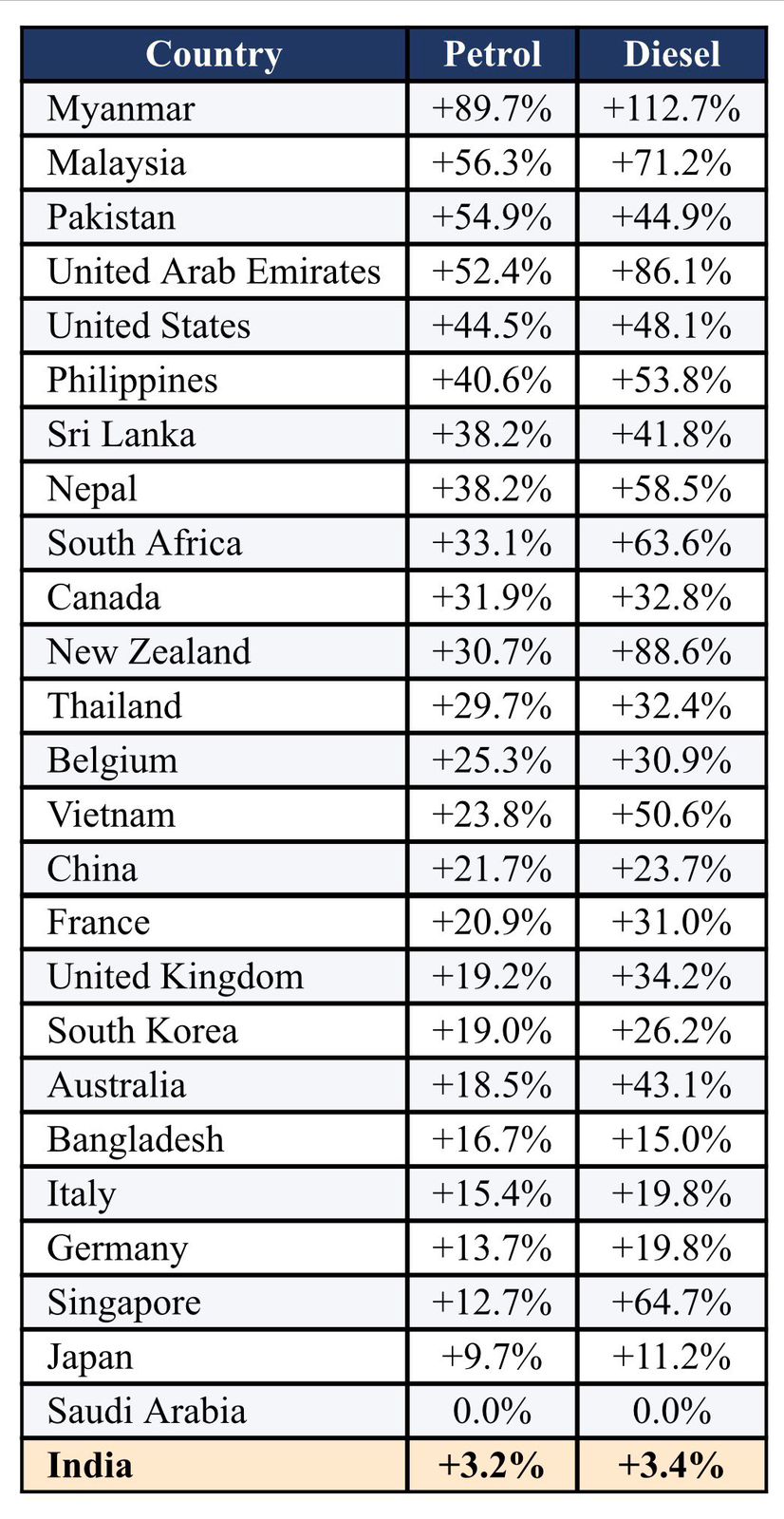
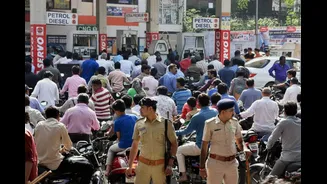
Until today, petrol and diesel prices had remained virtually unchanged from their February levels, despite public sector oil companies reportedly absorbing losses of nearly Rs 1,000 crore every single day. The Rs 3 increase announced now, the first revision in years, translates to around three per cent at the pump.
That number stands out globally.
Pakistan’s petrol prices are up nearly fifty-five per cent since late February. Malaysia has seen a fifty-six per cent jump. In the United States, where fuel prices react instantly to crude movements, petrol is up around forty-five per cent. Even relatively insulated economies like Japan and South Korea have seen significant increases. Diesel prices globally have climbed even faster because of freight and shipping disruptions.
पश्चिम एशिया में युद्ध शुरू होने के बाद दुनिया भर में पेट्रोल और डीज़ल की कीमतों में भारी उछाल आया है। स्ट्रेट ऑफ़ होर्मुज़ के बंद होने और तेल आपूर्ति बाधित होने के कारण अप्रैल और मई के अधिकांश समय ब्रेंट क्रूड 100 डॉलर प्रति बैरल से ऊपर बना रहा। इसका असर दुनिया की लगभग हर… pic.twitter.com/CgyqHIsbOL
— Amit Malviya (@amitmalviya) May 15, 2026
Against that backdrop, India’s fuel price hike looks less like a burden and more like delayed transmission.
Government sources point to one key reason why New Delhi could hold off this long—fiscal strength. India entered this crisis with a relatively stable debt-to-GDP position compared to several emerging economies already under pressure from high borrowing costs and weak currencies. That gave the Centre room to absorb volatility rather than immediately passing it on to households.
And politically too, the government clearly chose caution. Fuel prices remain among the most sensitive economic indicators for ordinary Indians because they affect everything else—vegetables, transport, logistics, household budgets. A sharp spike at the pump quickly turns into inflation everywhere else.
Which is why the timing of this increase matters. The government appears to have calculated that a calibrated rise now is preferable to a much steeper correction later if the conflict drags on.
The larger point, however, is this: crude prices have more than doubled during this crisis. Yet Indian consumers are paying only about three per cent more for fuel.
In a world where most governments have struggled to protect consumers from the oil shock, India has so far managed to buy time. In this context, the Prime Minister Narendra Modi’s appeal to people to lessen the use of cars and personal vehicles makes even more sense.