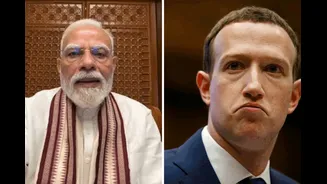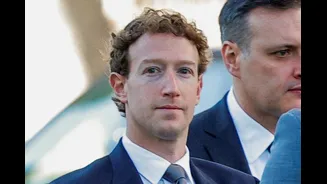





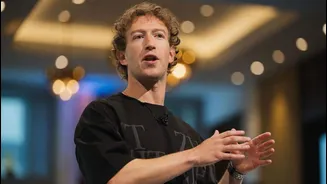
Mark Zuckerberg’s latest apology to the Indian government is more than just about deepfakes. It is the culmination of a decade-long collision between India and Meta over misinformation, political influence,
hate speech, child safety, and now AI-generated deepfakes.
What began in 2016 as a debate over fake news has, by 2026, become a far bigger question: Can a platform that uses algorithms to decide who sees what still claim to be only an “intermediary”?
That question is now at the heart of the latest row between Meta and the Centre.
The current controversy began after a video of Prime Minister Narendra Modi addressing students during the recent youth protests was temporarily restricted on Facebook and Instagram. Meta later restored the video and said the action was caused by an operational or technical error. Following this, the Ministry of Electronics and Information Technology summoned Meta executives, and Meta’s Chief Global Affairs Officer Joel Kaplan apologised to IT Minister Ashwini Vaishnaw for the restriction.
At the same time, another and potentially more serious issue had surfaced. According to government sources, Zuckerberg conveyed an apology over the presence of child sexual abuse material (CSAM), deepfake content and operational lapses on Meta’s platforms. India had earlier directed Meta to remove such content and sought explanations for how it was allowed to appear on Instagram and Facebook.
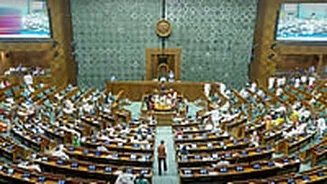
A parliamentary panel led by BJP MP Nishikant Dubey escalated the matter further, arguing that if a platform can decide the reach of content, it cannot hide behind the protections available to a passive intermediary. The panel even warned of action relating to Meta’s safe-harbour protections.
The PM Modi video was, therefore, not an isolated glitch. It became the latest flashpoint in a much larger argument about algorithmic power, political accountability and platform liability.
2016: The Fake News Era
Meta’s India troubles can be traced back to 2016, when Facebook was expanding aggressively across the country. Cheap smartphones and low-cost data brought millions of first-time users online, and Facebook and WhatsApp became primary news sources for many Indians.
That year, the controversy was not deepfakes or AI. It was fake news and manipulated images. Concerns grew that false stories were spreading faster than corrections, especially during elections and communal tensions.
India was not alone; Facebook faced similar criticism globally after the US presidential election. But the scale of WhatsApp usage in India made the challenge uniquely large.
2017-18: WhatsApp Lynchings
The turning point came with a series of mob lynchings linked to rumours spread on WhatsApp. Messages warning of child kidnappers circulated widely, often accompanied by unrelated or edited videos.
Public outrage forced the government to demand stronger safeguards. WhatsApp introduced labels for forwarded messages, limits on forwarding, and public education campaigns.
This was the moment when the Indian government’s approach shifted from “self-regulation” to “platform accountability.”
2019: Elections and political influence
During the 2019 general election, scrutiny intensified over political advertising, coordinated campaigns and disinformation networks.
Meta introduced an ad archive and verification requirements for political advertisers. Yet questions persisted about whether the platform’s algorithms amplified emotionally charged or polarising content because it generated more engagement.
The debate was no longer only about false information, but about how Meta’s recommendation systems shape public discourse.
2020: Hate speech And the Wall Street Journal revelations
In 2020, reports based on internal Facebook discussions alleged that hate speech rules were not always enforced consistently in India. The controversy triggered parliamentary attention and renewed criticism from civil society groups.
For the first time, Meta faced accusations from opposite sides simultaneously: some said it was too permissive, others said it was politically biased.
2021: The IT Rules
The Information Technology (Intermediary Guidelines and Digital Media Ethics Code) Rules, 2021, marked a watershed. The rules required major platforms to appoint compliance officers, enable grievance redressal and, in certain cases, identify the first originator of messages.
Meta challenged some provisions, particularly those affecting WhatsApp encryption. The core legal battle became whether platforms are merely carriers of user content or active entities that organise, rank and distribute it.
That same argument has resurfaced in the current safe-harbour controversy.
2022-23: From Misinformation To Synthetic Media
As AI tools became more accessible, India saw a surge in synthetic or AI-manipulated content. Celebrities, politicians and ordinary users found their images altered. Audio cloning and face-swapping became easier and cheaper.
Meta announced policies against misleading manipulated media, but enforcement proved difficult. Unlike traditional fake news, deepfakes can appear highly realistic and can be produced at scale.
2024-25: The Deepfake Alarm
By 2024 and 2025, deepfakes had become a national concern. Viral videos falsely depicting public figures spread across platforms. The government repeatedly warned social media companies that AI-generated misinformation could threaten elections, public order and personal dignity.
The focus expanded beyond politics to include financial scams, impersonation, sexual exploitation and child safety.
The current crisis is unprecedented because multiple issues have converged at once:
- AI-generated deepfakes
- CSAM-related content and advertisements
- Verified account safeguards
- Algorithmic amplification
- Temporary restriction of the Prime Minister’s video
- Questions over intermediary protection
Hyderabad police also registered a case against Meta India head Arun Srinivas over allegedly abusive videos depicting the Prime Minister that were circulating on Facebook during the recent protests.
The government has indicated that it wants to understand why such lapses continue despite Meta being one of the world’s most sophisticated technology companies.
The most consequential part of the current dispute is legal, not technical.
Government sources have argued that when a platform selects who receives content through algorithms and boosting systems, it may not fit the traditional understanding of a neutral intermediary. Meta, on the other hand, has maintained that it is committed to complying with Indian law while continuing to improve detection and moderation systems.
If India were ever to significantly narrow safe-harbour protections for large platforms, the impact would extend far beyond Meta to every major social media company operating in the country.