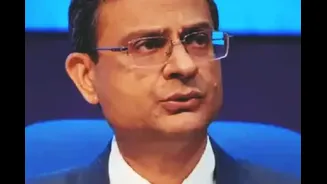








Reserve Bank of India (RBI) Governor Sanjay Malhotra on Wednesday said the introduction of a small merchant discount rate (MDR) on certain Unified Payments Interface (UPI) transactions is unlikely to materially
affect transaction volumes.
“As of now, we do not see any drop in volumes. And I don’t personally think that a small fee will have a major impact on the volumes,” Malhotra told reporters at the RBI headquarters in Mumbai.
The government had last month allowed MDR to be levied on certain UPI transactions. Under the new framework, merchant transactions above Rs 2,000 can attract an MDR of 0.4 per cent, subject to applicable rules and caps.
Speaking hours after the RBI announced a 25-basis-point increase in the repo rate and signalled that a rate cut is not on the immediate horizon, Malhotra said bank credit growth is expected to remain strong.
He said continued credit expansion would support broader economic activity, even as the central bank remains watchful of developments in the financial system.
Malhotra said the RBI is conscious of the potential impact that surplus liquidity could have on asset quality at non-bank lenders. However, he said the central bank does not currently expect such risks to materialise in a significant way.
The RBI Governor also said the banking system is unlikely to remain in a state of exceptionally high surplus liquidity for an extended period.
“The system liquidity will not be in such a high surplus as seen in the last few weeks for a very long time,” he said.
Malhotra also highlighted the strong response to the RBI’s special FCNR(B) deposit mobilisation scheme.
Banks raised nearly $13.3 billion in deposits from the Indian diaspora under the concessional swap facility. The RBI Governor said the response demonstrates the underlying strength of India’s macroeconomic fundamentals.
He also expressed confidence that banks would deploy these funds prudently.
On the external sector, Malhotra said global headwinds have led to some moderation in capital flows and put pressure on India’s current account. However, he termed the pressure temporary and expressed confidence that the country’s Balance of Payments would return to surplus soon. He cited several supporting factors behind the expected improvement in India’s external position.