








Every few days, there is a new opening that makes headlines in India. But it is not all the same. In the subcontinent, the very idea of what a hotel is supposed to be is changing bit by bit. The marble
lobbies and identical king-sized beds aren’t going anywhere, but they’re no longer enough. India’s luxury traveller has changed, and the world’s biggest hotel brands have noticed.
Three very different players, including Marriott’s Autograph Collection, Hilton’s LXR Hotels & Resorts, and UK-based Eight Continents Hotels & Resorts, are each making their move into India, and none of them are doing it the same way. Together, they tell a larger story about what’s really going on in Indian travel right now.
The Palace And The Perfectly Timed Debut
Let’s start with a palace. In the heart of Karnal, Haryana, Noormahal Palace (with its old arched corridors, carved facades, and unmistakable sense of occasion) has just become the first Autograph Collection property in India, a brand under Marriott International that is built entirely around the idea that a hotel should feel like no other hotel in the world. It’s a union that makes a certain kind of obvious sense, once you think about it.
“India’s luxury traveller today is looking for experiences that feel authentic, distinctive, and rooted in culture,” says Colonel Manbeer Sandhu, CMD of the Noormahal Group. “That aligns very naturally with the philosophy of Autograph Collection, which focuses on hotels that have their own identity and story rather than a standard luxury format.”
Autograph Collection’s unofficial motto is “Exactly Like Nothing Else” and Noormahal already was exactly like nothing else before the brand affiliation arrived. What the partnership does is place it in a global framework of discovery, attracting the kind of well-travelled guest who already knows what they’re looking for.
And what are they looking for? According to Colonel Sandhu, something that goes well beyond thread counts and room service. “Guests want hotels that create an emotional connection, whether through local cuisine, heritage, storytelling, curated experiences, or personalised service. There is also a growing interest in slower, more immersive travel where the stay itself becomes part of the overall journey.”
Heritage stays, he says, are booming — and the numbers back it up. Weekend travel, destination weddings, and experience-led bookings have all climbed sharply. “Heritage-led luxury stays are seeing very strong demand, especially from leisure travellers, destination weddings, celebrations, and guests looking for immersive experiences.” Meanwhile, business hotels hold steady, but the energy, and the aspirational growth, lives firmly in experiential luxury.
For global brands trying to figure out how to “do India,” heritage properties are increasingly the answer. They offer something a new-build simply cannot: a story that already exists. “Heritage properties allow global brands to create experiences that feel deeply connected to India’s culture, architecture, and traditions,” says Colonel Sandhu. “Travellers today appreciate hotels that reflect the identity and spirit of the destination rather than offering a uniform global experience.”
LXR Comes To Bengaluru, Carrying A Whole Philosophy
Hilton is not arriving in India quietly. The group already operates Conrad Hotels in Pune and Bengaluru, and has a pipeline that includes Waldorf Astoria properties in Jaipur, New Delhi Aerocity, and Goa, along with Conrad Jaipur and Signia by Hilton Jaipur. But the brand making the most interesting debut right now is LXR Hotels & Resorts (Hilton’s ultra-luxury, independent-spirited collection), which arrives in India with The Den Bengaluru as its first property.
Candice D’Cruz, Vice President of Luxury Brands at Hilton APAC, is direct about who the brand is chasing. “India’s luxury traveller has evolved significantly in recent years. Today, we are seeing a guest who is well-travelled, globally aware, and far more intentional in their choices. There is a clear shift in guests’ expectations from luxury hotels, as they now want to indulge in local experiences that would help them understand the pulse of the place.”
LXR’s answer to this is a programme called Pursuit of Adventure, a guest experience framework that moves beyond the standard spa-and-pool offering into curated local discovery. At The Den Bengaluru, this means anchoring the luxury experience not in traditional grandeur, but in the specific texture of Whitefield, the neighbourhood’s “unique blend of creative energy, cosmopolitan living, and slower neighbourhood rituals,” as D’Cruz describes it. The design will be contemporary and clean, but the soul will be distinctly local.
What does bespoke luxury mean in India, specifically? D’Cruz has a thoughtful answer. “In the Indian context, bespoke luxury is not a new construct. It is rooted in centuries of hosting traditions, craftsmanship, storytelling, wellness rituals and deeply personalised service.” The difference, she argues, is that Indian luxury is “inherently emotional rather than purely process-driven”; it is less about flawless execution of a service standard and more about making a guest feel genuinely known.
The market, she notes, is no longer a future opportunity; it’s a present reality. India’s affluent population is projected to reach 100 million by 2027. The luxury hotel market, currently valued at USD 3.64 billion, is expected to nearly double to USD 7 billion by 2031. “The demand is real, it is growing, and Hilton is firmly positioned to meet it.”
On the geography of growth, D’Cruz draws a useful distinction. Metro cities — Delhi NCR, Mumbai, Bengaluru — remain the backbone of luxury demand: consistent, frequent, driven by a dense concentration of high-spending consumers. But emerging leisure destinations like Goa and Jaipur are where the action is hottest, “fueled by experiential travel, rising domestic tourism, and an increasing preference for curated, occasion-led experiences such as weddings, wellness retreats, and short getaways.” Metros give you volume; leisure destinations give you the highest per-trip spending. Smart brands, it seems, want both.
The Ambitious Outsider With 50 Hotels On The Map
If Autograph Collection is the heritage purist and LXR is the global connoisseur, Eight Continents Hotels & Resorts is the one coming in with the boldest number on the table: 50 hotels across India.
The UK-based brand, with properties like Treetop by Eight Continents and Royalpine by Eight Continents Kasauli already on the ground, and a recent international expansion to Northern Ireland, is bringing what its Managing Director Richa Adhia calls “a globally connected hospitality corridor” to India.
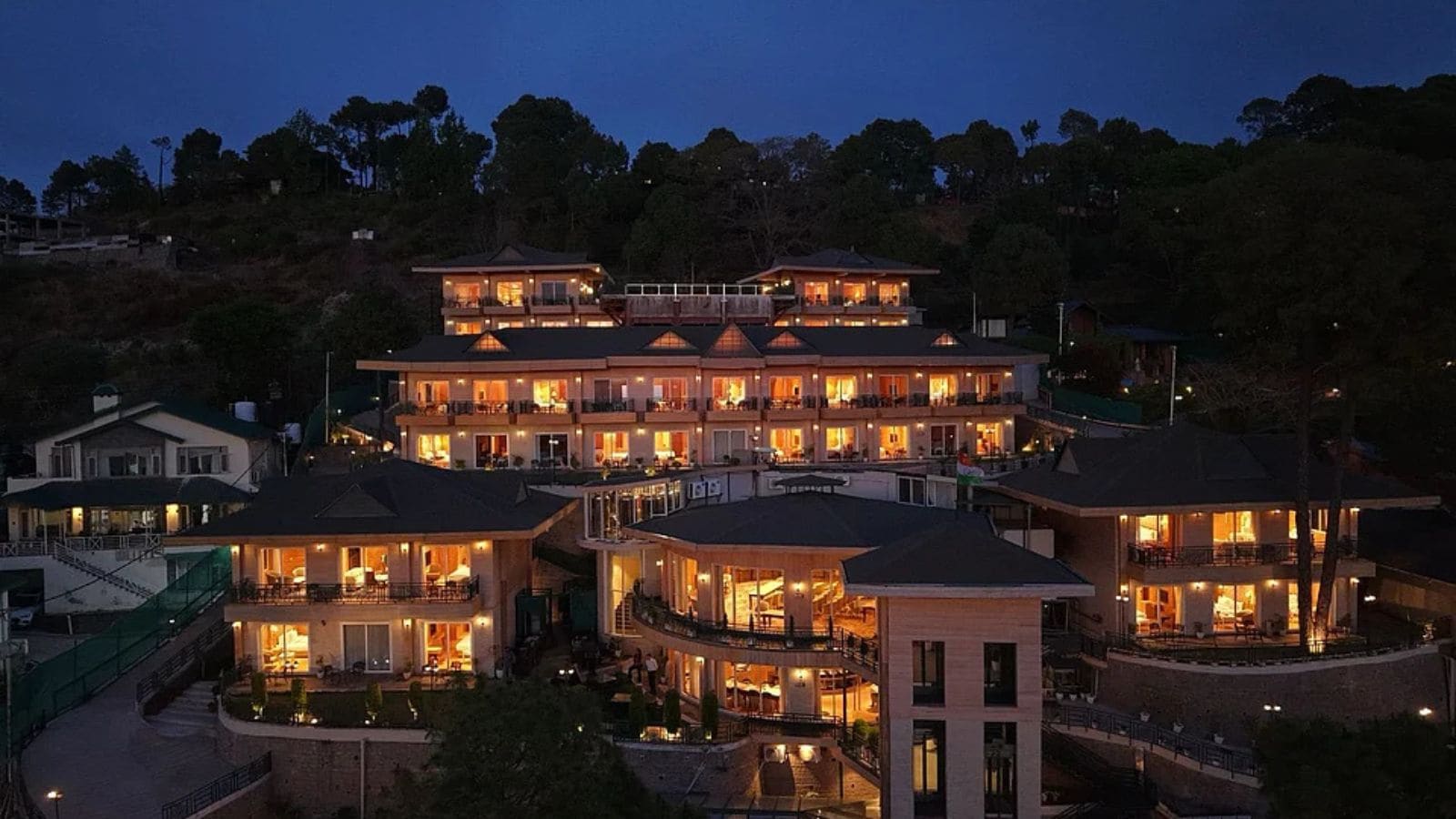
Fifty hotels sounds like a lot, and it is. But the plan isn’t to build 50 versions of the same hotel. “Each hotel is not a replica,” says Adhia. “It is a distinct expression of its location shaped through architecture, interiors, service style, and even the rhythm of guest interactions. We don’t want anything to feel imposed; it has to feel like it belongs there.”
This is where Eight Continents’ pitch gets interesting: it doesn’t want to pick between metros, spiritual destinations, and offbeat circuits. It wants all of it — and it thinks that’s exactly right. “We believe in the strength of a balanced approach,” says Adhia. “Metros give us scale and visibility. Spiritual destinations are no longer just niche, they are becoming deeply meaningful, extended-stay markets with strong cultural depth. Offbeat destinations give us the most freedom to create highly experiential, story-led hotels.”
What did the brand discover about Indian travellers that perhaps surprised it most? “What has genuinely impressed me is how informed and discerning the Indian traveler is today,” says Adhia. “They are globally exposed, highly research-driven, and very clear about what they expect from a stay. They don’t evaluate hospitality on comfort or service alone — they look at the entire experience as a narrative.”
And in a nod to something all three brands seem to agree on, Adhia identifies the most significant shift in Indian travel behaviour: the end of the trade-off between experiential and value-driven stays. “Travelers today expect both together. There is a much stronger focus on intentional travel now, where guests are looking for stays that feel distinctive, well-designed, and rooted in their destination, while also offering a strong sense of value.”
India, she says, is growing in a “non-linear, dynamic way” that makes it both challenging and uniquely rewarding. The UK remains Eight Continents’ most established market, the benchmark, as she puts it, for how the brand thinks about hospitality globally, but India is clearly where the ambition lives right now.