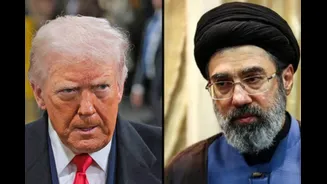




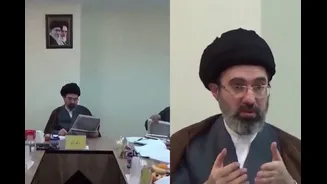


Ever since the US-Israel war on Iran began, there’s one question that has roamed through the corridors of power in Washington and Jerusalem: Where is Mojtaba Khamenei?
Last Tuesday, Iran’s Supreme Leader
hosted a wake for his father and predecessor, Ali Khamenei, who was killed in the February 28 US-Israeli strikes. While thousands of attendees, including several of Ali Khamenei’s sons, assembled at Tehran’s biggest mosque, one person was notably absent: Mojtaba, the host himself, The Atlantic reported.
According to the report, sources close to the regime have speculated that the 56-year-old leader “recently died from the injuries that he had sustained in February.”
News18 Also Covered: Deadlock Over Hormuz To End Soon? Iran, Oman Outline Proposal For Temporary Shipping, Demining In Strait
Once Again, Where Is Mojtaba?
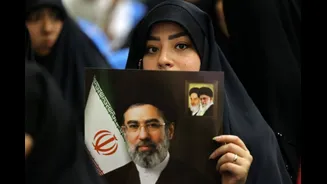
For six months, Mojtaba Khamenei has stayed out of public view. Unlike his father, who used to address the nation frequently during crises, he has not appeared publicly. Neither Iran has released a picture, video, or audio recording of him.
Many of the country’s top political leaders admit that they haven’t seen the Supreme Leader. According to IranWire, not a single cabinet member has met with Junior Khamenei, triggering uncertainty over his well-being.
According to The Atlantic, fewer than five people have met with him since he was named Iran’s Supreme Leader, particularly due to “security precautions”. However, the sudden decline in the frequency of statements from his office has only added to the speculation that Mojtaba is dead.
US-Iran War
On February 28, the US and Israel launched coordinated strikes on Iran, killing then-Supreme Leader, Ali Khamenei, along with many of his family members. In retaliation, Tehran targeted facilities linked to Washington across the Gulf and subsequently blocked the strategic Strait of Hormuz.
Recently, a preliminary Memorandum of Understanding (MoU) between the US and Iran expired. While President Trump said no further talks with Tehran were on the table, reports indicated that discussions to pave the way for peace in the region were quietly continuing.
On Tuesday, Iran and Oman outlined a proposal to jointly establish a temporary shipping channel through the strategic Strait of Hormuz that has emerged as a major conflict zone.
According to an official statement, the two sides will continue talks “with the aim of reaching agreement on a permanent shipping corridor and the future administration of the Strait”.