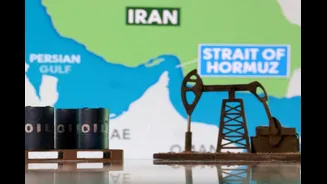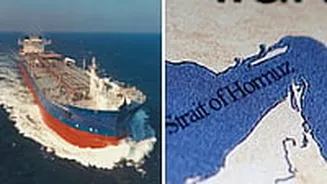









Only a few weeks ago, global markets were gripped by fears that the Strait of Hormuz could shut, pushing crude prices above $100 a barrel and raising the spectre of a energy and trade crisis.
But, today,
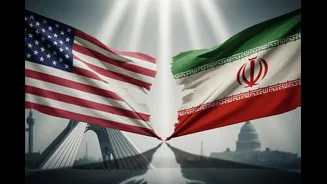
following the US-Iran peace agreement and the reopening of the Strait of Hormuz, oil markets are increasingly betting that the world could see an oil surplus. The International Energy Agency (IEA) expects global oil supply to grow far faster than demand over the next two years, reviving discussions of an oil surplus by 2027.
The war is estimated to have blocked more than 14 million barrels per day (bpd) of West Asia oil output, according to the IEA.
Christof Ruehl, Global Advisor at Crystol Energy, expects crude oil prices to fall below $60 per barrel in 2027 as global supply exceeds demand by more than 1 million barrels per day.
Does this mean India, which imports more than 85% of its crude oil requirements, could see an impact on petrol prices, airline fares, inflation and government finances?
“There won’t be immediate reduction in fuel prices in India,” said Amit Bhandari, Senior Fellow, energy, investment and connectivity at Gateway House. He pointed out that the oil surplus will “help India but price correction itself will take 5-6 months”.
He also stressed that India’s dependence on oil will continue. “Our dependence on oil will not go away as alternatives like renewables and ethanol are not ‘viable’. We will continue to import oil.”
What Does Oil Surplus Really Mean?
Oil flows through the Strait of Hormuz are already showing signs of recovery. According to the International Energy Agency (IEA), shipments that fell from around 20 million barrels per day before the conflict to a low of 9.6 million barrels per day in May have rebounded to about 12 million barrels per day, aided by a rise in ship-to-ship transfers in the Gulf of Oman.
The agency believes this recovery could be the beginning of a much larger shift in global energy markets. It projects that global oil supply will increase by around 8 million barrels per day by 2027, while demand is expected to grow by only 2 million barrels per day, creating the conditions for a significant supply surplus.
Such an oversupply could provide much-needed relief to oil-importing economies by easing price pressures and allowing countries to rebuild emergency stockpiles that were depleted during the recent West Asia crisis. It may also encourage governments to strengthen their strategic petroleum reserves as they reassess long-term energy security policies.
The IEA expects oil exports from the Gulf to recover gradually if the US-Iran agreement remains intact. A lasting deal and the removal of restrictions on Iranian exports would allow additional crude to return to international markets, further improving supply conditions and reinforcing expectations that geopolitical risk premiums in oil prices could continue to ease.
Why Markets Are Talking About An Oil Surplus Again
Several developments are converging to create expectations of excess supply.
The biggest is Iran’s potential return to international oil markets. If sanctions are eased and production gradually recovers, millions of additional barrels could become available to buyers.
At the same time, the reopening of the Strait of Hormuz is expected to release more than 60 million barrels of oil that were effectively stranded during the recent disruption.
OPEC+ is also increasing production quotas after years of supply restraint, while producers outside the cartel, including the US, Brazil, Guyana and Canada, continue to expand output despite recent price volatility.
The IEA believes these trends could fundamentally reshape the market.
Options markets are already reflecting this changing outlook, with traders increasingly positioning themselves for lower prices rather than another supply shock.
How China Moved The Price Of Oil
After the war, the oil price had at one point hit $120 a barrel. Analysts had warned ominously that oil would reach $200 a barrel. But the prices did not breach the $120-mark, thanks to China.
China, which is the biggest oil buyer in the world, has been rapidly reducing the amount of its oil imports. Before the war began, China imported an average of 11.6 million barrels per day. By May, its purchases of overseas oil had plunged to below eight million barrels a day, its lowest point in over eight years, according to customs data released by Beijing.
While oil prices hit three-month low on Monday as the US and Iran said they reached a framework agreement for ending the war, analysts said China will still hold considerable sway over the global market, according to a New York Times report.
“China has been buying less oil and processing less crude than before, partly because it has been drawing on its strategic petroleum reserves. As the world’s largest oil importer, that slowdown has significant implications for global demand. We’ve also seen automobile sales in China decline over the past five years, often in double digits, which has further softened oil consumption,” explained Bhandari.
Why The Market May Be Getting Ahead Of Itself
Despite growing optimism, analysts caution that an oil surplus is far from guaranteed.
OPEC, however, is far less convinced that the world is heading for an oil glut. The producer group has pushed back against the IEA’s forecast of a significant supply surplus, arguing that the projections are not backed by sufficient market data.
OPEC Secretary General Haitham Al Ghais said OPEC’s market outlook is based on actual supply-demand fundamentals rather than assumptions that could amplify price swings. He stressed that the organisation’s objective is to present a balanced assessment of market conditions rather than issue projections that grab headlines.
His remarks also highlight a broader divide between the world’s two most influential energy agencies. While the IEA sees the possibility of abundant supplies and downward pressure on prices, OPEC believes the market remains far more uncertain and warns that overly optimistic forecasts could themselves fuel volatility.