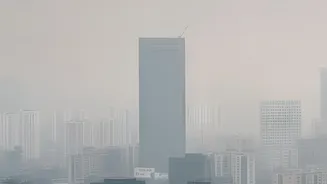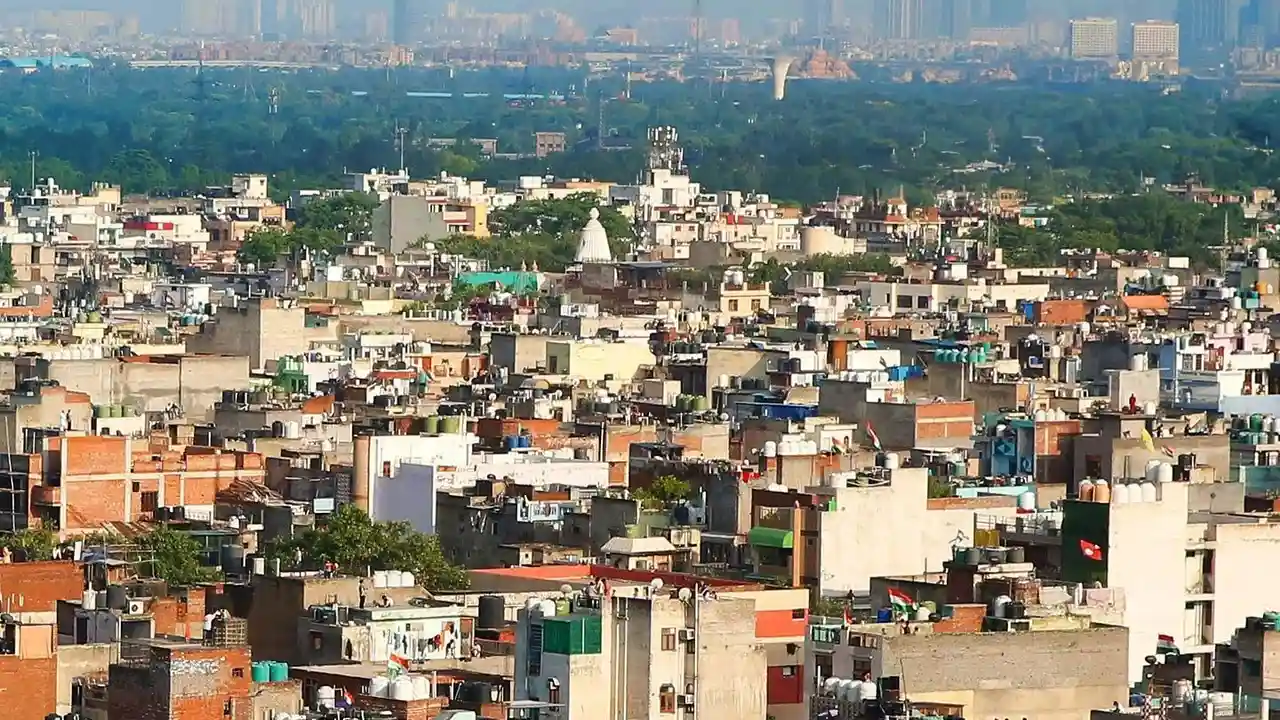








Every winter, as large parts of north India disappear under a blanket of smog, the conversation tends to revolve around air quality indices, school closures, masks and hospital visits. But there is another
cost of polluted air that receives far less attention—the hit to India’s economy.
The damage is not limited to people falling ill and missing work. Employees who turn up despite coughing, struggling with headaches or feeling fatigued may not be able to perform at their usual level. Businesses lose customers when people avoid stepping outdoors, while households and governments face rising medical expenses. Pollution also affects agricultural output and, over time, the productivity of the workforce India needs to sustain its growth.
The scale of the problem is reflected in a recent analysis by Dalberg Advisors and the Clean Air Fund. According to figures, air pollution cost the Indian economy around $260 billion in 2024—equivalent to roughly 6 per cent of GDP. The analysis suggests that cutting PM2.5 pollution by around 20 per cent could help avert $85 billion in economic losses by 2030.
So, how exactly does dirty air translate into an economic cost, and what could cleaner air mean for India’s growth?
The Hidden Cost Of Working Through Smog
One of the biggest economic consequences of air pollution may not show up in attendance records or company accounts. It is the loss of productivity when employees continue working despite being unwell.
This is known as presenteeism. Unlike absenteeism, where workers miss a shift because of illness, presenteeism refers to people turning up for work but operating below their usual capacity. Persistent coughing, breathing difficulties, headaches, fatigue and poor concentration can affect the quality and pace of their work.
The Dalberg-Clean Air Fund analysis identifies presenteeism as the largest contributor to India’s business losses linked to air pollution. It also identifies absenteeism, premature mortality, healthcare expenditure and reduced consumer spending as other major channels through which pollution affects businesses.
According to doctors quoted by NDTV, an employee taking a sick leave is noticed, “but what about someone who comes to work every day while dealing with a cough, breathing difficulties, headaches or constant fatigue?”
The impact is particularly relevant for sectors that depend on concentration, skilled labour and consistent output. It also extends beyond offices. Construction workers, delivery personnel, transport staff and others who work outdoors have limited ability to avoid exposure or shift their work indoors.
A 2021 report by Dalberg and the Clean Air Fund, which estimated the annual cost of air pollution to Indian businesses at $95 billion, had already highlighted the productivity problem. It estimated that presenteeism reduced employee productivity by 8-10 per cent on high-pollution days in 2019, translating into losses of around $24 billion that year. The report also estimated that absenteeism cost businesses $6 billion.
Healthcare Bills Only Part Of The Cost
Air pollution increases the risk of respiratory illnesses as well as cardiovascular conditions, including heart disease and stroke. Fine particulate matter, particularly PM2.5, is small enough to penetrate deep into the lungs and enter the bloodstream. Long-term exposure is associated with serious health consequences, including chronic respiratory disease and lung cancer.
The financial burden is spread across households, employers, insurers and public healthcare systems. Families pay for consultations, medicines, tests and hospitalisation. Governments have to devote resources to treating illnesses that could, in part, be prevented by reducing exposure. Employers face medical claims, health-related absences and the cost of replacing workers who become too unwell to continue working.
In fact, a report put pollution-related healthcare expenditure in India at $12.3 billion in 2024.
The wider economic impact of pollution-related deaths and illness was also examined in a 2021 study published in The Lancet Planetary Health, based on the Global Burden of Disease Study 2019. Researchers estimated that air pollution was responsible for 1.67 million deaths in India in 2019.
The study calculated that lost economic output due to premature deaths amounted to $28.8 billion, while illness-related losses accounted for another $8 billion. Together, the estimated loss was $36.8 billion, or 1.36 per cent of India’s GDP in 2019.
The researchers also found that the burden was unevenly distributed. The economic loss as a share of state GDP was highest in several lower-income states, including Uttar Pradesh, Bihar, Rajasthan, Madhya Pradesh and Chhattisgarh. Delhi recorded the highest per-capita economic loss.
The $36.8-billion figure measures lost output due to premature deaths and illness; it is not a complete estimate of all healthcare spending or every economic consequence of pollution. It nevertheless shows how the health burden translates into a loss of productive capacity.
When People Stay Indoors, Businesses Lose Customers
Pollution also affects the economy from the demand side.
On days when the air turns hazardous, people are more likely to cancel outdoor plans, avoid crowded markets, spend less time dining out and reconsider travel. This can hit restaurants, retail outlets, entertainment venues, tourism operators and other businesses that depend on people stepping out and spending money.
The effect is not limited to a few days of severe smog. If poor air quality becomes a recurring feature of a city, it can influence consumer habits, the attractiveness of a destination and the willingness of businesses and workers to remain there.
The impact on tourism can also extend to jobs in hotels, restaurants, transport, local markets and other services. A destination’s appeal is shaped by more than its monuments, food and hospitality; the quality of the air can influence travel decisions too.
Pollution A Threat To Agriculture, Food Security
The economic cost of air pollution does not stop at the city limits. Certain pollutants, particularly ground-level ozone, can damage crops and reduce agricultural yields.
Ozone at ground level is different from the protective ozone layer in the upper atmosphere. It forms when pollutants released by vehicles, industries and other sources react in sunlight. It can enter plant leaves and interfere with photosynthesis, affecting crop growth.
A 2024 study published in the journal Agricultural Systems examined the impact of surface ozone on rice production in India between 2005 and 2020. It estimated that rice production losses increased from 7.39 million tonnes in 2005 to 11.46 million tonnes in 2020. The researchers put the economic loss due to ozone-related rice yield reductions at $2.92 billion in 2020.
Another study, published in Science of the Total Environment in 2024, examined ozone pollution in the Indo-Gangetic Plain. It estimated that wheat production losses in selected districts amounted to 3.4 million tonnes between 2019 and 2021, worth around $923 million.
The study estimated that wheat yield losses in the region were 11.3 per cent in 2021. It also calculated that meeting the World Health Organization’s air-quality guidelines for ozone could have averted 11,407 premature deaths in the same year.
These findings underline a less visible consequence of polluted air: it can affect both the health of people working on farms and the output of the land they depend on. Lower yields can translate into lost farmer income, pressure on food supplies and wider economic costs.
The Cost To India’s Growth Ambitions
The economic consequences of pollution go beyond the immediate losses suffered by individual companies or households. Poor air quality can make cities less attractive to workers and investors, raise the cost of doing business and weaken the productivity gains that India needs to sustain economic growth.
The World Bank has warned that much of India’s population is exposed to unhealthy levels of ambient PM2.5. In its June 2026 assessment of India’s air pollution challenge, it cited the 2019 estimate of $36.8 billion in lost output from premature deaths and illness, equivalent to 1.36 per cent of GDP.
The World Bank has also pointed to the effect of pollution on labour productivity, healthcare costs and investment decisions. For companies deciding where to locate operations, the health and productivity costs associated with poor air quality can become part of the business calculation.
The challenge is particularly complex because pollution does not respect city or state boundaries. Emissions from transport, industry, power generation, construction, agriculture, waste burning and household fuels can travel across regions. The World Bank has therefore emphasised the need to manage pollution across entire airsheds rather than treating each city as an isolated problem.
Can Cleaner Air Become An Economic Opportunity?
The economic argument for tackling pollution is not only about preventing losses. It is also about the jobs, investment and new industries that could emerge from the transition to cleaner systems.
Dalberg Advisors and the Clean Air Fund’s latest analysis examines interventions across transport, industry, agriculture, waste, power, construction, road dust and residential combustion. It estimates that solutions capable of reducing PM2.5 levels by around 20 per cent could generate more than $200 billion in economic opportunities and support over 100 million job transitions or new jobs, while also reducing carbon emissions.
The analysis divides these gains into three broad categories: around $80 billion from public investment and the shift to cleaner technologies; around $60 billion from private investment and the growth of new value chains, such as compressed biogas and recycling; and more than $80 billion from wider economic gains, including improved worker productivity, higher consumer activity and lower healthcare expenditure.
Dalberg’s summary says reducing PM2.5 by around 20 per cent could avert $85 billion in losses by 2030. It also estimates that achieving safe air quality levels nationwide could unlock around $220 billion in annual gains.
The potential gains point to opportunities in electric mobility, cleaner industrial processes, renewable energy, waste management, recycling, public transport and cleaner cooking fuels. These sectors can attract investment and create jobs while reducing emissions.
But the transition requires more than short-term measures such as restrictions during severe pollution episodes. It calls for sustained investment, stronger enforcement of emission standards, cleaner public transport, better waste management, improved agricultural practices and coordination between states.
A Bleak Forecast?
Air pollution is often treated as an environmental problem that becomes urgent when visibility falls and the AQI enters the severe category. The economic evidence suggests that this is too narrow a way of looking at it.
The cost is paid throughout the year—in workers who cannot perform at full capacity, families spending more on healthcare, businesses losing customers, farmers facing lower yields and lives cut short by pollution-related illness.
The estimates differ in their years, methods and what they measure, so they should not be added together as if they were separate bills. But they point in the same direction—dirty air is imposing a substantial and recurring cost on India’s economy.
For a country seeking to expand its manufacturing base, attract investment, create jobs and sustain high growth, clean air is not simply a quality-of-life demand. It is an economic necessity.