







After weeks of uncertainty and disrupted journeys, the United Arab Emirates has officially reopened its airspace, bringing a sense of relief to travellers and airlines alike. The country’s General Civil
Aviation Authority (GCAA) confirmed that all temporary restrictions have now been lifted, allowing air traffic to return to normal operations following a comprehensive review of safety and security conditions.
The restrictions were originally introduced in late February as a precaution during escalating regional tensions linked to the conflict involving Iran. During that period, flights were either cancelled, rerouted, or forced to operate through limited aviation corridors, leading to longer travel times and widespread disruption across the Middle East.
What Has Changed Now
With the reopening, the UAE’s skies are back to what authorities describe as “normal status”. This means airlines can resume full schedules, expand routes, and operate without the earlier constraints that had limited capacity and flexibility.
We are pleased to announce the full resumption of normal air navigation operations across UAE airspace. Following a comprehensive evaluation of operational and security conditions, we have officially lifted the temporary precautionary measures previously in place.
This decision… pic.twitter.com/12hWWJevrA— الهيئة العامة للطيران المدني (@gcaauae) May 2, 2026
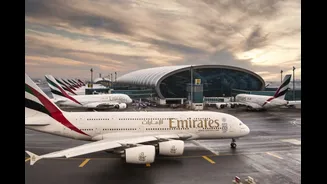
Major carriers such as Emirates, Etihad and flydubai are now gradually rebuilding their flight networks after nearly two months of disruption. Airports, including Dubai International, are also scaling up operations as passenger demand remains strong despite the earlier slowdown.
What This Means for Travellers?
Flagship carriers are ramping up quickly. Emirates is currently operating at approximately 80% of its pre-conflict network, serving over 100 destinations, while Etihad Airways is at around 75% capacity with more than 80 routes active. Both airlines are expected to accelerate schedule restorations in the coming weeks, bringing back more flights ahead of the busy summer season and Eid al-Adha celebrations.
Dubai and Abu Dhabi airports, vital transfer points for millions of passengers annually, are preparing to expand operations. Dubai Airports has indicated it will increase flight movements as regional routing capacity improves. Despite the challenges, the airports demonstrated resilience, handling over 6 million passengers, more than 32,000 aircraft movements, and 213,000 tonnes of cargo during the restricted period.
For travellers, the news translates to greater reliability: fewer delays, more route options, and smoother connections between Europe, Asia, Africa, and beyond. Those planning trips to the UAE’s iconic attractions, from Dubai’s futuristic skyline and Abu Dhabi’s cultural landmarks to beach resorts and desert adventures can now book with increased confidence.
Flight frequencies are likely to increase steadily, giving travellers more options and potentially stabilising fares over time. It also means fewer last-minute cancellations and better predictability when planning international trips.