






As the US and Iran traded fresh strikes on Friday, further straining the fragile Middle East ceasefire, President Donald Trump said American military action had prevented a prolonged conflict but warned
that Iran still possessed capability to strike back.
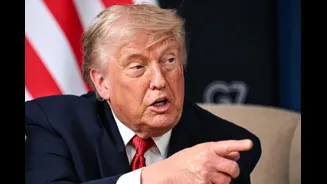
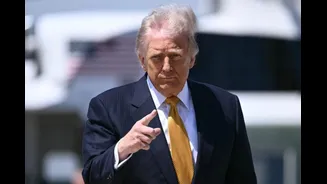
Speaking about the latest developments, Trump said that if Washington had not acted, the conflict would have continued. He added that although Iran was no longer in a winning position, it remained capable of carrying out attacks.
“They still have some capability—not much. They’re not winning, but they can still launch attacks,” Trump said.
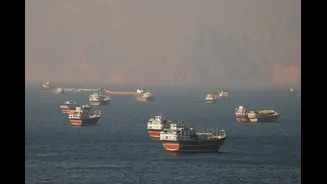
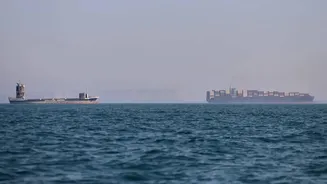
Referring to the recent attack in the Strait of Hormuz, he said Iran launched four drones at a large ship entering the strategic waterway. According to Trump, US forces intercepted three of the drones, but one managed to hit the vessel and caused damage.
“They fired four drones at a large ship entering the Strait of Hormuz. We shot down three of them. One got through and struck the ship, causing some damage. They shouldn’t be able to do that,” he said.
Iran issues fresh warning to Washington
Even as Trump defended the US action, Iran’s Supreme Leader’s military adviser Mohsen Rezaei warned that any renewed conflict would result in heavy American casualties.
“We will introduce new capabilities to the arena, and Trump should know that this time he will suffer widespread casualties,” Rezaei said.
“If the enemy makes a mistake, the next war will not be like the previous one.”
The remarks appeared to signal that Iran believes a second round of fighting would come at a greater cost for the United States than the first. Rezaei did not explain what he meant by Iran’s “new capabilities”, leaving the warning deliberately vague.
Iran’s message to Gulf countries
In another post on X, Ebrahim Maziz warned leaders of the Gulf Cooperation Council (GCC) against relying on the United States for security.
“Warning for GCC leaders: outsourcing your security has made you less secure. You have seen how US military bases in your countries have turned into a source of threat instead of providing security,” he wrote.
He added that Iran’s missile and drone capabilities, along with its control over the Strait of Hormuz, remained “serious red lines”.
“The only reliable path to regional security is to distance yourselves from the U.S.,” the post said.
US and Iran exchange strikes
The latest statements came after the United States and Iran exchanged military strikes following Washington’s accusation that Tehran had attacked a cargo ship, putting a fragile ceasefire under pressure as diplomatic efforts continued to contain the Middle East war.
US Central Command said its strikes targeted Iranian missile and drone storage sites as well as coastal radar positions. It described the operation as a response to “unwarranted aggression against commercial shipping by Iranian forces” that “clearly violated the ceasefire.”
The military said the operation was “a powerful response to yesterday’s attack on a commercial ship that was transiting the Strait of Hormuz.”
Iranian state television, citing a reporter in Sirik, said an explosion was heard late Friday at Taherouyeh pier in the southern port city. An informed military source told the broadcaster that the blast was caused by a projectile impact.
Earlier, Trump had condemned what he described as an Iranian drone strike on the vessel, calling it “a foolish violation of our ceasefire agreement.”
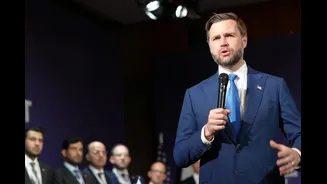
Vice President JD Vance also warned Iran on X that “violence will be met with violence” if further attacks take place.
Minutes later, on Saturday morning Iran time, state television reported that the Revolutionary Guards had targeted US sites in the Gulf region in retaliation for the American strikes.
“If the aggression is repeated, our response will be broader than this,” the Guards said in a statement carried by state television’s Telegram channel.
Shipping concerns in Hormuz remain
The latest exchange has raised fresh concerns over efforts to keep the Strait of Hormuz open while Washington and Tehran continue negotiations aimed at reaching a final settlement to a war that began on February 28 with US and Israeli strikes on Iran.
Iran has warned ships not to enter or leave the Gulf through the Strait of Hormuz without its permission. However, commercial traffic has continued, with some vessels taking routes not authorised by Tehran.
According to shipping tracking platform Kpler, around half of the 42 vessels that passed through the strait on Thursday used a non-approved southern route along Oman’s coast.