








A major upgrade on the Mumbai-Pune Expressway, the ambitious Missing Link project, was inaugurated on Maharashtra Day, May 1, by Chief Minister Devendra Fadnavis.
Designed to eliminate traffic bottlenecks
and safety hazards in the Adoshi Tunnel–Khandala ghat stretch, the project had been under construction since its approval on August 29, 2018, at a cost of Rs 6,695.37 crore.
In recent years, the need for this Missing Link had become more urgent. The ghat stretch between Mumbai and Pune has witnessed multiple mishaps and prolonged traffic snarls. Accidents involving heavy vehicles, vehicles stalling on steep gradients, and hours-long congestion during peak travel days had turned this portion of the expressway into a chronic bottleneck.
The Missing Link is now Maharashtra’s New Connecting Link 🛣️
A drive through the Mumbai–Pune ‘Connecting Link’, accelerating Maharashtra towards a new QUANTUM CORRIDOR…@mieknathshinde @SunetraA_Pawar #Maharashtra #MissingLinkProject pic.twitter.com/gIr2Gb0jAp— Devendra Fadnavis (@Dev_Fadnavis) May 1, 2026
With traffic sometimes backing up for several kilometres, the section had become one of the most problematic parts of the corridor, highlighting the need for a safer, more reliable alternative route.
Currently, the six-lane section between Adoshi Tunnel and the Khandala Exit carries the load of the expressway’s full ten-lane traffic. The sharp curves, steep gradients, and frequent landslides, particularly during the monsoon, often force authorities to close a Mumbai-bound lane, leading to severe congestion.
To provide an alternative route and reduce this recurring pressure, the government proposed the Missing Link, which creates a completely new alignment between the Khopoli Exit and Kusgaon. The project shortens the overall expressway distance from 19 kilometres to 13.3 kilometres, reducing travel time by 20 to 25 minutes. Nearly 70 per cent of the vehicles on this route are cars and buses, while the remaining 30 per cent are heavy vehicles, making the new alignment crucial to easing the burden on the ghat section.
Stretching 19.84 kilometres, the Missing Link consists of eight lanes, four on each side, with a road width of 100 metres and a design speed limit of 120 km per hour. The route features four major bridges, one minor bridge, two viaducts, and two parallel tunnels supported by three adits. The widening of the 5.86-kilometre Khalapur–Khopoli stretch from six to eight lanes also forms part of the project. Three upgraded toll plazas at Khalapur, Talegaon, and Shedung complete the major infrastructure planned along this section.
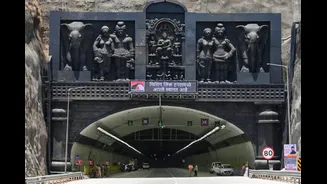
A key highlight of the Missing Link is its pair of parallel tunnels. One is 1.64 kilometres long, while the second, at 8.92 kilometres, is among the longest road tunnels in Asia and is expected to enter the Guinness Book of World Records for its width and scale.
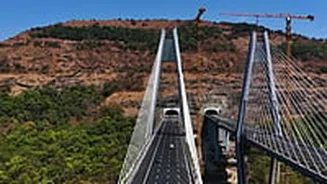
The project also includes two standout bridges. The first is a 900-metre viaduct rising 60 metres above the valley, while the second, an engineering landmark, is a 650-metre cable-stayed bridge with a 184-metre pylon built over Tiger Valley.
The project spans 128.0295 hectares of land, including 74.7102 hectares of forest area.
The Missing Link is expected to dramatically improve travel between two of the busiest cities, Mumbai and Pune. The new alignment bypasses steep ghat curves entirely, reducing travel time by nearly half an hour. Smoother traffic flow and the elimination of congestion are expected to save close to Rs 1 crore in fuel every day.
With improved safety, reduced accidents, and faster movement between Mumbai, Lonavala, and Pune, the Missing Link will stand as one of Maharashtra’s most significant and technologically advanced highway projects to date.