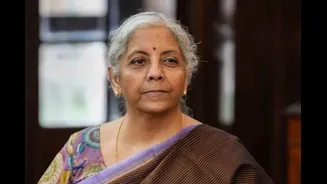







Union Finance Minister Nirmala Sitharaman said poverty is not merely a shortage of income or wages, but also a condition shaped by a lack of access to basic necessities such as housing, clean drinking
water, sanitation and healthcare. In a LinkedIn post, she highlighted India’s transformation in tackling poverty over the past decade, crediting the Narendra Modi government’s welfare schemes and targeted interventions.
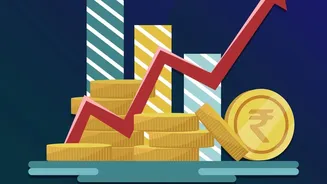
Referring to the World Bank’s Poverty and Equity Brief on India released last month, Nirmala Sitharaman said nearly 50 crore Indians had moved out of poverty between 2011 and 2023, while extreme poverty had been “almost eradicated”.
“The last decade has overturned that belief,” she wrote, arguing that the government’s approach had shifted from providing temporary relief to addressing the underlying deprivations that keep households trapped in poverty.
Titled ‘The Decade India Turned the Tide on Poverty’, the post drew on Nirmala Sitharaman’s interactions with beneficiaries of government schemes and outlined the role of welfare programmes, financial inclusion and women’s entrepreneurship in improving livelihoods.
‘Garibi Is Not Merely A Shortage Of Income Or Wages’
Explaining the government’s approach, Nirmala Sitharaman said a household could remain vulnerable even when its income increased if it lacked a secure home, safe drinking water, sanitation or healthcare.
“One illness can wipe out savings and push a family back into poverty,” she wrote, adding that government interventions were designed to be targeted, focused on measurable outcomes and tailored to the specific deprivation they sought to address.
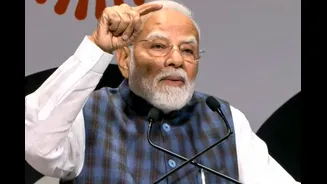
She credited Prime Minister Narendra Modi with personally monitoring the implementation of welfare schemes, resolving bottlenecks and using technology to track delivery to beneficiaries.
Nirmala Sitharaman said the government’s approach was guided by the principle of Antyodaya- the welfare of the last person in the queue- with a focus on ensuring that development reached the most deprived households.
How Government Schemes Have Addressed Basic Deprivations
The Finance Minister highlighted several flagship programmes, including Swachh Bharat Mission, Jal Jeevan Mission, Pradhan Mantri Ujjwala Yojana, Pradhan Mantri Awas Yojana and Ayushman Bharat.
Nirmala Sitharaman said that improved access to household toilets under Swachh Bharat has helped avert an estimated 60,000-70,000 infant deaths annually. She said rural tap-water connections under the Jal Jeevan Mission had increased from around 3 crore households in 2019 to nearly 16 crore, reducing the burden on women and girls who previously had to travel long distances to fetch water.
The Ujjwala scheme, she said, had enabled cleaner kitchens through access to cooking gas, while PM Awas Yojana had provided households with pucca homes. Ayushman Bharat, which offers cashless hospital treatment to eligible beneficiaries, had helped protect families from the financial burden of medical expenses.
“These interventions together act as insurance against the shocks that once pushed families back into poverty,” Nirmala Sitharaman wrote.
Jan Dhan Accounts, MUDRA Loans And Women’s Entrepreneurship
Nirmala Sitharaman also highlighted financial inclusion and access to credit as key elements of the government’s poverty-reduction strategy. She said more than 59 crore Jan Dhan accounts had enabled direct transfer of government benefits to recipients, reducing dependence on intermediaries.
“Once, it was accepted that only fifteen paise of every rupee sent from the exchequer reached the intended citizen. Direct Benefit Transfer has changed that,” she wrote.
The Finance Minister said the Pradhan Mantri MUDRA Yojana had seen 60 crore loan accounts sanctioned, with women accounting for around two-thirds of them. She also cited the roles of PM SVANidhi and PM Vishwakarma in supporting street vendors and traditional artisans.
‘No Time To Rest’: Nirmala Sitharaman On Viksit Bharat 2047
Nirmala Sitharaman said the progress made in reducing poverty should not be treated as the end of the government’s efforts, adding that the next phase would focus on lifting those still at the bottom of the economic ladder and ensuring that families who had moved out of poverty did not slip back.
She said access to finance, markets and the digital economy would need to expand further, alongside stronger links between academia and industry through employment-linked incentives, internships and apprenticeships.
“The next phase builds on this progress to lift the few people still at the bottom of the ladder out of poverty, while ensuring those who have already risen keep advancing and never slip back,” she wrote.
Invoking the government’s goal of a developed India by 2047, Nirmala Sitharaman said the country could approach the next two decades with confidence after achieving in 10 years what she described as having remained unfulfilled for six decades after Independence.
“With the resolve of 140 crore Indians, Viksit Bharat by 2047 is within our reach, and we together will get there,” she said.