



Languages have a way of turning into political standoffs in southern India. Amid the growing backlash against what is being described as Hindi imposition by the Centre, a fresh and sensitive language row has
now opened up between Karnataka and Kerala — this time over Malayalam.
At the centre of the dispute is Kerala’s Malayalam Language Bill, 2025, which mandates Malayalam as the compulsory first language in schools from Classes 1 to 10.
What Kerala sees as an assertion of its linguistic identity, Karnataka sees as a move that could marginalise Kannada-speaking students, especially in border districts such as Kasaragod. The irony, of course, is that Karnataka itself has been pushing for wider use of Kannada within the state, raising questions over where promotion ends and imposition begins.
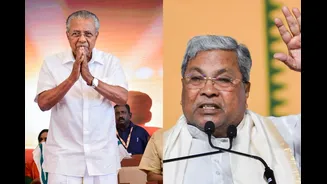
Kerala Chief Minister Pinarayi Vijayan rejected Karnataka’s objections outright, calling them baseless. He has said there is nothing in the law that violates the constitutional rights of linguistic minorities. In a letter to Karnataka Chief Minister Siddaramaiah, Vijayan made it clear that the legislation does not force non-Malayalam-speaking students to abandon their mother tongue.
Vijayan said that while the law designates Malayalam as the first language, children whose mother tongue is not Malayalam are allowed to learn Malayalam along with their own language. He also pointed out that, under the national curriculum framework, students can choose the language of their preference, and that Malayalam examinations are not mandatory at the Class 10 and higher secondary levels for students coming from other states or from abroad.
Love for one’s mother tongue, he said, should not become an obstacle to learning or promoting other languages. He added that the legislation was enacted in the spirit of cultural ties and cooperative federalism between Kerala and Karnataka, and that the state was fulfilling its constitutional duty.
The Kerala Chief Minister also said that linguistic minorities are allowed to use Tamil and Kannada for correspondence with government offices, and that officials are required to reply in the same language.
But Karnataka is not convinced.
The proposed law has triggered strong political reactions, particularly because of its impact on Kannada-speaking students in Kasaragod — a district with a significant Kannada-speaking population, where Kannada-medium education has long been prevalent, with students traditionally choosing Hindi, Sanskrit or Urdu as second languages.
Siddaramaiah has objected to Kerala’s move, saying language is not merely a subject for linguistic minorities, but a question of identity, dignity, access and opportunity. “If this Bill is passed, Karnataka will do everything to oppose it, using all the rights granted by our Constitution,” he said in a post on X.
He argued that enforcing a different language as the first language burdens students, disrupts academic progression and affects confidence. Urging the Kerala government to withdraw what he described as a coercive approach, Siddaramaiah said Kerala had every right to promote Malayalam with pride, just as Karnataka promotes Kannada, which he called the state’s heartbeat and identity. But, he added, promotion cannot become imposition.
The Karnataka Border Area Development Authority (KBADA) has also formally objected to the Bill, warning that it would adversely affect Kannada-speaking students living in border areas. The Authority said it would continue to pursue the matter to protect the language, culture and educational rights of border-area Kannadigas.
It recalled that a similar Malayalam language Bill was rejected by the President of India in 2017, and pointed to instances where the Union Ministry of Minority Affairs had advised Kerala to protect the interests of linguistic minorities.
In a representation submitted to the Kerala Governor on January 7, the Authority termed the Bill unconstitutional and said it violated the linguistic rights of minorities guaranteed under the Indian Constitution. Officials warned that enforcing Malayalam as a compulsory first language would disrupt existing education systems and hamper students’ academic prospects, particularly those seeking higher education outside Kerala.
The Authority also demanded mandatory appointment of Kannada teachers in Kannada-medium schools, installation of Kannada signboards in public offices and transport hubs, and the use of Kannada in official correspondence in Kasaragod district. The Kerala Governor has assured that the Bill will be reviewed, taking into account constitutional safeguards available to linguistic minorities.
The timing of this row is hard to ignore. It comes at a moment when language politics across southern India is already tense, with states pushing back against what they see as attempts to impose Hindi through policy and administration. Against that backdrop, Karnataka’s resistance is being framed as opposition to any form of linguistic imposition — whether from the Centre or from a neighbouring state.
Even as Karnataka takes up the issue with Kerala, it is facing its own internal pressures on language policy.
On Wednesday, Kannada and Culture Minister Shivaraj Tangadagi told the Assembly that the state government is favourable to declaring Tulu as Karnataka’s second official language, amid pressure from members across party lines from Dakshina Kannada and Udupi districts.
The Minister said a decision would be taken after studying the models adopted by West Bengal and Andhra Pradesh. An official team has already visited both states, though the report is yet to be submitted. Once it is received, a meeting will be convened with Chief Minister Siddaramaiah to take a final call. Andhra Pradesh, he noted, has declared Urdu as its second official language.
Tangadagi said Tulu has a history of over 3,000 years, has its own script, is included in Google Translate, and is being researched by foreign universities. He also recalled that the previous BJP government had constituted a committee in 2023 under educationist Mohan Alva, which recommended declaring Tulu as the state’s second official language under Article 345 of the Constitution.
Separately, Karnataka continues to see campaigns demanding stricter enforcement of Kannada usage, including calls for 60 per cent Kannada on signboards across Bengaluru.
As the Malayalam Language Bill awaits finalisation, the standoff highlights a familiar reality in southern politics: language is never just about textbooks or classrooms. It is about borders, identity and power — and it rarely stays confined to one state.