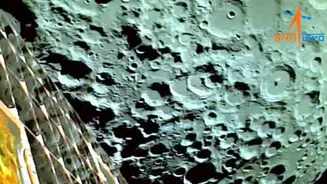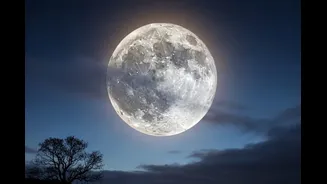

If you enjoy spending a quiet moment looking up at the night sky, January has a special treat in store. The Wolf Supermoon will light up the sky on January 3, marking the first full Moon of 2026. It is
expected to look slightly larger and brighter than usual, making it one of the most eye-catching lunar events of the year.
On the night of January 2 and 3, the moon will be about 3,62,000 kilometres away from earth, closer than normal. It may appear up to 14 per cent bigger and nearly 30 per cent brighter than when it is at its farthest point, known as apogee.
The moon will be at its fullest around 10:02–10:04 GMT on January 3. It will look full for a couple of nights before and after the peak. Skywatchers are likely to get the best views at moonrise on January 2 and 3, when the moon rises low in the sky.
In India, the Wolf Supermoon will be visible soon after sunset, between 5:45 PM and 6:00 PM IST. It will remain in view through the night and set around dawn. No special equipment is needed, though a camera or telescope can make the experience better.
January Full Moon
The January full moon is traditionally called the wolf moon, a name that comes from old Northern Hemisphere folklore. It is linked to long winter nights when the howls of wolves were often heard. Today, the name is mostly symbolic, but it continues to be used to mark the year’s first full moon.
What makes this moon especially bright is a rare mix of conditions. It is full, closer to Earth than usual, and appears when Earth itself is near perihelion, the point in its orbit closest to the sun. Together, these factors allow more sunlight to reflect off the moon, enhancing its glow in the night sky.