








Delhi’s real estate market could see a major revamping as Lieutenant Governor Taranjit Singh Sandhu has approved the Delhi Master Plan 2047 on August 12, setting out a long-term framework for housing,
redevelopment, transport and land use in the capital.
The plan aims to accommodate a population expected to approach 32 million by 2047, with nearly 4 million additional homes likely to be required. It will now be sent to the Ministry of Housing and Urban Affairs for final approval and notification.
For developers and investors, the plan could open opportunities in affordable housing, redevelopment, transit-linked projects and commercial development. However, experts said its impact will depend on how quickly its provisions are notified and implemented.
New Housing
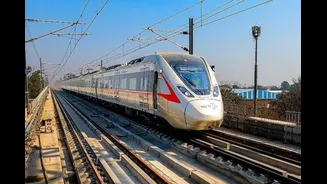
A key feature is Transit-Oriented Development (TOD), which could allow high-density housing along Metro and rail corridors. Sources cited by PTI said around 17 lakh dwelling units could be developed under TOD over the next decade, alongside large-scale development through land pooling.
The DDA’s TOD policy covers an area of 207 sq km within 500 metres of Metro corridors and around RRTS and railway stations, with a focus on affordable housing.
The plan also provides redevelopment rights for ageing two-storey DDA housing units, bringing them on par with vacant residential plots. It could also allow regulated commercial and institutional activity in 70 peripheral villages under the Green Development Area framework, including higher Floor Area Ratio (FAR) and vertical development.
Floor Area Ratio is basically a measure of how tall your building can be. You get the FAR when you divide the total constructed floor area, across all floors, with your total plot size.
Faster Approvals, Emerging Corridors
The DDA has approved changes to the Unified Building Bye-Laws to simplify building approvals by removing the need for separate prior NOCs from several departments.
The plan also includes changes in land use for infrastructure. A 19.63-hectare parcel in Narela has been approved for a Metro depot linked to the Rithala-Kundli corridor, while a plot near Sarojini Nagar has been cleared for residential use.
Experts said increased housing supply could ease pressure on surrounding NCR markets and moderate price growth in some areas. However, locations that gain better connectivity or higher development potential could see land values rise.
National Real Estate Development Council (NAREDCO) Delhi president Harsh Vardhan Bansal said, as per a Hindustan Times report, Delhi would need planned, high-density development, including group housing, redevelopment and affordable and mid-income housing, to meet its future housing needs.
The biggest uncertainty remains execution. Experts believe timely approvals, land assembly, infrastructure and coordination between government agencies will determine whether MPD 2047 translates into actual housing supply and new real estate growth corridors.