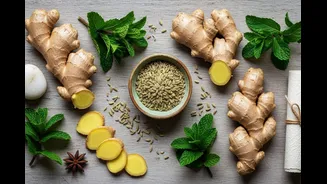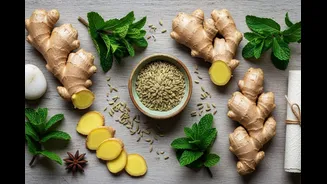









Long before supplements and quick fixes crowded our shelves, wellness began in the kitchen. A slice of ginger before a meal, a handful of fennel seeds after dinner, a cup of mint tea before bed – these
small rituals were once everyday medicine. Today, as stress, irregular eating and late nights strain digestion and mental calm, these humble ingredients are quietly reclaiming their relevance.
Simple, affordable and rooted in centuries of practice, ginger, fennel and peppermint offer something rare: gentle, sustainable relief that works with the body rather than against it.
Ancient Wisdom Meets Modern Science
“Ayurveda has long recognised the kitchen as the first pharmacy,” says Rekha Bhat, Ayurveda expert at SOUKYA International Holistic Health Centre, Bengaluru. She explains that these herbs act across the gut-brain axis: “Ginger kindles digestive fire (Agni), fennel soothes the digestive tract and reduces bloating, while peppermint cools, relaxes spasms and calms the mind.”
From a clinical nutrition lens, Archana Batra, dietitian and certified diabetes educator, echoes the sentiment: “When used at the right time and in the right form, they can be more effective than many people realise.”
Together, their guidance reframes these herbs not as trends, but as tools.
Ginger: The Metabolism Starter
Warm, pungent and energising, ginger is often the first line of defence against sluggish digestion. “Ginger works best before meals or early in the day,” says Batra. It helps stimulate gastric motility, reduce nausea and tackle that heavy, post-meal feeling. A simple ginger infusion, grated into warm water, or thin slices added to food, can wake up the digestive system.
Bhat adds that ginger-based teas also offer relief after rich or spicy meals and even mild cold or sinus discomfort. However, both experts advise moderation at night, when its stimulating nature may disrupt sleep.
Fennel: The Gentle Soother
If ginger ignites, fennel softens. Often chewed after Indian meals, fennel seeds are known to relax intestinal muscles and reduce fermentation. “Fennel is most effective after meals, especially heavy or spicy ones,” Batra notes. Roasted seeds or mild fennel tea can ease gas and cramping without irritating sensitive stomachs.
Bhat recommends combining fennel with ginger and mint in a warm infusion to ease bloating, acidity and mild IBS symptoms, particularly useful after travel or erratic eating schedules.
Peppermint: Calm For The Gut And Mind
Cooling and aromatic, peppermint bridges digestion and mental well-being. “Peppermint tea is helpful between meals or in the evening, especially for stress-related digestive issues,” Batra says. Its muscle-relaxing properties help relieve cramps and tension, while also promoting mental clarity. Bhat suggests mint-infused water or chutneys for daily use, and even peppermint oil applied to temples to ease headaches.
A caveat: those prone to acid reflux should use it cautiously, as its relaxing effect can sometimes worsen symptoms.
A warm herbal tea after lunch. A few fennel seeds after dinner. Steam inhalation during a cold. These aren’t dramatic interventions, but they’re micro-habits that accumulate over time. When used thoughtfully and consistently, these kitchen staples create balance without dependency. In a world chasing complicated solutions, the answer may already be steeping in your teacup.