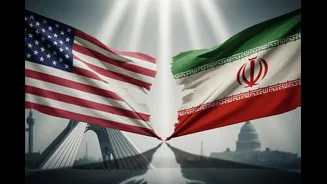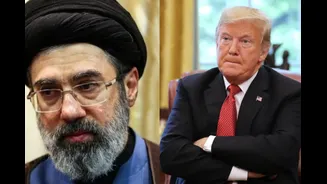






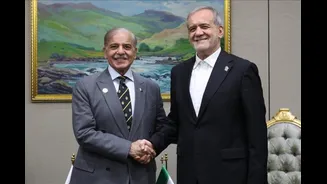
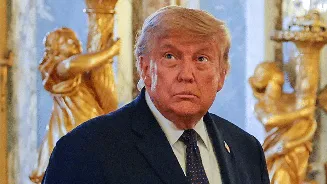
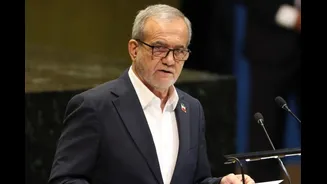


Iran pulled out of a proposed public ceremony in Switzerland to mark the US-Iran peace agreement after hardliners warned that sharing a stage with American officials could provoke severe domestic backlash,
a key source close to a senior Islamic Revolutionary Guard Corps commander has told CNN-News18.
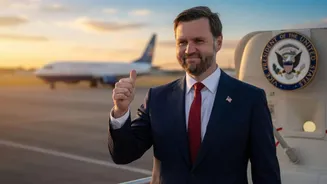
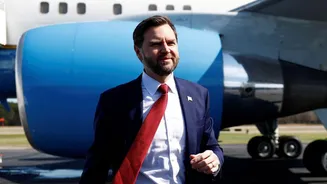
The ceremony, scheduled to be held in Bürgenstock on Friday, June 19, was expected to bring Iranian and US representatives together publicly after the two sides concluded a Memorandum of Understanding aimed at ending the conflict.
However, CNN-News18 has learnt that no senior Iranian leader or top US official will now travel to Switzerland. The process will instead move into an extended phase of technical negotiations involving officials from the United States, Iran, Qatar and Pakistan.
According to the source close to the IRGC commander, resistance within Iran intensified over the prospect of Iranian officials shaking hands with their American counterparts or appearing alongside them before television cameras.
The proposed event was to be held just days before the funeral of Iran’s slain Supreme Leader, Ali Hosseini Khamenei, who was killed in a US strike. The timing made the prospect of a public display of reconciliation with Washington particularly damaging for the Iranian leadership.
“Iranians want revenge,” the source said, explaining that images of Iranian and American officials together could have been interpreted domestically as a betrayal of those killed during the conflict.
Hardline factions reportedly conveyed to the leadership that the diplomatic value of the ceremony did not outweigh the political risks at home. Their objections centred not only on unresolved concerns over the agreement, but also on the symbolism of a public handshake with Washington.
Technical Negotiations To Continue For 60 Days
Advance teams representing the United States, Iran, Qatar and Pakistan are already stationed in Bürgenstock and Zurich, according to high-level diplomatic sources.
The teams are expected to hold several rounds of negotiations over the next 60 days to resolve the technical and operational details that were not settled in the initial memorandum.
The coming discussions are expected to determine how the commitments contained in the MoU will be implemented and whether the preliminary understanding can be converted into a comprehensive and lasting settlement.
Shehbaz Sharif Cancels Switzerland Visit
The change in the diplomatic schedule also prompted Pakistan Prime Minister Shehbaz Sharif to cancel his planned visit to Switzerland.
Pakistani officials said the visit was no longer required because the immediate objective of concluding the MoU had already been achieved and the process was entering a technical phase.
Sharif’s government had earlier projected Pakistan as an important mediator in the negotiations, alongside Qatar. Islamabad has described the understanding as a major diplomatic breakthrough and has highlighted the role played by Sharif and Pakistan Army chief Field Marshal Asim Munir in facilitating communication between the parties.
Pakistan has also offered assistance for Iran’s post-war reconstruction. The leaderships of the two countries have agreed to undertake reciprocal visits to their respective capitals as they seek to strengthen bilateral ties and maintain momentum behind the peace process.
Domestic Backlash Remains A Threat To Deal
The decision to avoid a public ceremony underlines the pressure confronting Iran’s leadership as it attempts to preserve the agreement while managing anger over the killing of the Supreme Leader and demands for retaliation against the United States.
By cancelling the Bürgenstock event, Tehran has avoided the immediate controversy that photographs of a public handshake could have triggered. But the deeper opposition from hardliners has not disappeared.
The next 60 days will test whether the Iranian leadership can sustain the negotiations without allowing domestic divisions to derail the agreement.