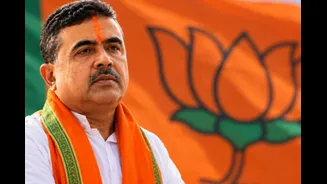










From implementation of the 7th Pay Commission for West Bengal government employees to making the singing of Vande Mataram mandatory in schools and scrapping religion-based incentive schemes, the West Bengal government led
by Chief Minister Suvendu Adhikari has announced a series of major policy and administrative changes after the BJP secured a historic victory in the 2026 Assembly elections. Among the significant changes is also a “detect, delete and deport” policy against illegal foreigners.
The government’s approach has also drawn comparisons with US President Donald Trump and his crackdown on undocumented migrants in the United States. Under the policy, the district magistrates have been directed to establish “holding centres” for those awaiting deportation.
Order Issued To Set Up Holding Centres
In an order issued on May 23, the foreigners’ branch under the state’s home and hill affairs department asked all district administrations to create facilities for “apprehended foreigners” and “released foreign prisoners” until their deportation or repatriation process is completed.
The directive referred to an advisory issued by the Union home ministry last year on the handling of Bangladeshi nationals and Rohingyas allegedly residing illegally in India.
“In this connection, it is requested to take initiative/appropriate action for setting up of Holding Centres in the district for apprehended foreigners as well as for the released foreign prisoners awaiting deportation/repatriation,” the order stated.
Officials told PTI that the proposed facilities would function as temporary detention centres for people suspected of illegal stay in the country and for foreign nationals whose deportation formalities are under process.
Under existing central guidelines, suspected illegal entrants can be kept in such centres for up to 30 days while authorities verify their nationality and documents. District magistrates or officers of equivalent rank would take the final call on citizenship status.
Detect, Delete, Deport’
Soon after taking charge as West Bengal chief minister, Suvendu Adhikari announced a strict drive against illegal Bangladeshi immigrants residing in the state.
The BJP government has decided to begin deportation proceedings against undocumented Bangladeshi nationals under the Citizenship (Amendment) Act (CAA), marking one of the administration’s first major decisions after coming to power.
Addressing a programme at Nabanna linked to land transfer for Border Security Force (BSF) fencing work, Adhikari said state authorities would identify and detain suspected illegal infiltrators. According to the chief minister, those taken into custody would later be handed over to the BSF, which would coordinate with Border Guards Bangladesh for deportation.
Calling the initiative “Detect, Delete and Deport”, Adhikari said the policy reflects the government’s hardline position on illegal infiltration and border management.
Why Comparisons Are Being Drawn With Trump?
The development has led to comparisons with Trump’s immigration policies, which focused heavily on mass deportation and stricter detention measures for undocumented migrants. Immigration remained one of the defining issues of Trump’s 2024 election campaign.
Trump’s administration expanded the powers of US Immigration and Customs Enforcement (ICE), allowing stricter detention measures and increasing the use of immigrant detention centres. While the policies were criticised by rights groups over concerns related to civil liberties and due process, Trump defended them as necessary for national security and curbing illegal immigration.
Mamata Banerjee’s Earlier Allegations
Earlier this year, former chief minister and Trinamool Congress supremo Mamata Banerjee had accused the BSF of facilitating illegal infiltration from Bangladesh.
“The border is not guarded by TMC or police; it is guarded by BSF,” she had said. “They are facilitating infiltration, allowing criminals to cross the border, commit murders, and escape.”
Policy Still At Early Stage
While the Bengal government’s proposed “holding centres” appear similar to immigrant detention facilities used in the US, the policy remains in its initial stages.