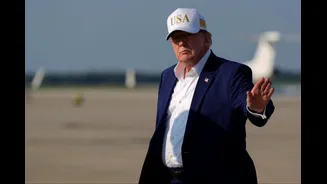




US President Donald Trump on Monday defended his administration’s fresh tariffs on Canadian goods, accusing Ottawa of taking advantage of the United States for years and claiming Washington has suffered
tens of billions of dollars in losses through its trade relationship with Canada.
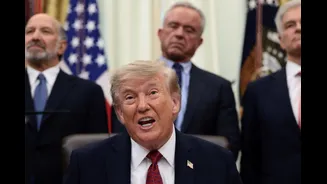
“Canada has been ripping off the United States for many years,” Trump said. He claimed the US had “lost anywhere from $60 to $100 billion” with Canada annually over the past 15 years, calling the trade relationship “a very unfair deal”.
Trump accused Canada of imposing heavy tariffs on American farmers and said Ottawa was also taking advantage of US tourists and airlines. He further alleged that Canadian rules prevent Bank of America from operating in the country.
#WATCH | US President Donald Trump says, “Canada has been ripping off the United States for many years. We lost anywhere from $60 to $100 billion with Canada. We have traditionally lost that for the last 15 years. It’s a very unfair deal. They charge tremendous tariffs to our… pic.twitter.com/4J0OlB9paq
— ANI (@ANI) September 2, 2026
Trump’s remarks come as the two neighbours descend deeper into a trade war after failing to reach an agreement to prevent a fresh round of US tariffs.
The US imposed new 50% tariffs on select Canadian goods from Saturday after talks between Washington and Ottawa failed to produce a deal. Trump also announced Monday that tariffs on Canadian automobiles would be doubled next year to 50%.
The current US tariff on Canadian automobiles stands at 25% for non-US content, while imported steel entering the United States generally faces a 50% duty.
Canada Sets To Announce Retaliation
Canada is expected to announce its response to the latest US tariffs on Tuesday. The Canadian government said ministers of finance, industry, labour and other officials would hold a press conference in Ottawa to announce measures aimed at protecting Canadian workers and businesses.
Prime Minister Mark Carney has already announced retaliatory tariffs effective September 8, targeting US steel and dairy industries as well as sectors including agricultural equipment, paper and electronics.
Carney said Canada’s objective during the negotiations was to secure the best possible deal for Canadians, but not “a deal at any price or on any time frame”.
He accused US negotiators of seeking terms that would damage major Canadian industries, including the automotive, steel and aluminium sectors, and said that was among the reasons Ottawa rejected the deal.
Carney has also said that strengthening domestic production and diversifying Canada’s overseas trade has been “plan A from the start”.
‘We Don’t Need Canada’: Trump
Trump has repeatedly taken an aggressive position towards Canada during the trade dispute. On Monday, he said, “We don’t need Canada, they need us,” while accusing Ottawa of benefiting unfairly from its relationship with the US.
The White House has alleged that Canada discriminates against US alcohol, automobile and dairy products. Washington had delayed the latest tariffs by three days last week in the hope of reaching an agreement, but negotiations ultimately broke down.
The latest duties affect around 5.5% of Canadian goods entering the US, worth approximately $20 billion, and cover products including hockey sticks and cement.
Canadian officials, meanwhile, have pushed back against Trump’s approach. Carney said the US had made additional demands late in the negotiations, including restrictions on Canada’s trade agreements with other countries. He also said American negotiators had made what he described as unacceptable threats concerning the French language and Quebec culture.
US Vice President JD Vance, however, blamed Canada for making what he called “unreasonable last-minute demands”.
The United States is Canada’s largest trading partner, with Canadian exports to the US accounting for around 70% of Canada’s total exports. Canada is also the second-largest US trading partner in goods this year, behind Mexico.
The dispute comes as Washington and Ottawa also face negotiations over revisions to the US-Mexico-Canada Agreement (USMCA), which Trump has indicated he does not want to renew in its current form.