
New Delhi [India], December 16 (ANI): The National Capital Delhi continued to reel under hazardous air conditions on Tuesday as the city’s overall Air Quality Index (AQI) stood at 378 at around 8 am, placing
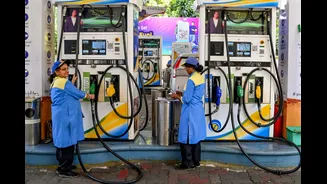
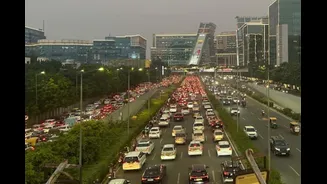
it in the ‘very poor’ category, according to data from the Central Pollution Control Board (CPCB). The air quality showed a marginal improvement compared to Monday, when the AQI had touched 427 at around 4 pm, falling in the ‘severe’ category. Despite the slight dip, pollution levels remained dangerously high across large parts of the national capital. A dense blanket of toxic smog enveloped the city, severely reducing visibility and causing discomfort to residents. Prominent areas such as India Gate recorded an AQI of 380, while Sarai Kale Khan reported an AQI of around 359, both categorised as ‘very poor’ by the CPCB. Whereas Ghazipur and Anand Vihar recorded an AQI (Air Quality Index) of around 410 in both areas, categorised as ‘Severe’. According to AQI categorisation, 0-50 is ‘good’, 51-100 ‘satisfactory’, 101-200 ‘moderate’, 201-300 ‘poor’, 301-400 ‘very poor’, and 401-500 ‘severe’. Meanwhile, a tourist grappling with Delhi pollution explained his situation, saying to ANI, “The situation here is very serious because of pollution. I arrived in Delhi last evening from Indore. Compared to Indore, I am experiencing difficulty in breathing. Visibility here is very poor; we cannot see the India Gate properly. It is affecting our health.” Air quality levels varied across other major Indian cities. Ahmedabad recorded an AQI of 117, Bengaluru 104, Chennai 135, Hyderabad 103, and Mumbai 109, mostly in the ‘moderate’ to ‘satisfactory’ range. Jaipur (187), Lucknow (158), Patna (156), and Pune (194) reported ‘moderate’ air quality. Meanwhile, the first meeting of the Expert Committee constituted by the Commission for Air Quality Management (CAQM) for in NCR and adjoining Areas to address air pollution from vehicular emissions was held on Monday under the Chairmanship of Ashok Jhunjhunwala and Co-Chaired by Prof Randeep Guleria. The meeting focused on broad discussions on key issues related to vehicular emission sources in Delhi-NCR, CAQM said in a post on X. “Deliberations covered assessment of segment-wise vehicular emission contributions, exposure risks, EV readiness and infrastructure needs,” CAQM said. The committee will present concrete, actionable recommendations to reduce vehicular emissions at upcoming meetings. This comes as the national capital battles with severe air pollution, with AQI crossing the 450 mark, reaching the ‘severe plus’ category, prompting CAQM to impose stage IV restrictions of the Graded Response Action Plan (GRAP). In view of the severe air pollution levels in the national capital, the Delhi Government issued a circular directing schools to shift to online mode from hybrid for students up to class 5. With the Air Quality Index (AQI) remaining in the severe category, the government has directed schools to switch to online mode for these grades until further notice. (ANI)