


You may think you’re eating healthy, cutting fats, choosing “light” oils, and loading up on carbs. But what if some of these habits are actually doing more harm than good?
When it comes to heart health,
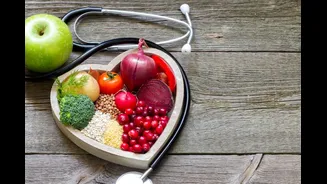
it’s not just what you eat but how much, how often, and how it’s cooked that truly matters. Diet plays a central role in maintaining heart health, yet there is widespread confusion about what truly constitutes a “healthy” diet.
“Diet is the most important factor in keeping your heart healthy. If your diet is not healthy, your heart cannot be healthy,” says Dr Amitabh Poonia, Consultant Cardiology, Kailash Deepak Hospital.
According to him, the key lies not in eliminating certain foods, but in achieving balance. “A healthy diet means including everything the body needs, in the right proportion. Excess of anything is harmful, and deficiency is equally problematic,” he explains.
What Does a Balanced Diet Look Like?
A balanced diet includes all essential macronutrients along with adequate vitamins and minerals.
“Carbohydrates should make up 40–60% of your total daily calorie intake, fats 20–30%, and protein 10–30%,” says Dr Poonia. “In addition, your diet must include fruits, vegetables, and essential micronutrients.”
Maintaining this balance is crucial. “Anything in excess is unhealthy, and anything in deficiency is also unhealthy. Balance is the foundation of a heart-healthy diet,” he adds.
Myth: Fat Is Bad for the Heart
One of the most common misconceptions is that fat should be avoided altogether.
“This is not true. Fat is an essential component of the diet and plays a key role in metabolism and various bodily functions,” says Dr. Poonia.
Fats are necessary not just for heart health but also for the brain and nervous system. However, moderation is critical.
“Fat should be included in the diet, but it should not exceed 20–30% of daily calorie intake,” he advises.
Ghee vs Vegetable Oil: Which Is Better?
Another widely debated topic is whether ghee is harmful. “The idea that ghee is bad for the heart is incorrect,” says Dr. Poonia. “In fact, when compared to vegetable oils, ghee can be equal to or even better from a heart-health perspective.”
However, the emphasis remains on quantity and usage.
“Neither ghee nor vegetable oil is inherently good or bad, it is the amount and method of use that matter,” he explains.
What makes fats harmful is improper usage. “Deep frying and repeatedly reheating oil or ghee leads to oxidation, and oxidised fats are extremely harmful for the heart,” he warns.
“Never reuse oil or ghee multiple times. If it has been used once or twice, it is better to discard it,” says Dr Poonia.
Carbohydrates: The Hidden Risk
While fats often get blamed, excessive carbohydrates can be more harmful. “If you reduce fat or protein, you tend to increase carbohydrates but excess carbohydrates are actually worse than excess fat,” explains Dr Poonia.
High carbohydrate intake can increase the risk of diabetes and contribute to the formation of bad cholesterol.
“Carbohydrates should be consumed in moderation and preferably on the lower side of the recommended range,” he advises.
Why Protein Matters
Protein is often overlooked but plays an important role in a balanced diet. “Protein should make up 10–30% of your daily intake,” says Dr Poonia. “If you need to increase one component, it is generally better to increase protein rather than fats or carbohydrates.”
However, moderation still applies. “Excess protein is also not advisable. Balance remains the key,” he adds.
Which Cooking Oil Should You Use?
There is no single “best” oil for heart health. “No one oil is superior. The important factor is purity and quality,” says Dr. Poonia.
He recommends rotating different fats. “It is better to use a mix of oils and ghee in rotation rather than sticking to just one type,” he explains.
However, some oils should be avoided. “Palm oil is not recommended as it oxidises quickly and its quality deteriorates on heating,” he notes.
Don’t Forget Fruits and Vegetables
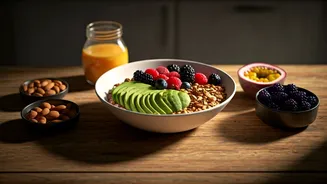
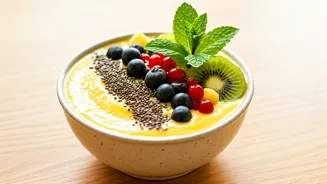
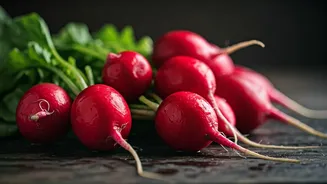
Beyond macronutrients, fresh produce is essential for heart health. “Your diet must include 2–4 servings of fruits and vegetables daily, including raw salads,” says Dr. Poonia. “They should always be properly washed and cleaned before consumption.”
A heart-healthy diet is not about restriction, it is about balance, quality, and mindful consumption.
“There is no single ‘good’ or ‘bad’ food. What matters is how much you eat and how you prepare it,” concludes Dr Poonia.