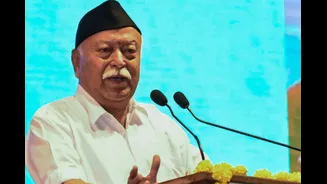









In a significant outreach to India’s indigenous communities, Rashtriya Swayamsevak Sangh (RSS) chief Mohan Bhagwat has underscored that Hinduism is defined by a “collective way of living” rather than any
singular ritualistic system. Speaking on Saturday, during a five-hour closed-door interaction titled “Janjatiya Sanvad” in Ranchi, Jharkhand, Bhagwat sought to bridge the gap between traditional tribal practices and the broader identity of Sanatan Dharma.
Addressing approximately 500 representatives from various tribal groups, Bhagwat addressed the delicate debate surrounding the Sarna faith—a nature-worshipping tradition followed by many Adivasi communities. The RSS chief stated that while Sarna is a distinct and respected “form of worship”, it exists within the inclusive ambit of Hindu identity.
“Hinduism is not the name of a particular worship system, but a way of living together,” Bhagwat stated. He argued that the core of Indian tradition teaches “unity in diversity”, where different paths of faith are valid and none is inherently wrong. By framing Hinduism as a civilisational ethos rather than a rigid religion, he aimed to counter narratives of division that he claimed allow “external forces” to exploit and weaken society.
The dialogue was not limited to spiritual matters; it involved a deep dive into the socio-political challenges facing tribal populations in 2026.
Participants, including Neesha Oraon (daughter of Congress MLA Rameshwar Oraon), raised concerns regarding the newly notified PESA (Panchayats Extension to Scheduled Areas) rules in Jharkhand. Critics allege these rules lack mention of customary laws and religious practices, which could lead to a loss of autonomy for tribal communities.
Bhagwat described the tribal communities as the “trustees of forests and land”, asserting that no state development should occur without their consent and accountability. He warned that uprooting tribal society would fundamentally weaken the civilisational foundation of the entire nation.
The meeting also touched upon the contentious issue of “delisting”—a demand to remove the Scheduled Tribe status of those who convert to other religions—as well as concerns over illegal land grabbing and substance abuse among tribal youth.
The timing of this visit to Ranchi is critical, as the demand for a separate “Sarna Religious Code” in the national census remains a potent political issue in Jharkhand. By engaging with prominent tribal leaders like former Chief Ministers Arjun Munda and Champai Soren, Bhagwat is reinforcing the RSS’s “Vanvasi Kalyan” agenda, which emphasises the “inseparable bond” between tribal culture and India’s national identity.