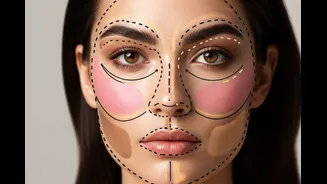









From ancient face analysis to viral Instagram reels, face mapping has become a go-to for modern makeup techniques. This viral beauty trick highlights the use of precise product placement for a balanced
and sculpted makeup look.
Scrolling through social media platforms has become synonymous with encountering beauty reels that divide the face into precise zones, which are dotted with contour, highlighter, and concealer. While the markings may seem like abstract patterns at first, they are actually a calculated technique known as face mapping in the makeup industry.
Professional makeup artists and influencers are relying on it to explain why certain placements work better than others. As beauty content is shifting from quick hacks to makeup placement, face mapping is gaining attention not just as a trend, but as a thoughtful method.
What Is A Face Mapping Technique In Makeup Industry?
Face mapping in the makeup industry makes for a structured approach to understanding the face as a series of interconnected zones rather than a ‘flat canvas.’
Instead of applying products based on habit or trend, the technique focuses on analysing facial proportions, natural reflection points and bone structure. The actual goal is to place makeup on the points where it enhances features most effectively.
While the technique has surged in popularity due to viral videos and tutorials, its foundations are far from new. When viewed historically, the technique existed in Chinese face reading and Ayurvedic traditions, where facial zones are believed to correspond to internal health.
In today’s era, however, face mapping is rooted in visual balance, aesthetics and symmetry.
Makeup artists have started using face mapping to determine where to contour, highlight, blush or even apply skincare products. This approach also highlights that no two faces are the same, and therefore, no single makeup placement can suit everyone.
Why Face Mapping Has Gone Viral
The rise of short-form video platforms has played an important role in popularising face mapping. Visual patterns of lines, dots and arrows across the face capture attention and promise transformation. These videos often reinforce the idea that placement also defines the final look.
Additionally, the technique also promises the growing awareness among consumers about makeup techniques rather than just makeup products. This trend also reflects curiosity around terms like ‘where to apply highlighter,’ ‘blush placement,’ and ‘face placement tips.’
Unlike many other expensive treatments, face mapping requires no special tools, only basic products and practice. This also makes it appealing to both beginners and experienced makeup users looking to refine their skills.
The Core Principles Behind Facial Mapping
Face mapping divides the face into zones and helps understand the purpose of each area. These zones also help determine where light should be reflected and where shadows should be created to enhance dimensions.
The technique also works on three main principles:
- Light attracts attention- highlighted areas naturally become focal points.
- Shadow creates structure- contouring adds depth by mimicking natural shadows.
- Balance is key- evenly distributed emphasis prevents any one feature from overpowering the face.
Face mapping also allows the face to appear more lifted, sculpted and proportionate without looking overdone.
Key Facial Zones To Highlight For Maximum Impact
Not every part of the face benefits equally from highlighting. Face mapping identifies specific areas where light naturally falls and where a subtle glow can enhance the features in a perfect way.
- Bridge and Tip of the Nose- A thin, controlled highlight down the bridge can refine the nose’s appearance.
- High Points of the Cheekbones- This is the most universally flattering highlight zone. Placed just above the natural hollow of the cheeks, highlighter here creates an instant lifting effect and adds structure to the face.
- Brow Bone- A soft sheen beneath the eyebrows opens up the eyes and complements eyeshadow, particularly for hooded or deep-set eyes.
- Cupid’s Bow- Highlighting the V-shaped area above the lips enhances definition and creates the illusion of fuller lips, making it a popular step in both everyday and glam looks.
- Centre of the Forehead- Often overlooked, this area balances the upper face, especially when paired with cheekbone highlights.
- Tip of the Chin- A touch of light here defines the lower face and works in harmony with jawline contouring.
Understanding The Shape Of The Face
One of the most important steps in face mapping is identifying the shape of the face. The technique adapts makeup placement to enhance balance rather than forcing a generic pattern.
- Round faces benefit from vertical highlighting to create the illusion of length.
- Oval faces are naturally balanced and can follow standard highlighting zones with minimal adjustment.
- Heart-shaped faces gain balance by highlighting the chin and lower cheeks.
- Diamond faces look best when the emphasis stays on the cheekbones with subtle light on the forehead and chin.
- Oblong faces benefit from width-enhancing highlights placed on temples and outer cheeks.
- Square faces require softer luminosity on the cheekbones to offset angular jawlines.
Step-by-Step Face Mapping For Highlighting
- Applying a highlighter using face mapping principles involves intention rather than excess. The first step is skin preparation. Well-hydrated skin reflects light better, making moisturiser and primer essential.
- Now, choosing the right formula is important. Next, move to cream and liquid highlighters, which suit dry or mature skin, while powder formulas work better for oily or combination skin. The application begins with a minimal amount.
- Next, blending is a crucial part. Highlighter should melt into the skin, not sit on top of it. The final step involves setting strategically to preserve the glow without dulling it.
Common Face Mapping Mistakes To Avoid
Despite its simplicity, face mapping can be wrong if misunderstood. One of the most frequent mistakes is applying highlighter to too many areas, which disrupts balance and creates an oily appearance.
Another common mistake is ignoring skin undertones. A mismatched shade can appear ashy, and poor blending can undermine the technique. The aim is not to cover the face in shimmer but to create the illusion of light.
Face Mapping And Skincare
Skincare routines and aesthetic treatments increasingly rely on similar zoning principles. Targeted serums, facial massages, and even professional treatments are often customised based on facial areas.
When skincare improves texture and hydration in key zones, makeup sits better and requires less product. This synergy between skincare and face mapping reinforces the idea that beauty routines work best when viewed holistically.
The Future Of Face Mapping
With the advancing technologies, face mapping is becoming easy. Virtual try-on apps and AI-powered analysers now recommend product placement based on facial scans. What began as a professional makeup technique is evolving gracefully into a digitally guided beauty experience.
Face mapping remains a simple concept, understanding one’s own face, which stands out not just as a viral trend, but as a thoughtful, lasting approach to looking effortlessly confident.