


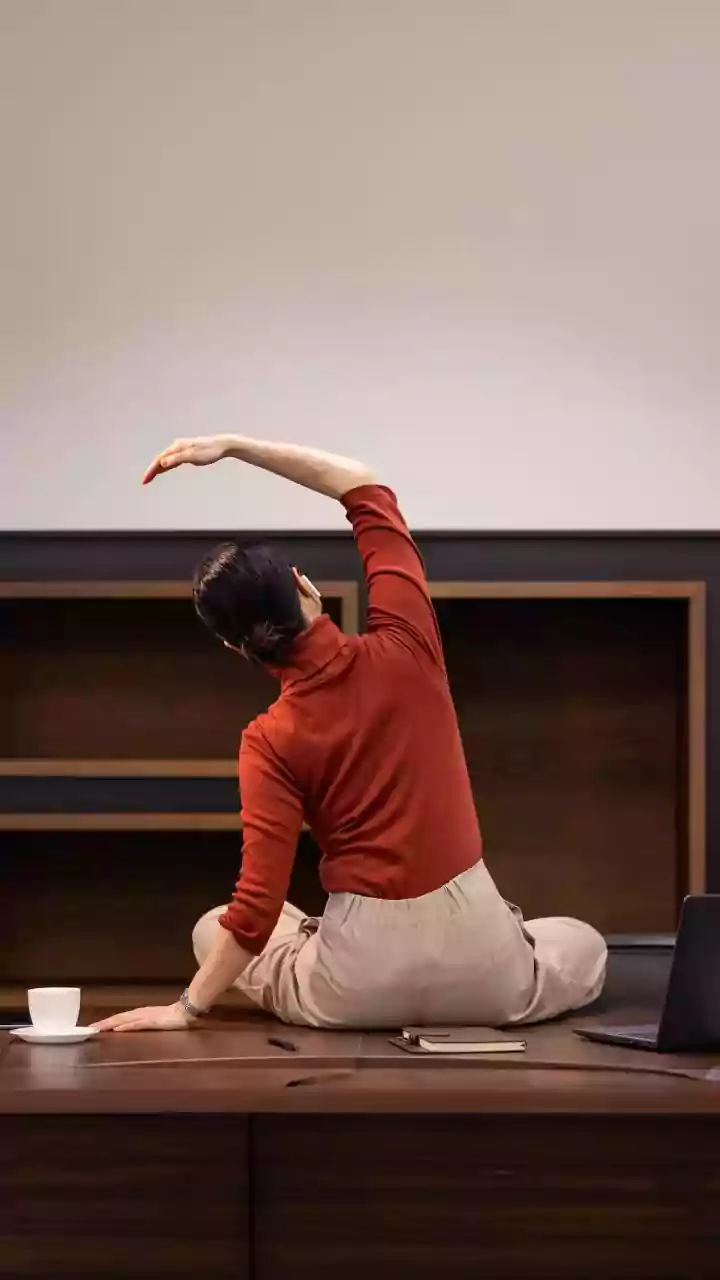





For many working professionals, the day moves from one screen to another, emails before breakfast, calls through lunch, meetings in between and long hours spent in the same chair. By afternoon, the neck
feels stiff, the shoulders begin to tighten, the lower back feels heavy and stress starts showing up in the body.
Taking a movement break sounds simple, but doing yoga in the middle of an office can feel awkward. Most people do not want to roll out a mat, sit on the floor or perform a pose while colleagues walk past.
The good news is that a useful yoga break does not need any of those things. A few standing and chair-supported asanas can be done quietly beside a desk, inside an empty meeting room, near a corridor or even while waiting for the next call to begin.
These movements look like regular stretches, take only five to seven minutes and can easily be done in office attire.
START WITH THE SHOULDERS:
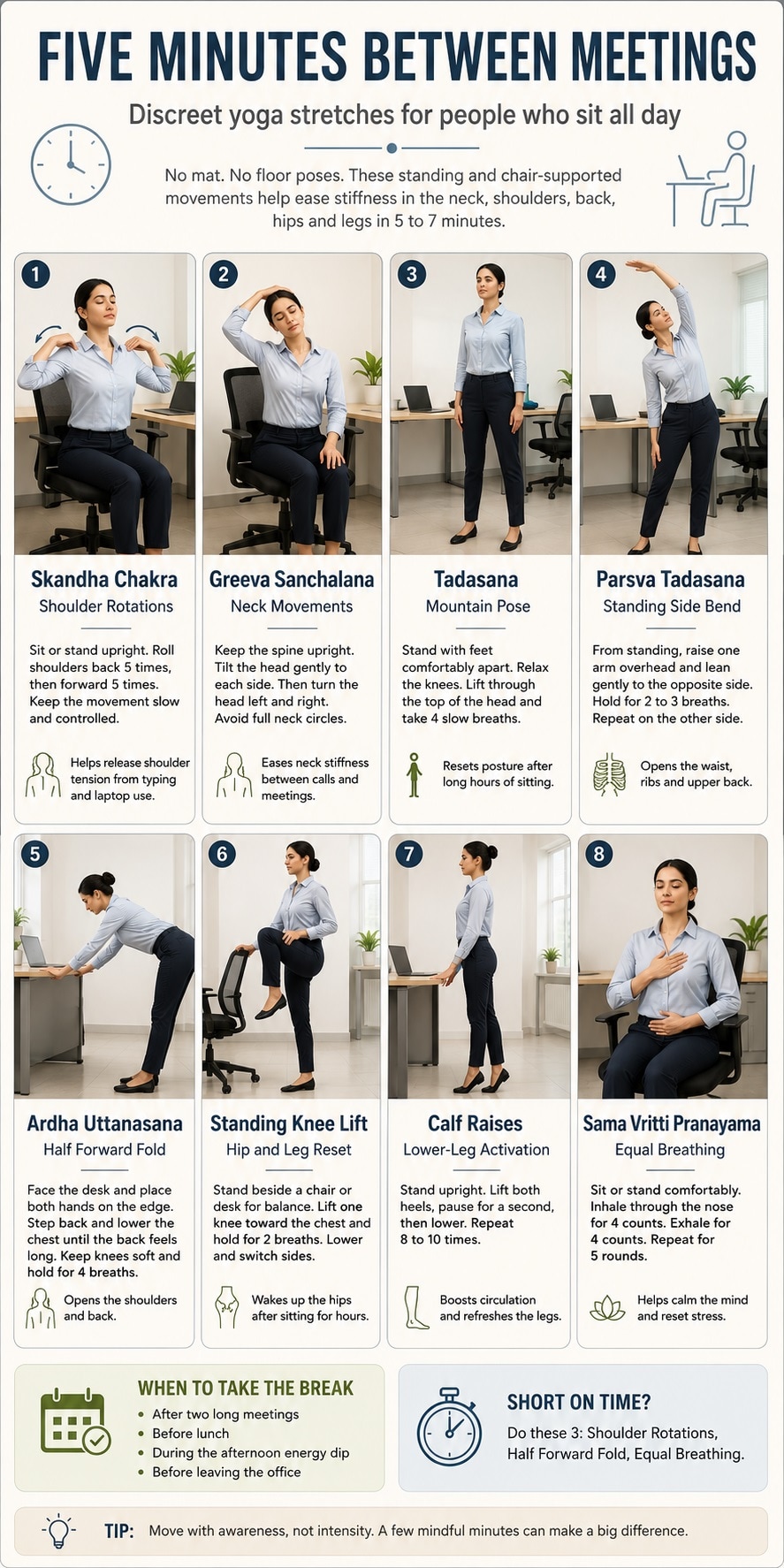
Skandha Chakra, Shoulder Rotations
Sit or stand upright and let both arms rest naturally. Roll your shoulders backwards slowly five times, then bring them forward five times.
Keep the movement controlled and avoid lifting your shoulders towards your ears.
This helps release the tension that builds from typing, using a phone or leaning towards a laptop. It is also one of the easiest movements to do without attracting attention.
OPEN THE NECK GENTLY:
Greeva Sanchalana, Neck Movements
Keep your spine upright and look straight ahead. Slowly tilt your head towards one shoulder, return to the centre and repeat on the other side.
Next, turn your head gently to the left and right, as though looking over each shoulder.
Avoid full neck circles. Keep the movement small and comfortable.
This movement works well between calls, near your desk or even while waiting for a meeting to begin.
RESET YOUR POSTURE:
Tadasana, Mountain Pose
Stand with your feet comfortably apart, keep your knees relaxed and let your arms rest beside your body.
Lift through the top of your head, draw your shoulders slightly back and take four slow breaths.
From the outside, it simply looks like standing normally, but the posture helps counter the rounded position created by hours of sitting.
ADD A SIMPLE SIDE STRETCH:
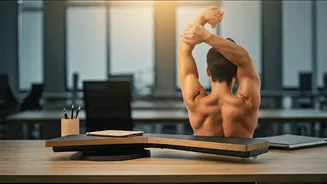
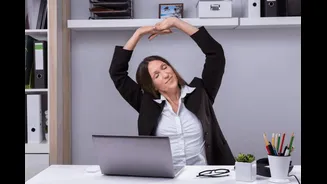
Parsva Tadasana, Standing Side Bend
From Tadasana, raise one arm overhead and lean gently towards the opposite side. Keep both feet on the floor and avoid twisting forward.
Hold for two or three breaths, return to the centre and repeat on the other side.
You can keep the stretch small when doing it in an open office. It helps release the sides of the waist, ribs and upper back without requiring much space.
USE THE DESK FOR SUPPORT:
Ardha Uttanasana, Half Forward Fold
Stand facing your desk and place both hands on its edge. Take a few steps backwards and lower your chest until your back feels long.
Keep your knees slightly bent, relax your neck and maintain straight arms.
Hold for four slow breaths, then step forward and return to standing.
This pose opens the shoulders and back after long periods of sitting. It looks like a regular desk stretch and takes less than a minute.
WAKE UP THE HIPS AND LEGS:
Standing Knee Lift
Stand beside a chair or desk for balance. Lift one knee towards your chest, hold it gently for two breaths and lower it.
Repeat on the other side.
You do not need to pull the knee high. Even a gentle lift helps mobilise the hips after several hours of sitting.
FOLLOW IT WITH CALF RAISES:
Stand upright and slowly lift both heels from the floor. Pause for a second, then lower them again.
Repeat eight to ten times.
Calf raises are discreet enough to do near a desk, while waiting for a lift or during a short break outside a meeting room.
END WITH A QUIET BREATHING RESET:
Sama Vritti Pranayama, Equal Breathing
Sit or stand comfortably. Breathe in through your nose for a count of four, then breathe out for a count of four.
Repeat for five rounds.
There is no need to close your eyes or place your hands in a yoga position. Keep your gaze soft and allow your breathing to slow down naturally.
This final minute helps create a pause between one demanding part of the day and the next.
WHEN TO TAKE THE BREAK:
You do not need to wait until the body feels uncomfortable.
Try the routine after two long meetings, before lunch, during the afternoon energy dip or before leaving the office. On particularly busy days, choose just three movements: shoulder rotations, a half forward fold and equal breathing.
ChatGPT can also help tailor the routine to your workspace, available time and specific areas of discomfort.
Try this prompt:
“Create a five-minute discreet yoga and stretching break for a working professional who sits for long hours and feels stressed. Use only standing or chair-supported movements that can be done in office clothes without attracting attention. Name each yoga asana clearly and focus on the neck, shoulders, back, hips and breathing.”
You can also make it more specific:
“Give me three short movement breaks for a busy office day, one before work, one between meetings and one before leaving. Keep each break under three minutes and avoid floor poses.”
The aim is not to perform a complete yoga session in the middle of the office. It is to give your body small opportunities to move before stiffness, fatigue and stress build up.
A few minutes beside your desk may be far more realistic than waiting for the perfect time, place or energy for a full workout.