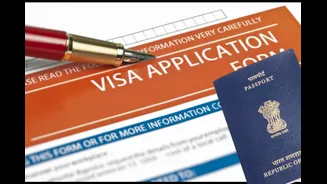









Amid concerns over delays in student visa appointments for Indian applicants, a spokesperson for the US Embassy said the United States remains committed to processing visa applications in accordance with
established rules and guidelines.
Responding to queries over the reported delays, the spokesperson said the US continues to issue visas to eligible student applicants
while ensuring that national security remains a priority.“The U.S. government is committed to processing visa applications in accordance with established rules and guidelines,” the spokesperson said, adding that all student visa applications are assessed on a case-by-case basis.
The embassy reiterated that every application undergoes an individual review in line with existing procedures and security requirements.
Applicants have been advised to regularly check the official website of the US Department of State and the website of the relevant US Embassy or Consulate for the latest updates on visa interview wait times and application procedures.
The clarification comes amid growing concerns among Indian students planning to begin their studies in the United States over delays in securing visa appointments ahead of the upcoming academic session.
Strict H-1B, Green Card And Student Visa Rules
The Trump administration has proposed a sweeping immigration regulatory agenda that could significantly alter the US employment-based immigration system. The planned changes cover the H-1B visa programme, employment-based Green Cards, international student visas, work authorisation, prevailing wage rules and employer compliance.
The proposals have been included in the latest regulatory agendas issued by the US Departments of Homeland Security, Labor and State. They are not yet law and must go through the formal rulemaking process before they can be implemented.
Even so, the agenda offers a clear indication of the administration’s immigration priorities for the coming months and could have major implications for Indian professionals, students and employers.
Indians Could Be Most Affected
Indian nationals account for the vast majority of H-1B visa holders in the United States and are also among the biggest recipients of employment-based Green Cards.
The student community is equally large. The latest Open Doors Report shows that nearly 3.6 lakh Indian students were studying in the US during the 2024-25 academic year, making up around 31 per cent of the country’s international student population.
The H-1B programme is also widely used by Indian technology companies to send skilled professionals to client locations in the US. Meanwhile, H-4 visa holders, spouses of H-1B workers, depend on Employment Authorisation Documents (EADs) to take up jobs or run their own businesses.
As a result, even targeted policy changes could affect a large number of Indians already living, studying or planning to work in the United States.
H-1B Rules May Become Tougher
One of the key proposals, expected to be introduced in August, seeks to tighten eligibility for certain exemptions under the annual H-1B cap of 85,000 visas.
The proposed rule would also impose stricter requirements on employers who place H-1B workers at third-party client sites. In addition, employers with a record of violating H-1B programme rules could face increased scrutiny when filing future visa petitions.
The third-party placement proposal is expected to have a significant impact on Indian IT and consulting companies, many of which deploy H-1B employees to work at client locations across the US.
Although the draft rule has not yet been released, employers may be required to establish a genuine employer-employee relationship, show that workers will perform specialty occupation duties at client sites, and maintain more detailed documentation related to employee assignments.
The administration also plans to strengthen compliance measures by increasing scrutiny of employers that have previously violated H-1B programme requirements when they submit future petitions.