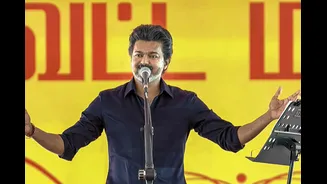









A complete political churn is underway in Tamil Nadu, with reports suggesting that around 10 more AIADMK MLAs are preparing to resign from the Assembly and join Chief Minister Vijay’s Tamilaga Vettri Kazhagam
(TVK). According to a report in The Indian Express, the legislators have been assured they will be fielded as TVK candidates in the by-elections expected to be announced in August, a strategy that has already been used for earlier entrants into the ruling party.
If the move goes through, it would bring Vijay significantly closer to achieving what appeared out of reach immediately after the 2026 Assembly election – a majority for TVK on its own in the 234-member House.
The Numbers Behind TVK’s Strategy
The Assembly’s halfway mark is 118.
In the 2026 Assembly election, TVK emerged as the single largest party with 108 seats, falling 10 short of a majority. After Vijay vacated one of the two seats he had won, TVK’s effective strength came down to 107. He formed the government with the support of the Congress (5 MLAs) and outside backing from the CPI, CPI(M), VCK and IUML, taking the government’s strength to 120 – enough to comfortably win the trust vote, but leaving TVK itself short of the majority mark.
Since then, TVK has been working towards securing the majority mark on its own rather than relying on coalition arithmetic.
The first phase of that strategy has already weakened the principal opposition. The AIADMK, which won 47 seats in the election, has seen a string of resignations, reducing its effective strength to 41 MLAs, according to the latest reports.
If another 10 AIADMK legislators resign, the opposition party’s strength would fall to 31. Should all 10 subsequently contest and win the bypolls on TVK tickets, Vijay’s party would rise from 107 to 117 MLAs – just one short of the simple majority on its own. Even one additional crossover or bypoll victory thereafter would take TVK past the 118-seat mark, allowing it to govern without depending on alliance partners.
How The AIADMK Rebellion Unfolded
The AIADMK crisis had begun immediately after the 2026 Assembly election. Although the AIADMK emerged as the second-largest opposition bloc with 47 MLAs, cracks surfaced within days over the party’s response to the hung verdict and the formation of the Vijay government.
The first major rupture came during the trust vote, when 25 of AIADMK’s 47 MLAs defied the party leadership and voted in favour of the Vijay government, exposing a split between the camp led by AIADMK general secretary Edappadi K Palaniswami (EPS) and legislators who favoured extending support to the new dispensation.
The rebellion soon moved beyond the Assembly floor.
The AIADMK rebellion was spearheaded by senior leaders SP Velumani and CVe Shanmugam. While Velumani led the bloc of MLAs that backed Vijay’s government during the trust vote, Shanmugam emerged as the organisational face of the revolt against AIADMK general secretary Edappadi K Palaniswami, with both leaders questioning his leadership after the party’s poor electoral performance.
Three AIADMK legislators resigned from both the party and the Assembly before joining TVK. They were followed by another MLA, while former ministers including C Vijayabaskar and MR Vijayabhaskar also crossed over to Vijay’s party. The exodus later expanded beyond legislators, with several senior AIADMK leaders and former ministers joining TVK in what became the biggest political crossover since the election.
EPS’s Attempts To Contain The Damage
Facing an accelerating exodus, EPS has attempted to restore unity through organisational changes. The AIADMK leadership publicly insisted there would be no further divisions after the initial defections and appealed for party unity. Subsequently, EPS announced a series of fresh organisational appointments aimed at accommodating dissatisfied leaders.
However, those efforts appear to have yielded limited results. Reports indicate that nearly 10 rebel MLAs rejected the new responsibilities offered to them, signalling that reconciliation attempts had failed to arrest the rebellion. At the same time, party cadres have publicly urged the leadership to take stronger measures to stop the steady migration of leaders and workers to TVK.
What Happens Next
For now, TVK continues to enjoy a comfortable working majority with the support of its allies. But the ongoing campaign to induct AIADMK legislators suggests Vijay’s objective extends beyond coalition stability.
If the reported resignations of 10 AIADMK MLAs materialise and are eventually followed by successful by-election victories, TVK would stand on the verge of an absolute majority in the Assembly on its own. At the same time, AIADMK’s strength would shrink further, raising fresh questions about the future of the state’s principal opposition just months after the Assembly election.