
On 28 December 1885, a political association was formed in Bombay with ambitions modest by any modern standard. The Indian National Congress began as a forum for educated Indians to petition an imperial
state for redress, reform and dignity within the British system. That it was founded by Allan Octavian Hume, a retired British civil servant, is neither incidental nor merely ironic.
And it wasn’t the founder alone who was not Indian. Subsequent presidents of the party included foreigners George Yule (1888), Sir William Wedderburn (1889, 1910), Alfred Webb (1894), Sir Henry Cotton (1904), Annie Besant (1917) and Edith Ellen Gray, aka Nellie Sengupta, (1933). This situates the Congress firmly within the political grammar of late 19th-century liberal imperialism. The distance between that beginning and the party’s present predicament is so large that treating Congress as a single, continuous institution risks flattening history.
The Congress has been, at different phases in the past, an elite debating society, a mass movement, a hegemonic ruling party, a patronage machine, a vehicle for dynastic leadership and, most recently, an opposition force struggling to define a coherent alternative to the dominant Bharatiya Janata Party.
Origins under empire, petition, loyalty, limits
The early Congress was loyalist in approach. Its leaders, drawn largely from the English-educated professionals, believed that moral persuasion, resolutions and memoranda could civilise the imperial rule. Annual sessions debated civil service examinations, budgetary discrimination and racial exclusion. The outfit, a glorified pressure group, had no stomach for confrontation. Early Congress leaders like Dadabhai Naoroji and WC Bonnerjee wrote letters to power, hoping against hope that the ‘lords’ would answer the prayers.
The partition of Bengal and the rise of assertive nationalism sent the Congress a message as the third decade of the 20th century arrived: Perform or perish!
Mass movement, moral authority, strategic ambiguity
The entry of a South Africa-via-England-returned Mohandas Karamchand Gandhi altered Congress beyond recognition. He mobilised the masses and called for non-cooperation with and civil disobedience of the colonial order. The Congress’s strength now lay in its ability to speak across classes, regions and religions, albeit imperfectly. The Congress spoke for peasants and workers while being led by landlords and lawyers. Nevertheless, this broad church was an Indian asset.
The contradiction between the Congress’s rhetorical commitment to democracy and its intolerance of internal dissent surfaced when Subhas Chandra Bose, elected Congress president against Gandhi’s preferred candidate Pattabhi Sitaramaiah, found himself isolated by Bapu’s coterie.
This is the stage that challenges any present-day Congress politician’s claim that the party bears the legacy of India’s freedom struggle, as the head of the Indian National Army, who most audaciously fought for India’s independence, parted ways. Most of the other armed revolutionaries had died by the time the British left, leaving no competition for the Congress in 1947.
From movement to state, dominance without competition
With the transfer of power from the British, the brown sahibs inherited the very system they had opposed. While the party went on to win the ‘tournament’ of the 1951-52 election by a walkover, ideological fissures within the party widened.
Under Jawaharlal Nehru, trained by Fabian socialist Professor Harold Laski, Irish theosophist Ferdinand T Brooks and the Majlis Society, the Congress oriented the country’s governance leftward, combining parliamentary democracy with state-led economic planning. The public sector, dominated by heavy industry, became the pillar of the then-Congress’s policy. Medium and small-scale industries were ignored. The nationalisation of Tata Airlines in 1953 — JRD Tata called it Nehru’s “backstabbing” — marked an early blow to conspicuous private enterprise.
The government of the time had a soft corner for the Muslims torn by Partition. Meanwhile, Nehru kept ‘discovering’ the India that was Hindu, never quite completing the task.
For nearly two decades, the Congress enjoyed dominance without serious national competition. The absence of alternation in power carried costs. Within the Congress Parliamentary Party and the wider organisation, there was a long-standing tension between Nehru’s left-leaning vision and a conservative, pro-property bloc. Leaders such as Sardar Vallabhbhai Patel, C Rajagopalachari, KM Munshi and later Morarji Desai were sceptical of heavy planning, state ownership and Nehru’s flirtation with democratic socialism.
These disagreements were substantive, but they were rarely resolved through open, institutional debate within the party. The early death of Patel removed the only counterweight of comparable stature to Nehru. Rajaji eventually left Congress altogether, forming the Swatantra Party, an early example of disagreement being resolved by departure rather than debate.
The First Constitutional Amendment (1951), adding “reasonable restrictions” for public order, state security, and foreign relations, put a question mark on Nehru’s liberal ethos. The dismissal of the first elected communist government in Kerala, though directed at an opposition party, had an internal chilling effect within the Congress. While Nehru was a leftist himself, his tolerance for competition was minimal.
Indira Gandhi, centralisation, rupture
Indira Gandhi would not even mind breaking the party to reign supreme. Facing internal discord, she split the party and recast the Congress as a vehicle of personal authority, the Congress (Requisitionists), when in 1969, a K Kamaraj-led faction, the “Syndicate”, formed the Congress (Organisation).
Unsure of being able to keep occupying the prime minister’s office, Nehru’s daughter sought help from communist MPs who demanded from the ‘Goongi Gudiya’ decisive control over the country’s education system in the quid pro quo.
Even when she did not need the help from communists, Indira Gandhi had been turning more and more socialist, nationalising banks and insurance companies and cultivating a general contempt for the rich among the people through mass media, and, most glaringly, school textbooks written by Marxists.
This ensured the worst political outcome when, brainwashed by a romantic celebration of the ‘poor but principled’ proletariat for decades, even the opposition turned competitively leftist, offering no ideological choice to the voter! Indira Gandhi’s authoritarianism was worth challenging, of course. Still, there could have been no greater irony in Indian politics than the fact that a socialist Jayaprakash Narayan challenged a super-socialist Indira Gandhi, claiming the latter was not socialist enough!
The consequence was evident in the economy. The Morarji Desai-led Janata government sacked Tata from his leadership roles in Air India in 1978, a highlight of the three years of erratic governance by the ragtag coalition of disgruntled former Congress leaders, Lohiaites and the Bharatiya Jana Sangh.
Rajiv Gandhi, modernisation, hesitation
Rajiv Gandhi entered office with a promise of technocratic modernisation and clean governance, but his responses to religious mobilisation, whether in the Shah Bano case or the opening of the locks at the disputed site in Ayodhya, were mutually conflicting.
The Congress was caught between ambivalent assurances to communities and electoral calculations. This confusion could have created space for a more assertive Hindu nationalism, but the BJP was not yet a formidable rival. What led to the Congress’s recession from the map of India was a common sentiment shared by several provinces that the oldest party was now a New Delhi-based apathetic ruler. West Bengal and the southern states had rejected such ‘binocular governance’ under Indira Gandhi; undivided Uttar Pradesh and Bihar dumped the Congress on Rajiv Gandhi’s watch.
The spine-chilling commonality between the mother and the son was the assassination of both by products of such parochial extremism that they had themselves nourished. Satwant Singh and Beant Singh were nothing but political progenies of Jarnail Singh Bhindranwale. Kalaivani Rajaratnam, alias Dhanu, was a product of the clandestine mercenary training Indira Gandhi provided the LTTE with, whom her son antagonised.
Rao, reform, compulsion, silence
Under PV Narasimha Rao, the Congress dismantled key elements of the licence-quota raj it had championed for decades. This liberalisation was not born of ideological conversion but of necessity. Balance of payments constraints left little choice.
The five years of Rao could have made the people forget the dynasty. However, plagued by accusations of corruption in the JMM bribery scandal, security scam, St Kitts forgery case, Lakhubhai Pathak cheating case, Sukh Ram telecom scandal and Hawala, Rao went after a few fellow Congress leaders to pose as an objective, impartial administrator. This made ND Tiwari and Arjun Singh break away with their All India Indira Congress (Tiwari), while GK Moopanar formed the Tamil Maanila Congress.
UPA years, coalition, perception
The leadership avoided owning Rao’s reforms. Prime Minister Manmohan Singh (2004-14), the mason of economic change under architect Rao, appeared defensive about his work as the finance minister of the period 1991-96, as if liberalisation were a deviation requiring apology rather than a strategic correction. Thus, the Congress lost its monopoly over the language of growth, still retaining the blame for the ‘garibi’ that never looked alleviated during the Nehru-Indira-Rajiv years.
Running the government with post-poll alliances, winning merely seven seats more than the BJP in 2004, the Congress-led United Progressive Alliance accepted all treasury-draining demands of 60 communist MPs supporting the government, riding on the returns from the momentum Atal Bihari Vajpayee had given to the economy. As economics sees a lag effect, the indices looked better than Vajpayee’s. However, the Centre’s political compulsion to grin and bear with the tantrums of coalition partners led to the most ignominious stretch in Indian governance. The news of the 2G spectrum scam, coal block allocation scam, Commonwealth Games scam, railway scam, Adarsh Housing Society scam, etc, broke every other month. Numbed by the media’s opprobria, the government of the day froze, ceasing to make decisions, marking the last couple of years of the UPA with “policy paralysis”.
When the UPA lost in 2014, an internal review by AK Antony concluded that the Congress had failed to challenge the idea that it was anti-Hindu.
Opposition after dominance, Rahul Gandhi, experiment without anchor
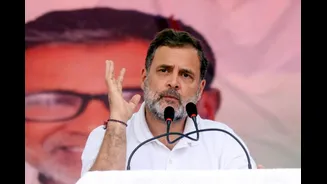
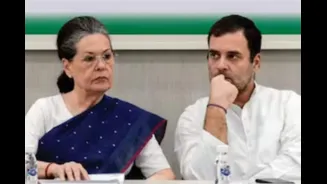
Since losing power at the Centre, the Congress has struggled to adapt to a competitive, media-saturated political arena dominated by Narendra Modi. Rahul Gandhi’s leadership has been marked by episodic campaigns rather than a sustained ideological project. He takes up an issue with intensity and then drops it. Temple runs, later abandoned, sat uneasily alongside iftar parties — like father, like son!
Solidarity with activist groups, from university protestors to affluent agrarian lobbies demanding statutory guarantees, disoriented the party’s social base. Overseas engagements, framed as global advocacy, often look like the US deep state’s operations in which the Congress’s top leader is a mere pawn.
The BJP has successfully cast Rahul Gandhi as goofy. The Congress, once the arbiter of political legitimacy, finds its boss defined and confined by the party’s arch-rival. Even its own history restricts the party’s options. The Rao experience suggests the Congress needs the albatross of the dynasty around its neck, even with a bungling scion of the family, lest the organisation should disintegrate.
The present puts the Congress in a bind, too. It may want voters to believe the current government is crony capitalist, but no one in India recalls the pre-1991 era as being economically better than the post-1991 era. Meanwhile, Prime Minister Modi has checked all the boxes on the leftist pamphlet as well, bombarding the underprivileged with welfare schemes. So, which economic model should the Congress return to?
Epilogue of existence
What remains of the Congress now is a cheer-led mascot with diminishing grassroots vitality. Outside the few bipolar states, the Congress wins at times, but only as a junior alliance partner or after a state-level star campaigner wins the mandate after requesting Rahul Gandhi to stay away from the hustings.
Looking across its 140 years, the Congress hasn’t been a continuum. The party that petitioned the empire bears little resemblance to the Congress that led a mass movement, which, in turn, differs from the Congress that ruled a postcolonial state and the Congress that now occupies opposition benches.
Adaptation was once its strength. Today, Nehru’s claim that his party lacks ideology but has a vision appears disingenuous. Historical prestige no longer goes undisputed. Without clarifying what it stands for beyond opposition to the BJP, the Congress risks extinction. The Indian National Congress has exhausted the political model it created.
The author is a senior journalist and writer. Views expressed in the above piece are personal and solely those of the author. They do not necessarily reflect News18’s views.