





The Rashtriya Swayamsevak Sangh (RSS) has formed an informal group which will submit its recommendations to the government on ways to regulate OTT (Over the Top) content and tackle what they are terming
as “cultural pollution” on the online streaming platforms, according to The India Express.
According to The Indian Express, the RSS panel comprises pracharaks engaged in the fields of education and culture as well as former vice-chancellors.
According to the report, the panel was established a few months ago, and it held its first meeting last month.
“This is an informal group, and a proposal will be made which will ultimately be submitted to the Union Ministry of Culture and other stakeholders in the central government to deal with the dirt coming out on OTT platforms,” the person who was aware of the matter was quoted as saying by The Indian Express.
“We need something like a censor board to deal with this cultural pollution affecting our families and the young generation in particular,” he added.
The panel does not have a deadline for submitting its recommendations, and it is planning to hold wider consultations with the people in the field of law as well before submitting the proposal, as per the report.
According to The Indian Express, the Sangh decided to form the panel after receiving feedback from Kutumb Prabodhan, an initiative by RSS that aims at strengthening traditional family bonds and cultural values in India.
“Sangh functionaries view OTT platforms as one of the sources of moral corruption,” as per the RSS source.
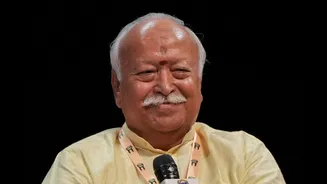
Mohan Bhagwat On OTT Content
The panel has been formed by the RSS two years after its chief Mohan Bhagwat had called OTT content a driver of “moral corruption”.
While delivering the annual Vijayadashami address in Nagpur on October 12, 2024, Bhagwat had said, “The kind of things shown on OTT platforms are so disgusting that talking about it too would be indecent… There is a need to regulate it through law because it is also one of the big reasons for moral corruption,” the RSS chief had then said, blaming the OTT platforms for alleged “perversion in society”.
Debate On Censor Over OTT Content
Unlike films released in cinemas, which require certification from the Central Board of Film Certification (CBFC) under the Cinematograph Act, 1952, content released on OTT platforms does not undergo a comparable pre-certification process.
OTT platforms are instead regulated through the Information Technology (Intermediary Guidelines and Digital Media Ethics Code) Rules, 2021, along with provisions under other applicable information technology and criminal laws.
The absence of a certification mechanism similar to the one applicable to theatrical films has periodically prompted concerns over what some have described as “gaps in regulatory framework” governing digital streaming content.
The government has, however, taken action against OTT platforms over alleged violations. In the Lok Sabha on July 22 this year, Minister of State for Information and Broadcasting L Murugan said 50 OTT platforms had been disabled from public access in India over a two-year period.
According to Murugan, the action was taken over the display of obscene content and alleged violations of provisions under the Information Technology Act, Section 294 of the Bharatiya Nyaya Sanhita and the Indecent Representation of Women (Prohibition) Act, 1986.