







One of the most significant and technically complex clauses in the newly signed US-Iran Memorandum of Understanding (MoU) has little to do with missiles, sanctions or the Strait of Hormuz. Instead, it centres
on around 440 kilograms of uranium enriched up to 60 per cent purity, a stockpile that has been at the heart of years of diplomatic deadlock between Washington and Tehran.
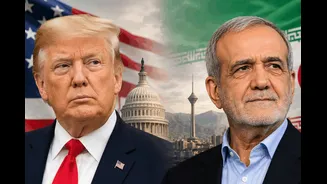
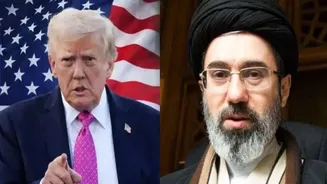
Under the MoU signed by US President Donald Trump and Iranian President Masoud Pezeshkian, Iran has agreed to downblend, or dilute, this highly enriched uranium under the supervision of the International Atomic Energy Agency (IAEA), instead of destroying it or handing it over to another country. The clause represents one of the biggest compromises in the agreement and will likely determine whether the broader peace deal survives its 60-day implementation period.
Read More: Hormuz Reopening, Down-Blending Of Uranium, No Nukes: Inside The 14 Clauses Of US-Iran Peace Deal
What is uranium enrichment?
Natural uranium contains only about 0.7 per cent uranium-235, the isotope needed to sustain a nuclear chain reaction. To make uranium useful, it is processed in centrifuges that increase the concentration of uranium-235, a process known as enrichment. The higher the concentration, the more powerful the uranium becomes.
Broadly, enrichment levels are classified as:
- 3-5 per cent: Suitable for most civilian nuclear power reactors.
- Up to 20 per cent: Used in some research reactors but considered highly enriched uranium.
- 60 per cent: Far beyond civilian energy requirements and technically close to weapons-grade.
- Around 90 per cent: Weapons-grade uranium suitable for nuclear bombs.
Although 60 per cent is not weapons-grade, nuclear experts say it represents the hardest part of the enrichment process. Once uranium reaches that level, increasing it to 90 per cent requires considerably less time than enriching it from natural uranium.
What is downblending of enriched uranium?
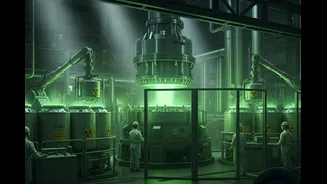
Downblending is essentially the reverse of enrichment. Instead of increasing the concentration of uranium-235, technicians mix highly enriched uranium with either natural uranium or depleted uranium, reducing its enrichment level.
It’s like adding water to concentrated fruit juice. The juice remains the same product, but its concentration drops.
In Iran’s case, the MoU requires the country to dilute its uranium enriched to 60 per cent so that it is no longer considered near weapons-grade. The exact target level will be negotiated during the implementation phase, but officials have indicated it would be reduced to levels suitable only for peaceful civilian purposes. The entire process will be monitored by inspectors from the IAEA.
How much enriched uranium does Iran have?
According to the IAEA’s latest verified assessment before inspectors lost regular access following the 2025 conflict, Iran possessed about 9,875 kilograms of enriched uranium in total. Of this, 440.9 kilograms was enriched up to 60 per cent purity. More than 6,000 kilograms was enriched up to 5 per cent, while smaller quantities were enriched to 20 per cent. That 440.9 kg stockpile is what has alarmed Western governments.
Experts estimate that, if further enriched to roughly 90 per cent, it could theoretically provide enough fissile material for around 10 nuclear weapons, although building an actual bomb would require several additional technological and engineering steps. Iran has consistently maintained that its nuclear programme is exclusively for peaceful purposes.
Why was this stockpile the biggest obstacle in negotiations?
For months, the fate of Iran’s enriched uranium became the single biggest sticking point in negotiations. The United States initially wanted the material removed from Iran altogether or destroyed under international supervision.
Iran firmly rejected both options. Tehran argued that the uranium had been produced legally under its civilian nuclear programme and insisted that giving up the stockpile would amount to surrendering years of scientific and technological progress. Iranian leaders also feared that once the uranium left the country, there would be no guarantee that sanctions relief promised by Washington would actually materialise.
The disagreement threatened to derail negotiations several times before both sides settled on a compromise: the uranium would remain inside Iran, but its enrichment level would be reduced under continuous IAEA monitoring.
Why didn’t the US insist on destroying the uranium?
The decision reflects political reality as much as nuclear science. Destroying or exporting Iran’s enriched uranium would almost certainly have been unacceptable to Tehran and could have collapsed the negotiations. Downblending offers a middle path.
It significantly lengthens the time Iran would need to produce weapons-grade uranium while allowing the country to retain ownership of the material. From US’s perspective, the arrangement also creates a verifiable process under international supervision rather than relying solely on political assurances.
What happens next?
The signing of the MoU does not end the nuclear dispute, but begins a new phase of it. Over the next 60 days, inspectors, diplomats and technical experts will have to determine exactly how the uranium will be diluted, to what enrichment level, how compliance will be verified and what sanctions relief Iran will receive in return.
If those steps are completed successfully, the downblending clause could become the foundation of a broader and more durable nuclear agreement.
If implementation falters, however, the uranium stockpile that helped bring both sides to the negotiating table could once again become the biggest source of tension between US and Iran.