



A familiar pattern has resurfaced in US President Donald Trump’s commentary on global conflicts, with a series of disputed claims on the Iran war drawing scepticism from officials, analysts and even US media
outlets.
In the aftermath of Operation Sindoor, Trump had repeatedly asserted that he played a key role in mediating a ceasefire between India and Pakistan, claims firmly rejected by New Delhi. A similar trajectory is now visible in his remarks on the Iran conflict, where the United States is itself a direct participant.
On Monday, Trump told The New York Post that Vice President JD Vance was already en route to Pakistan for talks linked to Iran. “They’re heading over now… they’ll be there tonight, Islamabad time,” Trump was quoted as saying.
However, people familiar with Vance’s schedule later said that the vice president was expected to leave for Pakistan only on Tuesday, with talks beginning Wednesday.
Vance’s motorcade was subsequently seen departing the White House, contradicting the president’s earlier timeline.
While such inaccuracies might ordinarily be brushed aside, analysts say they form part of a broader pattern.
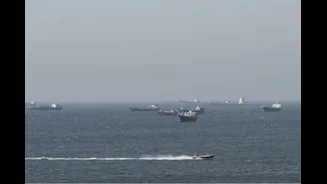
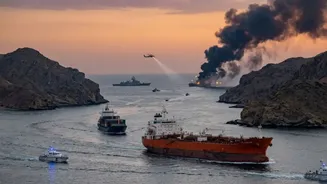
Trump’s comments on the strategic Strait of Hormuz further fuelled doubts. After Iranian Foreign Minister Abbas Araghchi said the strait would remain open to commercial shipping during the ceasefire, Trump declared the “Hormuz situation is over” and claimed Iran had agreed to never close the route again.
Subsequent developments contradicted the assertion.
Iran clarified that shipping was permitted only through a limited, approved corridor near its coastline, while US officials confirmed that Washington’s blockade of Iranian ports remained in place. Tehran later announced fresh restrictions on the waterway.
Trump has also made other contested statements in recent days, including attributing support for nuclear weapons to Pope Leo XIV, claiming Iran’s military had been “completely destroyed”, and suggesting Gulf states were never expected to face Iranian retaliation, all of which were disputed by independent reporting or official responses.
The president has even contradicted himself on the role of his own vice president. On Sunday, Trump said Vance would not travel to Pakistan for security reasons, only for senior US officials to later confirm that Vance would in fact lead the delegation.
Scepticism has also greeted Trump’s claims of sweeping Iranian concessions.
He has said Tehran agreed to an unlimited halt to nuclear activity, an end to backing proxy groups, and the removal of enriched uranium from the country.
Iranian officials have denied these assertions, with parliamentary speaker Mohammad Bagher Ghalibaf saying the president made “seven claims in one hour, all of them false”.