






Everything you probably saw in Hollywood films a decade ago is finally translating into real world experiences. Humanoid robots are stepping out of the lab and into people’s homes. Robotics company Tau
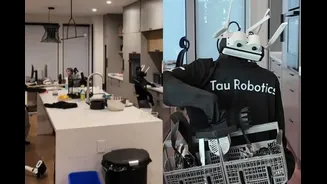
Robotics has launched an invite-only service in San Francisco that lets residents book humanoid robots for household cleaning at $30 an hour.
The robots can reportedly clean surfaces, vacuum floors, take out the trash and tidy everyday clutter. Dressed in black uniforms and given names such as Chelsea, Elon and Tony, the machines are trained using artificial intelligence. Each robot reportedly costs around $50,000 to build, while customers pay $30 for one robot for 60 minutes or $60 for two.
CEO Alexander Koch announced the service on X, writing, “You can now book two humanoids for our cleaning service in SF. One humanoid for 60 minutes is $30, two are $60.” The price is particularly interesting when compared with San Francisco’s minimum wage, which is currently $19.61.
But despite the futuristic appearance, Tau’s robots aren’t completely autonomous. Koch made that clear when he explained, “A human is always supervising the AI and guiding it at different levels.” In other words, there is still a person behind the scenes helping the robot navigate the job.
You can now book two humanoids for our cleaning service in SF. One humanoid for 60 minutes is $30, two are $60.
You can book a cleaning at https://t.co/Brl42KyISx. If you don’t have an invite code yet, join the waitlist. Timelapse at 5× speed (~40 minutes in real time). pic.twitter.com/lUbBT7Kjet
— Alexander Koch (@alexkoch_ai) August 13, 2026
Koch also explained the limitations of the technology in an interview with CBS News. “It doesn’t know how to walk upstairs, for example. It doesn’t know where to vacuum. That’s directed by mostly humans at the moment.” That means the $30-an-hour service isn’t quite the completely independent robot butler that science-fiction movies have promised. The company is currently keeping the service invite-only, with prospective customers required to join a waitlist.
The idea has unsurprisingly divided the internet. Some users see the robots as an early step towards a future where household chores are automated, with one predicting, “Eventually, home robots will become quite affordable, and most people will possess them.” Others questioned whether the technology is worth the money when it still requires human supervision. One commenter asked, “Why would someone pay 30$ for something inefficient like this when you can get a real human who would do better work for the same money and you supply them a job?”
The bigger questions, however, go beyond whether a robot can vacuum a floor. Users have raised concerns about privacy, safety, responsibility in case of accidents and what happens when a machine connected to the internet enters someone’s home. Another commenter wondered: “if there’s accidents, who is to blame? no legal/monetary consequences?”