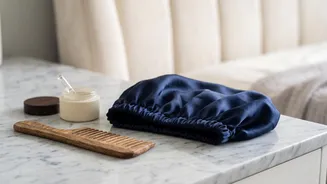









When the temperature drops, your skincare routine deserves a little more thought. Think gentle cleansing, intelligent hydration, a richer moisturiser and sunscreen that stays firmly in the picture, even
when the sun seems to have disappeared.
Winter has a way of changing the rules. The face wash that felt perfectly refreshing in July suddenly leaves your cheeks feeling tight. Your favourite moisturiser seems to vanish before lunchtime. And the skin around your nose, lips and eyes begins making its own rather unwelcome appearance.
It is tempting to respond by buying everything labelled nourishing, repairing or ultra-hydrating. The bathroom shelf fills up, the skincare budget expands, and somehow your complexion still feels uncomfortable.
But a good winter routine is not about having more products. It is about understanding what your skin needs when the weather changes.
Cold air, low humidity, wind and indoor heating can all contribute to moisture loss and a compromised skin barrier. The answer is a little less aggression, a little more hydration and a routine that is consistent enough to become second nature.
Four steps. A handful of thoughtful products. And, ideally, no elaborate ten-step ritual before your first cup of coffee.
Step 1: Cleanse without stripping
There is something satisfying about a face wash that leaves your skin feeling exceptionally clean. Unfortunately, that tight, squeaky sensation is not necessarily a sign that you have done your skin a favour.
During winter, a gentle cleanser is often the better choice, particularly if your skin is dry, sensitive or prone to flaking. The objective is to remove sweat, sunscreen, makeup and everyday impurities without unnecessarily stripping away the oils that help maintain your skin barrier.
Look for a cleanser that leaves your skin comfortable after rinsing. Creamy or hydrating formulations can be especially appealing during colder months, although the right texture will depend on your skin type.
If your skin is already dry, you may find that cleansing once in the evening and simply rinsing with water in the morning works well. If you have oily or acne-prone skin, you may prefer to continue using a gentle cleanser twice daily.
The trick is to pay attention to how your skin feels afterwards, rather than chasing that overly clean sensation.
Step 2: Give your skin a targeted treatment
Once your skin is clean, consider what it actually needs. Is it feeling dehydrated? Does it look dull? Are dark spots or uneven tone your main concern?
Winter is not an invitation to layer every active ingredient you own. Instead, choose one treatment that addresses your primary concern and introduce it thoughtfully.
For skin that feels thirsty, ingredients such as hyaluronic acid and glycerin can help attract and retain moisture. Niacinamide can support the skin barrier and may help improve the appearance of uneven tone. If pigmentation or signs of ageing are your concern, more targeted ingredients may be useful, but they should be introduced according to your skin’s tolerance.
This is where a serum earns its place. It is a focused addition to your routine, rather than another step for the sake of it.
The important thing is to resist the temptation to over-exfoliate or combine several strong actives when your skin is already irritated. If a product causes persistent burning, redness or peeling, stop using it and reassess.
Step 3: Make moisturiser your winter essential
If there is one step worth reconsidering when the weather turns colder, it is moisturising.
A good moisturiser helps reduce water loss and supports the skin barrier. In winter, you may prefer a richer cream to the lightweight gel you enjoyed during warmer weather. Ingredients such as ceramides, glycerin and other emollients can be particularly useful when skin feels dry or uncomfortable.
Apply moisturiser while your skin is still slightly damp after cleansing or your treatment step. You do not need to use an excessive amount; consistency matters more than piling on layer after layer.
For particularly dry areas, a little extra cream around the cheeks, corners of the nose and other rough patches may help. If your skin is oily or combination, choose a formulation that provides sufficient hydration without feeling unnecessarily heavy.
And remember: expensive does not automatically mean effective. The best moisturiser is one that suits your skin, feels comfortable and is easy to use every day.
Step 4: Finish with sunscreen — yes, even in winter
There is a persistent winter misconception that sunscreen can be put away until summer. It cannot.
UVA radiation is present throughout the year and can contribute to premature skin ageing and pigmentation. Daylight exposure varies with the season and location, but sun protection remains an important part of a daytime routine.
Choose a broad-spectrum sunscreen of at least SPF 30, ideally SPF 50 when appropriate for your exposure and preferences, and apply it generously as the final step of your morning skincare routine. Reapply as directed, particularly after sweating, swimming or spending extended periods outdoors.
If you enjoy a tinted sunscreen, it can also help even the appearance of your complexion while providing UV protection. For concerns about visible-light-induced pigmentation, a suitably formulated tinted product containing iron oxides may offer additional protection.
The finishing touch should not be the product that makes your routine look the most expensive. It should be the one you will actually use consistently.
The winter skincare edit: products worth considering
A thoughtful routine does not require every product to come from the same brand. It is perfectly reasonable to combine a practical cleanser, a targeted treatment, a richer moisturiser and a sunscreen that suits your skin.
For this edit, we have selected products from Novology and Lakmé, alongside a premium skincare option and a Fraganote fragrance for the final, lifestyle-led flourish.
1. Novology Moisture Barrier Booster Cleanser
A gentle cleansing option for the first step of a winter routine. Novology’s cleanser is formulated with stearic and palmitic acids, making it worth exploring if your usual face wash leaves your skin feeling uncomfortable.
2. Lakmé Vitamin C Brilliance Serum
For those who want to address dullness and add a brightening-focused treatment, Lakmé’s Vitamin C Brilliance Serum is an accessible option to investigate. Introduce it gradually and follow with moisturiser and daytime sunscreen.
3. Dermalogica Super Rich Repair
For a more luxurious moisturising step, Dermalogica Super Rich Repair is designed for very dry skin. It is the premium choice in this edit for readers looking for a richer cream during colder weather.
The finishing touch: Fraganote Baked Vanilla Eau de Parfum
Skincare done, coat on, keys in hand. A fragrance is the finishing detail that makes getting ready feel like a ritual rather than a task. Fraganote’s Baked Vanilla Eau de Parfum brings a warm, gourmand-inspired note to the edit. It is a fragrance, not a skincare treatment, so keep it separate from your facial routine and avoid spraying it onto irritated skin.
The takeaway
Winter skincare need not be complicated. Cleanse gently, choose one useful treatment, moisturise according to your skin’s needs and finish with sunscreen in the morning.
Adjust the textures as the weather changes, introduce new products one at a time and remember that skin comfort is a better guide than the number of products on your shelf.
The real luxury is not a bathroom counter crowded with expensive jars. It is skin that feels comfortable, a routine that works for your life and the confidence to know when you have done enough.
Prices and availability can change. Verify current listings and seller details before publication. The Fraganote product is included as a fragrance recommendation, not as one of the four skincare steps.