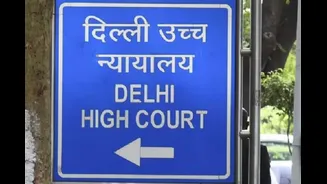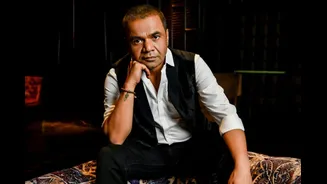










Rajpal Yadav’s long-running cheque bounce case has returned to the spotlight after the Delhi High Court, on July 10, 2026, upheld the actor’s conviction and six-month sentence. The court also directed
that he be sent back to jail, marking another serious turn in a legal battle that began with a film loan more than a decade and a half ago.
For many fans, Rajpal remains one of Hindi cinema’s most beloved comic faces, an actor who built his career through sharp timing, oddball characters and scene-stealing performances. But behind the laughter is a case that shows how risky film financing can become when a passion project fails and personal liabilities enter the picture.
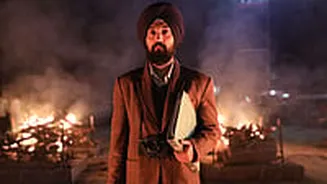
The matter is linked to Ata Pata Laapata, Rajpal’s directorial debut, which was released in 2012. What started as an attempt to expand his creative identity beyond acting eventually became a financial dispute, then a criminal complaint, then a conviction, and now, a jail sentence upheld by the High Court.
How The Case Began
The case goes back to 2010, when Rajpal Yadav reportedly borrowed around Rs 5 crore from Delhi-based M/s Murali Projects Pvt Ltd to fund Ata Pata Laapata. The film was designed as a quirky comedy and marked his move into direction.
However, the film did not work at the box office. Like several mid-budget passion projects in Bollywood, it struggled commercially and left behind a financial burden. With the film failing to recover its costs, Rajpal allegedly found it difficult to repay the loan along with interest and penalties.
Over time, the dues reportedly increased to nearly Rs 9 crore. What began as a film production loan soon became a prolonged repayment dispute.
Why Cheques Became A Legal Problem
To clear the dues, Rajpal Yadav issued multiple cheques. Some reports also mention cheques involving his wife. However, several of these cheques were dishonoured when presented for payment.
This led to complaints under Section 138 of the Negotiable Instruments Act. Under this provision, if a cheque is issued to repay a legally enforceable debt and is dishonoured due to insufficient funds, it can become a criminal offence.
This is where the case became more serious. A bounced cheque is not treated merely as a failed payment under Indian law. If the legal requirements are met, it can result in criminal prosecution, fines and imprisonment.
The 2018 Conviction
In April 2018, a magisterial court convicted Rajpal Yadav and his wife in the cheque bounce cases. Rajpal was sentenced to six months of simple imprisonment, along with fines.
The conviction was later upheld by a sessions court in 2019. Rajpal then approached the Delhi High Court, seeking suspension of the sentence and more time to settle the matter.
Over the years, the High Court granted him temporary relief on multiple occasions. The court also gave him opportunities to make payments and show genuine efforts toward clearing the dues. However, the repeated failure to meet repayment commitments appears to have weakened his position.
What The Delhi High Court Said Now
On July 10, 2026, the Delhi High Court upheld Rajpal Yadav’s conviction and six-month sentence. The court described his conduct as “dubious” and directed authorities to send him back to jail to serve the remaining sentence.
The court reportedly noted that despite multiple chances and assurances, the actor had failed to honour his commitments toward repayment of the dues. This strong observation suggests that the court was no longer inclined to extend relief without compliance.
Rajpal reportedly made an emotional submission before the court, saying, “Sir, kya karoon? Mere paas paise nahin hain. Aur koi upaay nahin dikhta.” In English, it means, “Sir, what should I do? I don’t have the money. I cannot see any other way out.”
The statement gives the case a deeply human dimension. At one level, it is a legal matter involving cheques, liabilities and court orders. At another, it is the story of an actor caught in the aftermath of a film that did not work financially.
Why This Case Matters
Rajpal Yadav’s case stands out because it is not about a sudden controversy. It is the result of years of accumulated legal pressure. The conviction dates back to 2018, the loan goes back to 2010, and the film was released in 2012. In other words, the case has shadowed the actor for almost a major part of his later career.
It also underlines the dangers of film financing in Bollywood. Many actors dream of becoming producers or directors. But filmmaking is a high-risk business. If a film fails, the losses are not always limited to box office numbers. Loans, interest, penalties and personal guarantees can follow a person for years.
For big studios, one failed film can often be absorbed by a larger slate. For individual actors or small producers, one flop can become financially devastating.
The Bigger Film Industry Lesson
The case is a reminder that passion projects need strong financial planning. When actors put personal credibility, cheques or guarantees behind a film, they expose themselves to legal consequences beyond creative failure.
In Bollywood, many mid-level actors do not have the kind of corporate backing or financial safety nets that major studios enjoy. A film may be made with hope, but if the recovery does not happen, the burden can become crushing.
Rajpal’s case also shows that courts take cheque bounce matters seriously, especially when there is a clear debt and repeated defaults despite several opportunities for settlement.
What Happens Next?
Following the Delhi High Court’s latest order, Rajpal Yadav is expected to be sent back to jail to serve his sentence. He may still explore further legal remedies, including approaching the Supreme Court, but as of now, the conviction stands upheld.
The actor was recently seen in Welcome Back To The Jungle and has continued to receive support from several industry colleagues during his legal troubles.