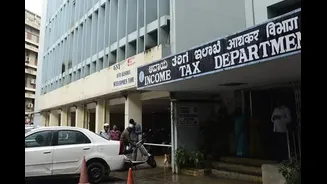









Filing an income tax return (ITR) does not always mean the tax-related process ends once the return is submitted. In some cases, taxpayers may receive an income tax notice, intimation or communication
from the income tax department asking them to correct an error, provide additional information, explain a transaction or pay an outstanding tax demand.
For many taxpayers, receiving an income tax notice can be stressful. However, getting a notice does not necessarily mean that you have done something wrong or that you will have to pay a penalty. Different notices serve different purposes, and several of them relate to routine processing, verification or discrepancies in the information available with the tax department.
Vipin Upadhyay, partner at King Stubb & Kasiva, Advocates and Attorneys, said, “Income tax notices should not necessarily be viewed as an indication of wrongdoing, but rather as an important part of the tax administration and verification process.”
He added that the income tax department increasingly relies on information reported through sources such as the Annual Information Statement (AIS), Taxpayer Information Summary (TIS) and Form 26AS. As a result, taxpayers can receive notices or intimations because of relatively routine issues, including differences in reported income, TDS credits, deductions claimed or incomplete information in the ITR.
“With increasing reliance on data reported through sources such as AIS, TIS and Form 26AS, taxpayers may receive notices or intimations due to relatively routine issues, including discrepancies in reported income, TDS credits, deductions claimed, or incomplete information in the return,” Upadhyay said.
For instance, a return may be treated as defective under Section 139(9) where the information provided is incomplete or inconsistent, while proposed adjustments under Section 143(1)(a) may arise from apparent errors or inconsistencies identified during processing, he added.
What to do in case you receive tax notice
Upadhyay said taxpayers should adopt a “timely and informed” approach when they receive such communications.
“The key to handling such communications is therefore timely and informed action: taxpayers should first verify the authenticity and scope of the notice, reconcile the ITR with their supporting records and available tax information, and respond through the e-Filing portal within the prescribed timeline, with appropriate explanations and documentary evidence,” he said.
The e-Proceedings facility enables taxpayers to view notices, submit responses and upload supporting documents electronically. A proactive approach to reconciliation and record-keeping can significantly reduce the risk of an otherwise minor discrepancy developing into a larger tax dispute or compliance issue, Upadhyay added.
Common income tax notices taxpayers should know about
1. Section 143(1) intimation
This is one of the most common communications taxpayers receive after filing an ITR. Under Section 143(1), the Income Tax Department processes the return and sends an intimation showing the outcome of the processing. Depending on the calculation, the taxpayer may receive a refund, have no additional tax payable or have an outstanding tax demand.
In some cases, the department may propose an adjustment to the income or deductions reported in the return. Taxpayers can respond to a proposed adjustment under Section 143(1)(a).
For example, suppose you claimed a deduction in your ITR but the department’s processing indicates that the claim may not be allowable based on the information available. You may receive a communication giving you an opportunity to respond.
How to tackle a Section 143(1) notice: Do not immediately assume that the department’s calculation is correct. Compare the intimation with your original ITR, Form 26AS, AIS and supporting documents. If the department’s calculation is correct, you may have to accept the adjustment or pay the resulting demand, depending on the circumstances.
If you believe the adjustment is incorrect, submit an appropriate response with the relevant explanation and supporting documents.
2. Defective return notice under Section 139(9)
A return can be treated as defective when it contains incomplete or inconsistent information.
For example, a mismatch between TDS credit claimed and the corresponding income reported in the ITR can create an issue. Similarly, discrepancies between receipts reported in the return and information available with the tax department may result in a defective return notice.
Upadhyay said, “A return may be treated as defective under Section 139(9) where the information provided is incomplete or inconsistent.”
This notice is important because ignoring it can have serious consequences. If the defect is not corrected within the prescribed time, the return may be treated as invalid.
How to tackle a Section 139(9) notice: Read the notice carefully and identify the exact defect mentioned by the department. If you agree with the department, correct the return or submit the required response in the prescribed manner.
If you disagree, explain why the return is not defective and provide supporting information. Taxpayers should not make changes simply to close the notice without first understanding the underlying discrepancy.
3. Notice under Section 142(1)
A notice under Section 142(1) is generally issued when the Assessing Officer requires additional information, documents or clarification from a taxpayer.
It may be issued during assessment proceedings and can ask you to furnish particular documents or information relating to your income, deductions, investments, expenses or other financial details.
For example, the department may ask for documents supporting a deduction, details of a particular bank transaction or information relating to income reported in the return.
How to tackle a Section 142(1) notice: First, read every question or requirement in the notice carefully. Do not send random documents that are unrelated to what has been asked. Prepare a point-by-point response and attach relevant supporting documents. Keep copies of everything submitted.
If the information requested is complicated, relates to business income, large transactions or multiple financial years, it may be sensible to consult a chartered accountant or tax professional before responding.
4. Notice under Section 143(2)
A notice under Section 143(2) is associated with scrutiny assessment. In simple terms, it means that the Income Tax Department wants to examine aspects of the return in greater detail. The department may ask questions or seek documents relating to income, deductions, exemptions, investments or other claims made in the ITR.
Receiving a scrutiny notice does not automatically mean that the taxpayer has committed tax evasion. It means the return has been selected for detailed examination.
How to tackle a Section 143(2) notice: Do not ignore a scrutiny notice. Go through the issues mentioned by the Assessing Officer and collect documents supporting the figures reported in the ITR. Bank statements, salary documents, investment statements, property-related documents, invoices and other relevant records may be required depending on the questions raised.
For a straightforward case, a taxpayer may be able to respond independently through the portal. However, if the scrutiny involves complicated business transactions, property transactions, international income or substantial tax exposure, professional assistance can be useful.
5. Notice under Section 148
A notice under Section 148 is related to reassessment of income that the department believes may have escaped assessment, subject to the applicable legal conditions and procedures.
This is more serious than a routine processing intimation because it can reopen questions concerning income that was not properly assessed earlier.
How to tackle a Section 148 notice: Do not ignore a Section 148-related communication. Check the assessment year, the information referred to in the communication and the response required from you. Collect documents relating to the income or transaction in question.
Because reassessment proceedings can involve detailed legal and factual issues, taxpayers should consider consulting a chartered accountant or tax lawyer before submitting a detailed response, particularly where the amount involved is substantial.
6. Notice for outstanding tax demand
Sometimes taxpayers receive a communication showing that tax is payable. An outstanding demand can arise because the tax calculated by the department differs from the taxpayer’s calculation. It may also result from a mismatch in TDS credit, an incorrect deduction claim, interest computation or other adjustments. A demand should not simply be ignored.
How to tackle an outstanding tax demand: First determine why the demand has been raised. Compare the department’s calculation with your ITR, tax challans, Form 26AS and AIS. If you have already paid the tax but the payment has not been properly reflected, keep the challan and payment details ready.
If the demand is correct, follow the prescribed process to pay it. If you disagree with the demand, submit an appropriate response through the e-Filing portal and provide the supporting information.
7. Section 245 notice for adjustment of refund against demand
A taxpayer expecting a refund may sometimes receive an intimation that an outstanding demand is proposed to be adjusted against the refund. In simple terms, the department may seek to use the refund due to you to recover an existing tax demand.
How to tackle a Section 245 notice: Check whether the outstanding demand is actually payable. If you believe the demand has already been paid, has been incorrectly raised or relates to an issue that has already been resolved, submit your response with the relevant evidence. Do not assume that an old demand appearing on the portal is automatically correct.
8. Notice seeking clarification or information
The department may also send a communication asking the taxpayer to clarify a particular transaction, income figure or discrepancy. Such communications can arise from information available to the tax authorities through various reporting mechanisms.
For example, the department may ask about a high-value transaction, income that appears in AIS but is missing from the ITR, or a discrepancy between reported TDS and income.
How to tackle it: Check the information in your AIS, TIS and Form 26AS and compare it with the ITR you filed. If the information is correct but was accidentally omitted from the ITR, understand whether a correction or other tax-compliance action is required. If the information does not belong to you or is incorrect, provide an appropriate explanation and supporting evidence.