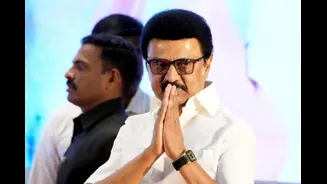




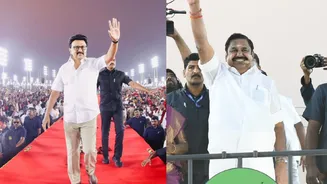
As the Tamil Nadu assembly elections approach, the ruling Dravida Munnetra Kazhagam (DMK) has transitioned into a high-gear campaign mode. Seeking a second consecutive term, Chief Minister MK Stalin has structured
the party’s strategy around three core pillars: an ironclad seat-sharing formula, a “superstar” welfare manifesto, and a high-decibel ideological battle against the National Democratic Alliance (NDA). With the official notification issued and nominations underway for the April 23 polls, the DMK’s roadmap is designed to protect its 2021 gains while neutralising new challengers like actor Vijay’s Tamilaga Vettri Kazhagam (TVK).
How has the DMK structured its ‘Secular Progressive Alliance’ for 2026?
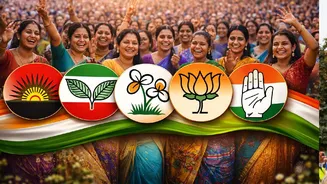
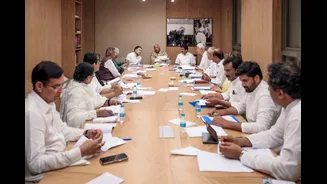
The DMK has prioritised alliance stability as its primary tactical advantage. On March 28, MK Stalin finalised a seat-sharing pact that sees the DMK contesting 164 of the 234 constituencies, ensuring it has enough strength to form a government on its own if necessary. The Congress remains the lead ally with 28 seats, followed by the DMDK—a significant new addition to the bloc—with 10 seats. Other partners include the VCK (8 seats), CPI (5), CPI(M) (5), and MDMK (4). By accommodating smaller regional players early, the DMK has avoided the internal friction currently seen in the opposition AIADMK-BJP-PMK camp, projecting an image of a unified front ready for governance.
What are the ‘Superstar’ welfare promises in the 2026 manifesto?
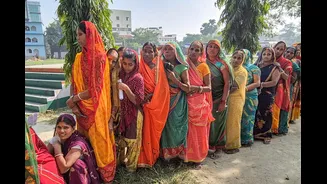
To counter anti-incumbency, the DMK has doubled down on its “Dravidian Model” of development with a manifesto released on March 29. The centrepiece is the doubling of the monthly Kalaignar Magalir Urimai Thogai (Women’s Basic Income) from Rs 1,000 to Rs 2,000, benefitting over 1.37 crore families. In a direct bid to woo urban and rural housewives, the party has also introduced the Illathu Arasi scheme, offering Rs 8,000 worth of coupons to purchase household appliances. Other high-impact promises include expanding the Chief Minister’s Breakfast Scheme to Class 8, providing free laptops to 35 lakh higher education students, and increasing the procurement prices for paddy and sugarcane to Rs 3,500 and Rs 4,500, respectively.
What is the role of Udhayanidhi Stalin in the 2026 campaign?
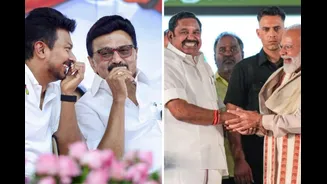
The 2026 election marks the formal elevation of Deputy Chief Minister Udhayanidhi Stalin as the party’s primary campaigner. While MK Stalin focuses on administrative achievements and state-level rallies, Udhayanidhi has launched a whirlwind “door-to-door” campaign, beginning in Kanchipuram and Tiruvannamalai. His rhetoric is framed as a direct choice between “Stalin’s Good Governance” and “Modi’s NDA”, effectively nationalising the state election to consolidate the secular vote. By positioning himself as the guarantor of the party’s 2021 promises, Udhayanidhi is also serving as the bridge to the youth and first-time voters who are being heavily courted by third-party disruptors like the TVK and NTK.
How is the DMK handling the ‘Third Pole’ disruptors?
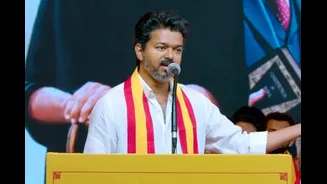
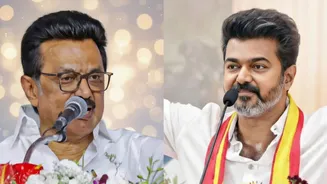
The entry of actor Vijay’s TVK and the persistent growth of Seeman’s NTK have forced the DMK to recalibrate its urban strategy. To prevent a split in the youth vote, the DMK’s campaign highlights its industrial successes, specifically Tamil Nadu’s 41% share in India’s electronics exports and the creation of new “Global Cities” near Madurai and Coimbatore. The party is also leveraging its digital wing to contrast its “data-backed governance” with the “celebrity-led rhetoric” of its new rivals. By focusing on tangible outcomes—such as the 10,000 new buses and five lakh houses promised under the Kalaignar Kanavu Illam scheme—the DMK aims to convince voters that experience in administration is the only viable path forward.