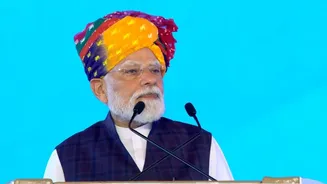









Prime Minister Narendra Modi will inaugurate key sections of the Delhi-Amritsar-Katra Expressway on Friday, marking a major milestone in the development of the high-speed corridor that will connect Delhi with
Punjab and Jammu & Kashmir. Once the entire expressway is operational, the road journey from Delhi to Katra is expected to be reduced to around six hours, significantly improving access to the Shri Mata Vaishno Devi shrine.
According to the Prime Minister’s Office (PMO), Modi will dedicate the 157.92-km-long Packages 1 to 5 of the four-lane Greenfield expressway during his visit to Jind in Haryana. These stretches have been developed at a cost of around Rs 9,680 crore. Later in the day, the Prime Minister will inaugurate the 30.9-km-long Package 6 in Jalandhar, Punjab.
Part Of A 667-km Greenfield Corridor
The newly inaugurated stretches are part of the 667-km Delhi-Amritsar-Katra Expressway, which is being developed at an estimated cost of around Rs 38,905 crore. The corridor is designed to provide seamless, high-speed connectivity between Delhi, Haryana, Punjab and Jammu & Kashmir.
After the entire project is completed, travel time between Delhi and Katra is expected to come down from around 14 hours to nearly six hours. Similarly, the Delhi-Amritsar journey is expected to be reduced from around eight hours to about four hours.
Improved Connectivity For Pilgrims And Travellers
The expressway is expected to make travel more convenient for pilgrims visiting the Shri Mata Vaishno Devi shrine in Katra. Besides improving passenger movement, the corridor will strengthen road connectivity across northern India by providing a faster alternative to existing routes.
Relief For NH-44 Traffic
The project is also expected to ease congestion on National Highway-44 (GT Road), one of the busiest highways in the country. By diverting traffic to the new expressway, authorities expect smoother vehicle movement and improved travel efficiency across the region.
Boost To Logistics And Economic Activity
Apart from enhancing passenger travel, the corridor is expected to improve freight movement and logistics by providing faster connectivity for commercial transport. Officials believe the expressway will support industrial activity and strengthen supply chains across northern India.
The Delhi-Amritsar-Katra Expressway is among the country’s major infrastructure projects and is expected to improve regional connectivity while facilitating faster travel for commuters, tourists, pilgrims and goods transport.