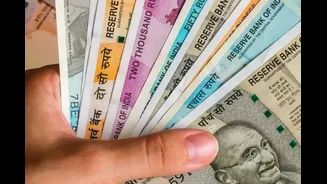









With UPI, we can now make instant payments for any item we wish to buy. Before digital payments, transactions were made entirely with physical currency. Although physical currency is still in use today,
its usage has decreased somewhat. Whenever we see currency notes, we often wonder where they were first used. So, which country first introduced paper currency? Let’s explore its origins.
For centuries, people used coins and other forms of money for trading goods and services. However, carrying large amounts of metal coins became cumbersome, leading to the need for an easier method for transactions. The concept of paper currency first appeared in China during the Song Dynasty in the early 11th century.
Merchants in the Sichuan region realised that lightweight paper currency could allow them to carry significant wealth. At the time, lugging around large metal coins for trade was impractical. Consequently, they began using paper notes known as Xiaoji instead of coins. Merchants started conducting business and trade regularly with paper currency, making it popular in commercial circles.
Seeing its usefulness, the Chinese government began issuing special paper money on its behalf, making it the official means of buying and selling goods. Thus, the world’s first national currency system emerged, with the government-issued paper money called Xiaoji.
Although merchants initially created the Xiaojie notes, the government soon took control and implemented stringent regulations for their use. To prevent misuse, it issued currency with an expiration date, which also built trust in the currency. This made people feel secure using these notes.
During the Yuan Dynasty, the use of Xiaoji expanded, and Kublai Khan made its usage mandatory across his empire. This helped China manage trade and taxes more efficiently. Over time, China’s currency system became a model for other countries.
Spread to Europe Paper currency reached Europe through travelers and traders visiting China. Notable travelers, such as Marco Polo, wrote about Chinese paper money in the 13th century. Initially, Europeans were skeptical, but by the 16th century, as Europe faced a shortage of metal coins, they began to adopt the idea. In the 17th century, Sweden became the first European country to issue its own paper currency, soon followed by other European nations. Eventually, the entire world transitioned to paper currency.