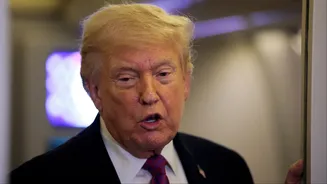


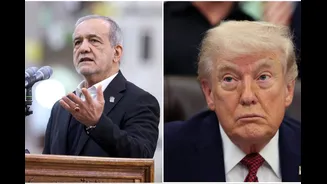
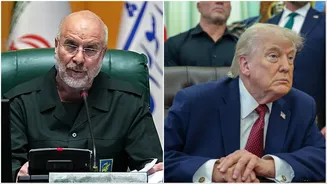

US President Donald Trump has said he is willing to personally meet senior Iranian leaders if negotiations show signs of progress, even as Tehran threatens to boycott the next round of talks expected to take
place in Islamabad.
According to The New York Post, Trump dismissed concerns about Iran’s refusal to participate, signalling confidence that diplomatic engagement will ultimately proceed despite rising tensions.
LIVE Updates On The US-Iran War
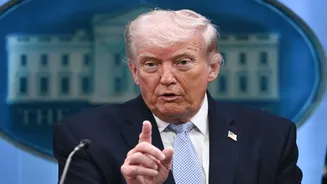
“I have no problem meeting them,” Trump told The New York Post on Monday.
“If they want to meet, and we have some very capable people, but I have no problem meeting them.”
Trump’s comments come at a critical moment, with the US-Iran ceasefire set to expire Wednesday evening, Washington time.
The looming deadline has added urgency to efforts to revive negotiations and avoid further escalation in a conflict that has already lasted several weeks.
TALKS IN ISLAMABAD UNDER SCRUTINY
Trump indicated that preparations are underway for a fresh round of negotiations in Pakistan’s capital, despite Tehran signalling reluctance to participate.
He confirmed that Vice President JD Vance, special envoy Steve Witkoff, and adviser Jared Kushner are expected to travel to Islamabad to facilitate discussions.
“They’re heading over now,” Trump said, according to the report.
The President downplayed suggestions that talks could collapse, expressing confidence that both sides will eventually come to the table.
“We’re supposed to have the talks,” Trump said.
“So I would assume at this point nobody’s playing games.”
However, the possibility of renewed conflict remains high.
Trump told Bloomberg it was “highly unlikely” the ceasefire would be extended, suggesting hostilities could resume if a deal is not reached before the deadline.
The Associated Press also reported that Trump has sent mixed signals about the path forward, expressing optimism that negotiations could soon begin while warning of escalation if diplomacy fails.
According to AP, Trump cautioned that “lots of bombs” could “start going off” if no agreement is reached before the ceasefire expires.
NUCLEAR WEAPONS DEMAND AT THE CORE OF US POSITION
A key sticking point in negotiations remains Washington’s demand that Iran abandon its pursuit of nuclear weapons.
Trump described the requirement as straightforward and non-negotiable.
“Get rid of their nuclear weapons. That’s all very simple,” he said.
“There will be no nuclear weapon.”
Trump added that Iran has the potential to prosper if it agrees to end its nuclear programme permanently.
“Otherwise, a wonderful country, it truly could be,” he said, as quoted by The New York Post.
Despite the strong stance, Trump declined to elaborate on the specific consequences Iran could face if talks collapse.
“Well, I don’t want to get into that with you,” he said when asked about possible escalation.
“You can imagine. It wouldn’t be pretty.”
Trump has previously threatened severe measures, including the possible destruction of key infrastructure such as bridges and power plants, if Iran refuses to reach a deal.
IRAN PUSHES BACK AGAINST US DEMANDS
Iran has accused Washington of making “excessive demands” and shifting its position during negotiations, according to the report.
Iranian parliament speaker and chief negotiator Mohammed Bagher Qalibaf said Tehran would not negotiate “under the shadow of threats,” adding that the country was prepared “to reveal new cards on the battlefield”.
Iranian Foreign Minister Abbas Araghchi also criticised US military actions, saying recent developments were “incompatible with the claim of diplomacy”.
Despite the public rhetoric, Pakistani sources quoted by The New York Post suggested Iran’s position may be strategic, aimed at strengthening its negotiating leverage.
The hardline stance “is posturing to extract maximum advantage when [the] second round happens,” one source said, citing discussions with the Iranian Foreign Ministry spokesman.
TRUMP DEFENDS NEGOTIATING STRATEGY AMID CRITICISM
Trump also pushed back against criticism from domestic political opponents, urging a quicker resolution to the conflict.
He argued that internal dissent could weaken the US position at the negotiating table.
“As a negotiator, and I am a great negotiator, how bad is it when you have people from your own country trying to reach a deal? They are helping the other side,” Trump said, according to The New York Post.
He added that Iran was using delays to its advantage.
“The other side has nothing, they have no cards, but they are using this to delay… I have only been in this for five weeks. I will not be rushed.”
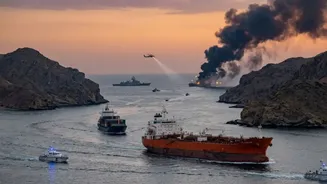
Tensions have also intensified in the Strait of Hormuz, a critical global energy route through which about one-fifth of the world’s oil trade typically passes.
The conflict has disrupted shipping traffic and contributed to rising oil prices, with Brent crude climbing above $95 per barrel compared to roughly $70 before the war began.
According to AP, Iran has reported more than 3,000 deaths since the conflict began, while casualties have also been recorded in Israel and across the wider region.
With the ceasefire deadline fast approaching, uncertainty remains over whether talks in Islamabad can produce a breakthrough or whether the conflict could enter a more volatile phase.
ALSO READ | Trump’s Tall Claims On Iran And Why Nobody Is Buying Them