








Swine flu cases are being reported in Delhi and several other parts of the country, raising concerns among citizens. Delhi has reported more than 2,300 cases, while Karnataka has around 300-400 active
cases.
With seasonal influenza and H1N1 cases on the rise, health experts have urged people to remain cautious but said there is no need to panic. Doctors have advised people to follow basic precautions, particularly when dealing with someone who has flu-like symptoms.
Follow LIVE Updates On Swine Flu Cases In Delhi
Do You Need To Wear A Mask?
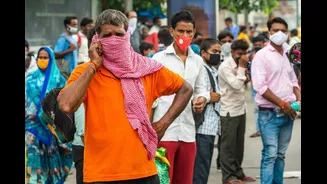
Dr Rajiv Bahl, Director General of the Indian Council of Medical Research (ICMR), said people should follow several precautions similar to those adopted during the COVID-19 pandemic, but masks are not being recommended routinely for everyone.
“We should follow many of the same precautions that we followed during COVID, with the exception of wearing masks,” Bahl said.
He explained that H1N1 primarily spreads through respiratory droplets, which generally do not travel long distances.
“Here, we are not asking people to wear masks because the infection spreads mainly through respiratory droplets, which do not travel very far, usually up to about two metres,” he said.
Also Read | Have These 7 Symptoms? You Could’ve Swine Flu: What To Know About H1N1
How Does Swine Flu Spread?
H1N1 is a strain of influenza A and spreads in ways similar to seasonal influenza. The virus can primarily spread through respiratory droplets and close contact.
Respiratory droplets
When an infected person coughs, sneezes or talks, respiratory droplets containing the virus can be released into the air. People nearby may inhale these droplets or the droplets may come into contact with their eyes, nose or mouth.
Contaminated surfaces
The virus can also spread through contaminated surfaces. Touching objects such as doorknobs, phones or countertops and then touching the eyes, nose or mouth can potentially result in infection.
Close contact
Close physical contact with an infected person can also increase the risk of transmission. For example, virus-containing respiratory secretions on the hands can potentially be transferred during contact and subsequently reach the eyes, nose or mouth.
Also Read | Swine Flu Alert: 5 Precautions Doctors Recommend As H1N1 Cases Rise
H1N1 Vs COVID-19: What Is The Difference?
Although H1N1 and COVID-19 are both respiratory infections and share several symptoms, they are caused by different viruses.
Virus type
H1N1 is a subtype of influenza A, while COVID-19 is caused by SARS-CoV-2, a coronavirus. The two viruses therefore belong to different virus families.
Incubation period
H1N1 generally has a shorter incubation period, with symptoms typically appearing within one to four days after infection. COVID-19 has a more variable incubation period, depending on the variant and other factors.
Contagious period
People infected with influenza can spread the virus from around one day before symptoms appear and for several days after becoming sick. The infectious period can vary depending on factors such as age and immune status.
COVID-19 can also spread before symptoms develop and, in some cases, for a longer period after the onset of symptoms.
Symptoms
There is considerable overlap between the two infections. Common symptoms can include fever, cough, sore throat, fatigue and body aches.
Some people with H1N1 may also experience gastrointestinal symptoms such as nausea, vomiting or diarrhoea. COVID-19 can also cause a range of symptoms and, particularly during earlier variants, loss of taste or smell was more commonly reported.
Transmission
Both viruses can spread through respiratory particles, particularly during close contact. The transmissibility of COVID-19 has varied substantially across different variants, while influenza transmission also varies by strain and population immunity.
Immunity And Mutation
Influenza viruses undergo frequent genetic changes through a process known as antigenic drift. Larger genetic changes can also occur through antigenic shift, which is one reason influenza surveillance and annual vaccine updates are important.
SARS-CoV-2 has also evolved into multiple variants since it emerged, including Alpha, Delta and Omicron, resulting in changes in transmissibility, disease severity and population immunity.
The Bottom Line
H1N1 and COVID-19 are different viral infections, but both can spread through respiratory particles and close contact. Maintaining distance from people who are sick, following good hand and respiratory hygiene and staying home when unwell can help reduce the risk of transmission.
While experts have said there is no need for widespread mask use in the current situation, people who are sick or at higher risk of complications should follow medical advice and take appropriate precautions.